
[论文解读] Broad Absorption Line Quasars in the Dark Energy Spectroscopic Instrument Early Data Release
本文通过自动化检测方法,在暗能量光谱仪(DESI)早期数据发布中识别出宽吸收线(BAL)类星体的星表。通过掩蔽BAL吸收特征并重新计算红移,作者将平均红移误差降低了243 km s⁻¹,显著提升了类星体团聚测量精度,增强了宇宙学分析,尽管BAL特征历史上被视为污染源。
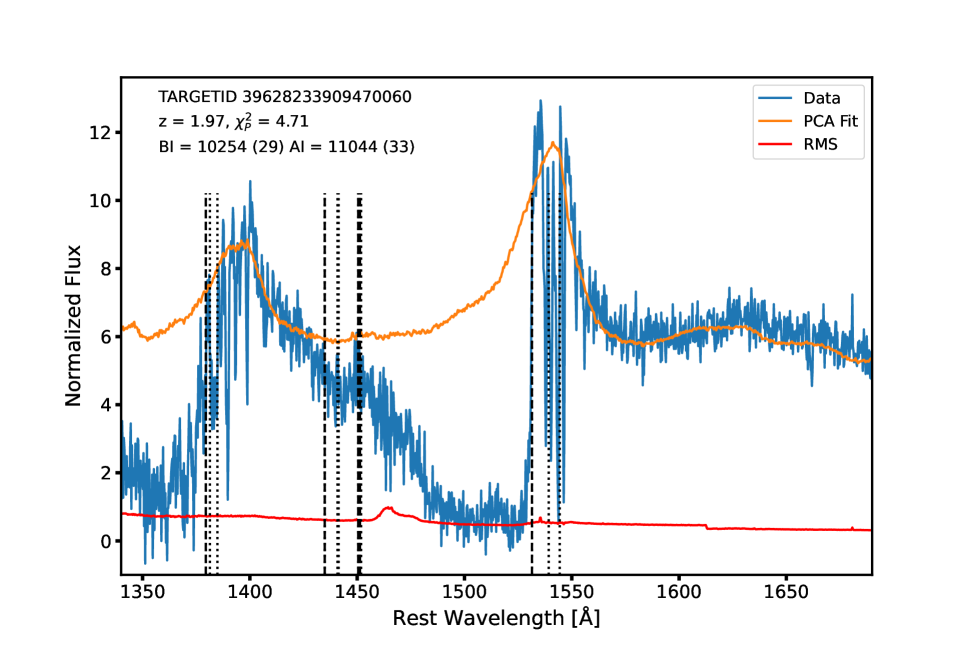
Broad absorption line (BAL) quasars are characterized by gas clouds that absorb flux at the wavelength of common quasar spectral features, although blueshifted by velocities that can exceed 0.1c. BAL features are interesting as signatures of significant feedback, yet they can also compromise cosmological studies with quasars by distorting the shape of the most prominent quasar emission lines, impacting redshift accuracy and measurements of the matter density distribution traced by the Lyman-alpha forest. We present a catalog of BAL quasars discovered in the Dark Energy Spectroscopic Instrument (DESI) survey Early Data Release, which were observed as part of DESI Survey Validation, as well as the first two months of the main survey. We describe our method to automatically identify BAL quasars in DESI data, the quantities we measure for each BAL, and investigate the completeness and purity of this method with mock DESI observations. We mask the wavelengths of the BAL features and re-evaluate each BAL quasar redshift, finding new redshifts which are 243 km/s smaller on average for the BAL quasar sample. These new, more accurate redshifts are important to obtain the best measurements of quasar clustering, especially at small scales. Finally, we present some spectra of rarer classes of BALs that illustrate the potential of DESI data to identify such populations for further study.
研究动机与目标
- 通过基于C iv、Si iv、N v和Lyα发射线中吸收特征的自动化光谱分析,识别DESI早期数据发布中的宽吸收线(BAL)类星体。
- 解决BAL特征对类星体红移测量和团聚研究造成的污染问题。
- 通过掩蔽C iv、Si iv、N v和Lyα线区域的BAL吸收谷,提高红移精度。
- 量化BAL对宇宙学巡天的影响,并评估其尽管以往被排除,但其科学价值。
- 通过BAL掩蔽后的红移校正,实现更精确的大尺度结构测量。
提出的方法
- 基于C iv、Si iv、N v和Lyα发射线中的吸收特征,应用自动化算法在DESI光谱中检测BAL类星体。
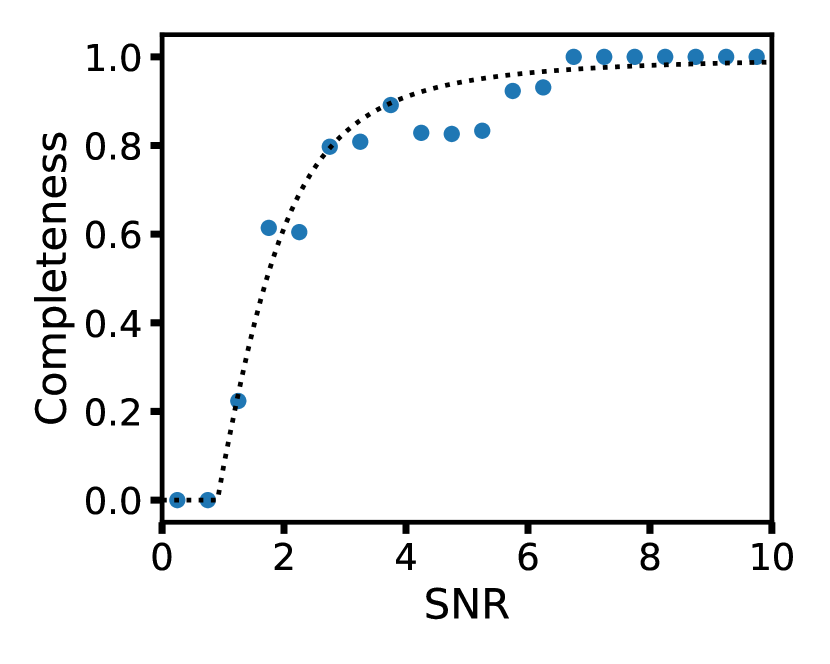
- 利用模拟的DESI观测数据评估BAL检测方法的完整性和纯净度。
- 掩蔽C iv、Si iv、N v和Lyα区域中对应BAL谷的波长,以重新计算类星体红移。
- 比较掩蔽前后的红移,量化系统性偏移和误差减少情况。
- 计算原始红移与校正后红移之间的平均径向速度偏移,以评估精度提升。
- 基于星表完整性和代表性样本,预测完整DESI巡天中的BAL分数。
实验结果
研究问题
- RQ1DESI早期数据发布中BAL类星体的分数是多少?与以往巡天相比有何差异?
- RQ2BAL吸收特征如何影响类星体红移测量?这些误差在多大程度上可以被校正?
- RQ3掩蔽BAL特征对类星体红移和团聚测量精度有何影响?
- RQ4BAL类星体的信噪比(SNR)与非BAL类星体相比如何?这对宇宙学分析有何影响?
- RQ5能否在宇宙学生存中保留BAL类星体,以在不损害数据质量的前提下提升统计功效?
主要发现
- 掩蔽BAL特征后的平均红移偏移为243 km s⁻¹,表明对原始红移估计进行了显著校正。
- 基于代表性星表分析,预测完整DESI巡天中的BAL分数约为19%。
- 掩蔽BAL特征后,红移误差降低至与非BAL类星体相当的水平,模拟类星体研究已证实此结果。
- BAL类星体的平均信噪比(≈5 per pixel)高于非BAL类星体(≈3),提升了数据质量。
- 在宇宙学分析中保留BAL类星体可提高统计功效,并增加探测Lyα森林的视线数量。
- 在某些情况下,掩蔽后的速度偏移超过1000 km s⁻¹,表明若未校正,BAL可能导致灾难性的红移误差。
更好的研究,从现在开始
从阅读论文到最终审阅,大幅缩短您的研究时间。
无需绑定信用卡
本解读由 AI 生成,并经人工编辑审核。