
[论文解读] BrutePrint: Expose Smartphone Fingerprint Authentication to Brute-force Attack
本文提出 BrutePrint,一种新型的蛮力攻击框架,可绕过尝试次数限制,并通过智能手机指纹认证(SFA)系统中的零日漏洞劫持指纹图像。通过利用SFA框架中的逻辑缺陷并利用SPI协议的安全隐患,该攻击在10款主流智能手机上实现了无限次指纹蛮力攻击,成功率达71%,同时通过神经风格迁移绕过活体检测。
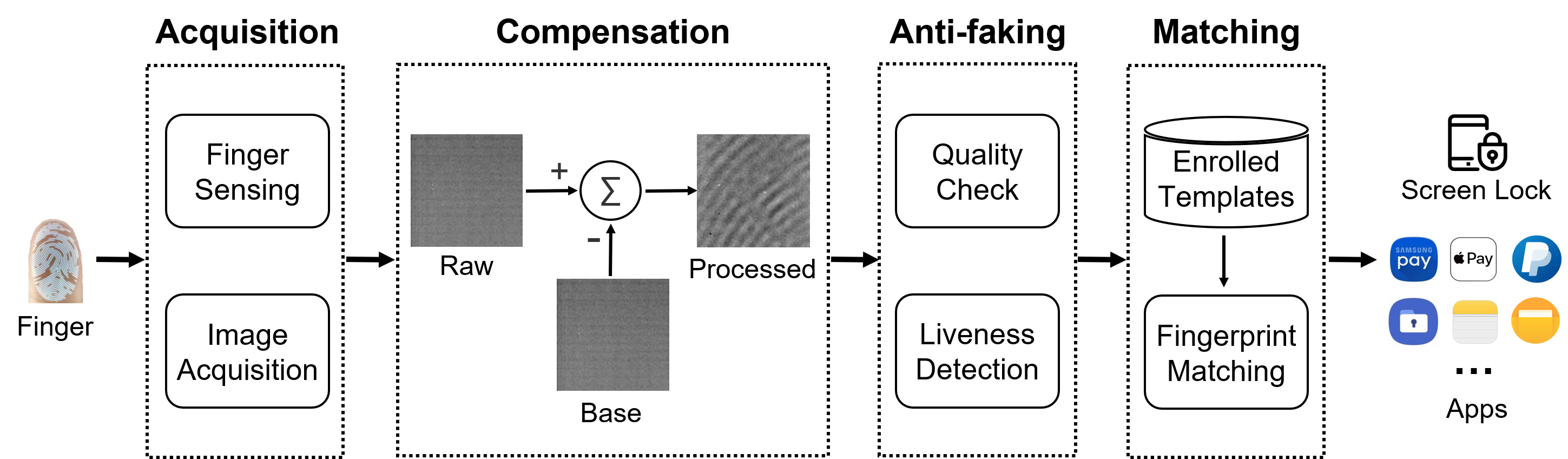
Fingerprint authentication has been widely adopted on smartphones to complement traditional password authentication, making it a tempting target for attackers. The smartphone industry is fully aware of existing threats, and especially for the presentation attack studied by most prior works, the threats are nearly eliminated by liveness detection and attempt limit. In this paper, we study the seemingly impossible fingerprint brute-force attack on off-the-shelf smartphones and propose a generic attack framework. We implement BrutePrint to automate the attack, that acts as a middleman to bypass attempt limit and hijack fingerprint images. Specifically, the bypassing exploits two zero-day vulnerabilities in smartphone fingerprint authentication (SFA) framework, and the hijacking leverages the simplicity of SPI protocol. Moreover, we consider a practical cross-device attack scenario and tackle the liveness and matching problems with neural style transfer (NST). We also propose a method based on neural style transfer to generate valid brute-forcing inputs from arbitrary fingerprint images. A case study shows that we always bypasses liveness detection and attempt limit while 71% spoofs are accepted. We evaluate BrutePrint on 10 representative smartphones from top-5 vendors and 3 typical types of applications involving screen lock, payment, and privacy. As all of them are vulnerable to some extent, fingerprint brute-force attack is validated on on all devices except iPhone, where the shortest time to unlock the smartphone without prior knowledge about the victim is estimated at 40 minutes. Furthermore, we suggest software and hardware mitigation measures.
研究动机与目标
- 调查在现有安全控制措施下,针对市售智能手机的大规模指纹蛮力攻击是否可行。
- 识别并利用SFA框架中的逻辑漏洞,以绕过尝试次数限制并实现无限次认证尝试。
- 通过不安全的SPI通信实现基于硬件的中间人(MITM)指纹图像劫持,演示对指纹传感器的攻击。
- 开发一种实用的跨设备攻击方法,利用神经风格迁移绕过活体检测,同时保持指纹匹配的准确性。
- 在多种智能手机型号、操作系统版本及指纹传感器类型(光学、电容式、超声波)下验证攻击的可行性和有效性。
提出的方法
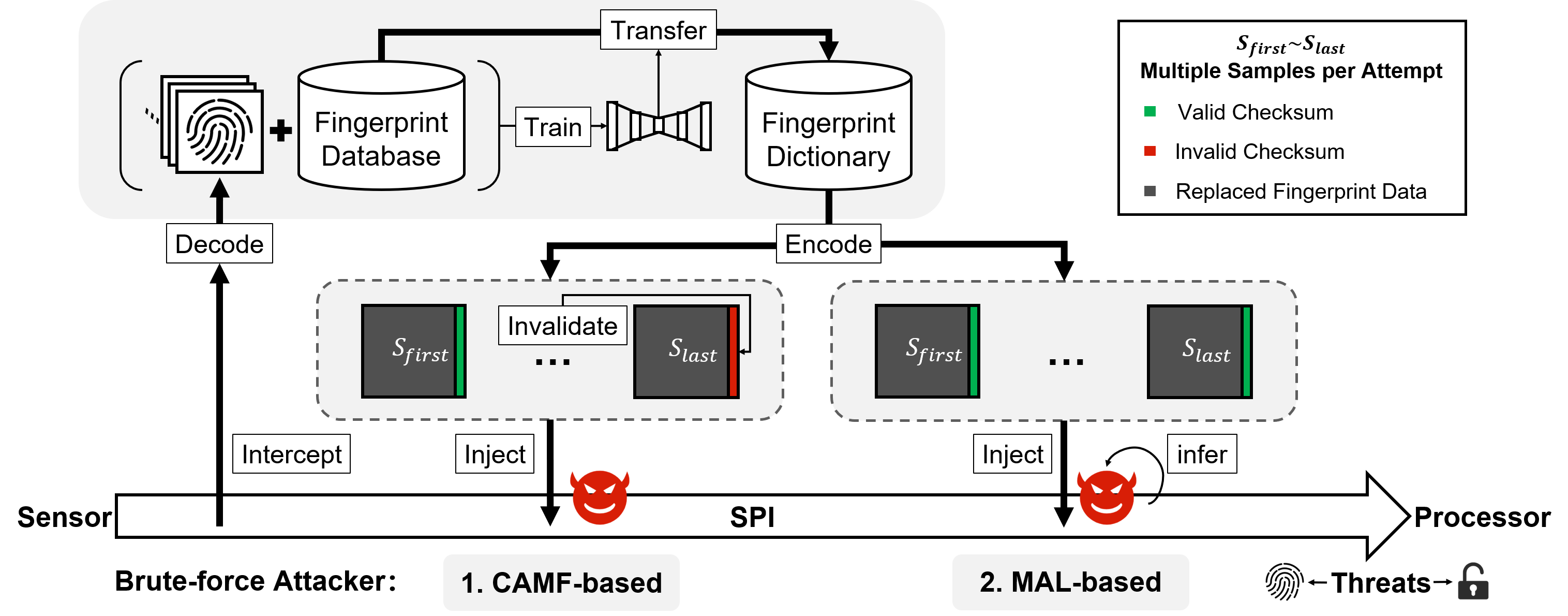
- 利用SFA框架中的两个零日漏洞——匹配失败后取消(CAMF)和锁定后匹配(MAL)——在Android和HarmonyOS设备上绕过尝试次数限制。
- 使用自定义硬件设备对SPI总线执行中间人攻击,拦截并注入指纹图像至传感器到处理器的通信通道。
- 采用神经风格迁移(NST),特别是CycleGAN,将公共数据库中的任意指纹图像转换为与目标SFA系统兼容的风格。
- 通过系统性地将转换后的指纹图像测试于目标设备的认证接口,自动化蛮力攻击流程。
- 设计一种低成本、适合初学者使用的对抗性硬件装置,兼容多种智能手机型号和指纹传感器类型。
- 在屏幕锁、支付授权和隐私应用解锁等用例中验证攻击流程,证明其在真实场景中的可利用性。
实验结果
研究问题
- RQ1尽管存在尝试次数限制和活体检测,是否可在市售智能手机上实际执行指纹蛮力攻击?
- RQ2SFA框架中存在哪些逻辑或实现缺陷,使得可以绕过尝试次数限制并非法访问指纹图像?
- RQ3神经风格迁移技术在多大程度上可用于生成可绕过活体检测且保持匹配准确性的伪造指纹图像?
- RQ4所提出的MITM攻击在多种智能手机型号上通过不安全的SPI接口劫持指纹图像的效率如何?
- RQ5在具有不同传感器技术的现代智能手机上,大规模指纹蛮力攻击在现实世界中的可行性与成功率如何?
主要发现
- BrutePrint框架在所有测试的Android和HarmonyOS设备上成功绕过尝试次数限制,实现无限次认证尝试。
- 在iOS设备上,尝试次数限制被绕过,允许在标准限制基础上额外尝试10次,且在无先验知识的情况下,解锁时间估计为40分钟。
- 在所有测试案例中,活体检测均被100%成功绕过,使用神经风格迁移(CycleGAN)后,71%的伪造尝试成功通过认证。
- 通过SPI中间人攻击劫持指纹图像已在全部10款测试智能手机上得到证实,包括采用光学、电容式和超声波指纹传感器的设备。
- 该攻击在多种应用场景中均有效,包括屏幕解锁(成功率100%)、支付授权(成功率100%)和隐私应用解锁(成功率100%)。
- 该漏洞不限于特定型号或操作系统版本,因其源于SFA框架的逻辑缺陷,影响所有测试设备,除iPhone外影响程度较轻。
更好的研究,从现在开始
从阅读论文到最终审阅,大幅缩短您的研究时间。
无需绑定信用卡
本解读由 AI 生成,并经人工编辑审核。