
[论文解读] Building and Using Personal Knowledge Graph to Improve Suicidal Ideation Detection on Social Media
本文提出了一种知识图谱增强的深度学习框架,将个人因素(如帖子、人格特质和人生经历)整合到面向自杀的知識圖譜中,以提升社交媒體上的自殺意念檢測效果。通過在多模態數據(文本、圖像、社交圖譜和知識)上應用雙層注意力機制,該方法在微博和Reddit數據集上實現了超過93%的準確率,其中帖子內容、壓力水平和反覆思考被識別為最重要的預測因子。
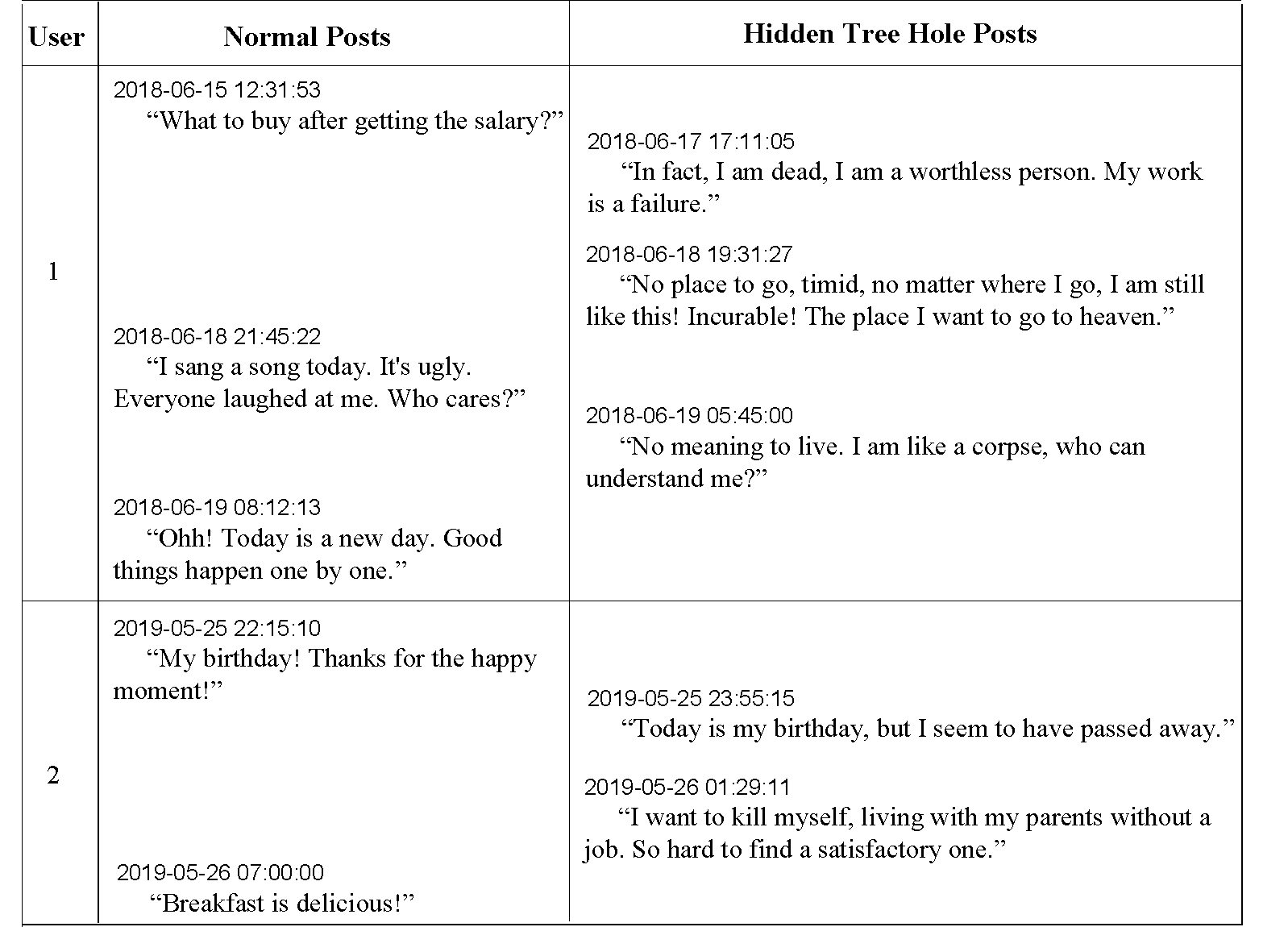
A large number of individuals are suffering from suicidal ideation in the world. There are a number of causes behind why an individual might suffer from suicidal ideation. As the most popular platform for self-expression, emotion release, and personal interaction, individuals may exhibit a number of symptoms of suicidal ideation on social media. Nevertheless, challenges from both data and knowledge aspects remain as obstacles, constraining the social media-based detection performance. Data implicitness and sparsity make it difficult to discover the inner true intentions of individuals based on their posts. Inspired by psychological studies, we build and unify a high-level suicide-oriented knowledge graph with deep neural networks for suicidal ideation detection on social media. We further design a two-layered attention mechanism to explicitly reason and establish key risk factors to individual's suicidal ideation. The performance study on microblog and Reddit shows that: 1) with the constructed personal knowledge graph, the social media-based suicidal ideation detection can achieve over 93% accuracy; and 2) among the six categories of personal factors, post, personality, and experience are the top-3 key indicators. Under these categories, posted text, stress level, stress duration, posted image, and ruminant thinking contribute to one's suicidal ideation detection.
研究动机与目标
- 為解決社交媒體中自殺意念檢測的挑戰,其中用戶表達往往隱含且數據稀疏。
- 通過將心理知識整合到個人化、面向自殺的知識圖譜中,提升檢測性能。
- 識別對自殺意念有顯著影響的個人因素(如人格、經歷和帖子內容)的貢獻。
- 開發一種多模態、基於注意力的深度學習模型,明確地在個人知識圖譜上進行推理,以提升可解釋性和準確率。
提出的方法
- 構建了一個高階、面向自殺的個人知識圖譜,整合六類個人因素:帖子、人格、經歷、社交互動、人口統計和心理健康。
- 採用深度神經網絡從文本、圖像和社交網絡結構中提取並統一特徵,融入知識圖譜。
- 設計雙層注意力機制:第一層關注用戶帖子中的關鍵資訊,第二層在知識圖譜實體上推理,突出顯示關鍵風險因素。
- 將多模態輸入(文本、圖像、社交圖譜和知識圖譜)整合到端到端的深度學習框架中,實現聯合表徵學習。
- 在兩個真實世界數據集(新浪微博(中文微博)和Reddit)上訓練模型,採用監督學習與自監督學習相結合的方式。
实验结果
研究问题
- RQ1如何有效構建個人知識圖譜,以表徵個人層級的自殺意念風險因素?
- RQ2不同個人因素(如帖子內容、人格特質和人生經歷)在預測自殺意念中發揮何種作用?
- RQ3雙層注意力機制能否通過明確地在知識圖譜實體上推理,提升自殺意念檢測的可解釋性和準確率?
- RQ4與單模態或有限多模態基線相比,多模態數據(文本、圖像、社交圖譜、知識圖譜)的整合如何影響檢測性能?
主要发现
- 所提出的基於知識圖譜的方法在新浪微博和Reddit數據集上均實現了超過93%的準確率,顯著優於最先进方法。
- 在六類個人因素中,帖子內容、人格特質和人生經歷被識別為自殺意念檢測的前三名關鍵指標。
- 在帖子類別中,帖子的實際文本內容是最具影響力的因素,其次為壓力水平和壓力持續時間。
- 反覆思考和發佈的圖片也被發現是檢測性能的重要貢獻因素。
- 模型的推理時間與其他深度學習方法相當,知識圖譜增強的模型因多模態整合而需稍長的訓練時間。
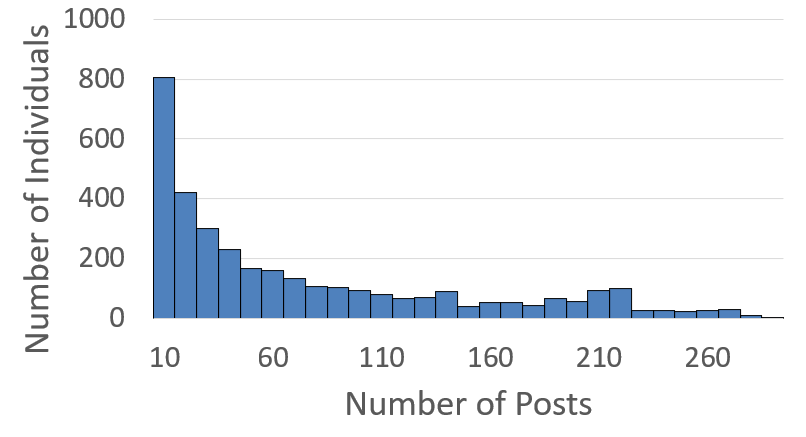
- 數據品質顯著影響性能:較低的噪聲(如真實用戶身份、充足的發帖歷史)導致更高的檢測準確率,表明數據可靠性至關重要。
更好的研究,从现在开始
从阅读论文到最终审阅,大幅缩短您的研究时间。
无需绑定信用卡
本解读由 AI 生成,并经人工编辑审核。