
[论文解读] Cattle Identification Using Muzzle Images and Deep Learning Techniques
本研究提出了一种基于深度学习的牛只识别系统,利用鼻部图像与图像压缩技术,在资源有限的环境中实现高精度、低成本的生物特征识别。采用保留25%图像质量的宽残差网络50(wide ResNet50),该方法实现了99.5%的准确率,证明即使在压缩后、画质较低的图像条件下,也能实现高性能识别,适用于非洲小农户及游牧养殖环境。
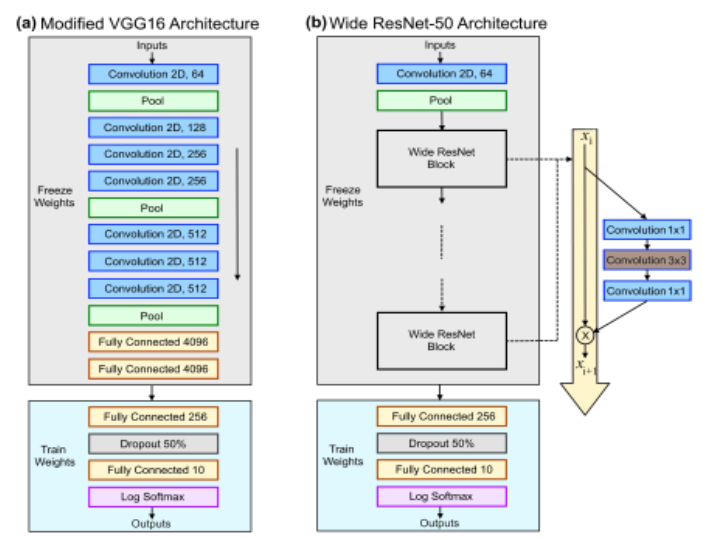
Traditional animal identification methods such as ear-tagging, ear notching, and branding have been effective but pose risks to the animal and have scalability issues. Electrical methods offer better tracking and monitoring but require specialized equipment and are susceptible to attacks. Biometric identification using time-immutable dermatoglyphic features such as muzzle prints and iris patterns is a promising solution. This project explores cattle identification using 4923 muzzle images collected from 268 beef cattle. Two deep learning classification models are implemented - wide ResNet50 and VGG16\_BN and image compression is done to lower the image quality and adapt the models to work for the African context. From the experiments run, a maximum accuracy of 99.5\% is achieved while using the wide ResNet50 model with a compression retaining 25\% of the original image. From the study, it is noted that the time required by the models to train and converge as well as recognition time are dependent on the machine used to run the model.
研究动机与目标
- 开发一种非侵入式、可扩展的牛只识别系统,以克服传统标签与电子标签方法的局限性。
- 评估深度学习模型在低质量鼻部图像上的性能,以降低现场应用中的软硬件与运营成本。
- 评估图像压缩对模型准确率与训练效率的影响,以适应非洲低资源农业环境的部署需求。
- 通过提出一种横向扩展的集成模型方法,解决生物特征牛只识别中的可扩展性挑战。
- 通过设计一种在设备与基础设施要求极低的系统,实现实际部署。
提出的方法
- 本研究使用了在非洲真实农业环境中采集的4,923张来自268头肉牛的鼻部图像。
- 训练了两种深度学习模型——宽残差网络50(wide ResNet50)与VGG16_BN——用于图像分类,以识别个体牛只。
- 通过JPEG压缩将图像质量降低至原始大小的100%、50%和25%,以模拟低带宽与低成本成像条件。
- 模型训练在Google Colab与Colab Pro平台上进行,监控了不同压缩级别下的每轮训练时间、收敛速度与推理时间。
- 采用早停法防止过拟合,模型性能基于准确率、训练轮次数与总训练时间进行评估。
- 提出一种横向扩展的集成模型策略,通过仅对新增牛只类别进行微调,而非重新训练整个模型,以解决可扩展性问题。
实验结果
研究问题
- RQ1深度学习模型能否在适用于低成本现场部署的压缩低质量鼻部图像上实现高准确率的牛只识别?
- RQ2图像压缩对深度学习模型在牛只识别中的训练时间、收敛速度与识别准确率有何影响?
- RQ3在成像基础设施有限的真实农业环境中,图像质量与模型性能之间的权衡如何?
- RQ4在数据库中新增动物时,如何提升生物特征牛只识别系统的可扩展性?
- RQ5横向扩展的集成模型方法能否降低在引入新牛只时重新训练整个模型所带来的计算负担?
主要发现
- 当图像压缩至原始质量的25%时,宽残差网络50(wide ResNet50)模型达到最高准确率99.5%。
- 尽管图像经过显著压缩,宽残差网络50模型仍保持高性能,其准确率仅比全质量图像(99.2%)略有下降。
- 图像压缩降低了两种模型的每轮训练时间,VGG16_BN在Colab Pro上因计算能力更强而实现更快的训练速度。
- 总训练时间在不同压缩级别间保持相对稳定,尽管更高压缩级别略微延长了训练时长。
- VGG16_BN模型在25%图像质量下达到最高98.04%的准确率,虽仍属高水平,但低于宽残差网络50在相同条件下的99.5%。
- 本研究证实,即使在低质量图像条件下,仍可实现高准确率,表明该系统适用于无需高端相机的低资源农业环境部署。
更好的研究,从现在开始
从阅读论文到最终审阅,大幅缩短您的研究时间。
无需绑定信用卡
本解读由 AI 生成,并经人工编辑审核。