
[论文解读] Challenges and Opportunities of Using Transformer-Based Multi-Task Learning in NLP Through ML Lifecycle: A Survey
本综述系统调查了自然语言处理(NLP)中基于Transformer的多任务学习(MTL)在机器学习全生命周期中的应用,涵盖数据工程、模型开发、部署和监控等环节,识别出其中的挑战与机遇。本文提出持续多任务学习(CMTL)作为MTL与持续学习(CL)的创新融合,以支持周期性微调和对分布漂移及新任务的动态适应。
The increasing adoption of natural language processing (NLP) models across industries has led to practitioners' need for machine learning systems to handle these models efficiently, from training to serving them in production. However, training, deploying, and updating multiple models can be complex, costly, and time-consuming, mainly when using transformer-based pre-trained language models. Multi-Task Learning (MTL) has emerged as a promising approach to improve efficiency and performance through joint training, rather than training separate models. Motivated by this, we first provide an overview of transformer-based MTL approaches in NLP. Then, we discuss the challenges and opportunities of using MTL approaches throughout typical ML lifecycle phases, specifically focusing on the challenges related to data engineering, model development, deployment, and monitoring phases. This survey focuses on transformer-based MTL architectures and, to the best of our knowledge, is novel in that it systematically analyses how transformer-based MTL in NLP fits into ML lifecycle phases. Furthermore, we motivate research on the connection between MTL and continual learning (CL), as this area remains unexplored. We believe it would be practical to have a model that can handle both MTL and CL, as this would make it easier to periodically re-train the model, update it due to distribution shifts, and add new capabilities to meet real-world requirements.
研究动机与目标
- 系统分析基于Transformer的MTL如何融入机器学习全生命周期的各个阶段,包括数据工程、模型开发、部署和监控。
- 识别在真实世界NLP生产系统中应用MTL时的关键挑战与机遇,尤其关注计算成本、模型维护和可扩展性问题。
- 强调MTL与持续学习(CL)之间尚未被充分探索的联系,倡导构建统一框架以支持动态模型更新。
- 提出持续多任务学习(CMTL)作为处理生产环境中顺序任务添加、分布漂移和周期性微调的实用解决方案。
- 推动构建一个能真实模拟现实世界机器学习系统挑战的基准,用于评估CMTL模型。
提出的方法
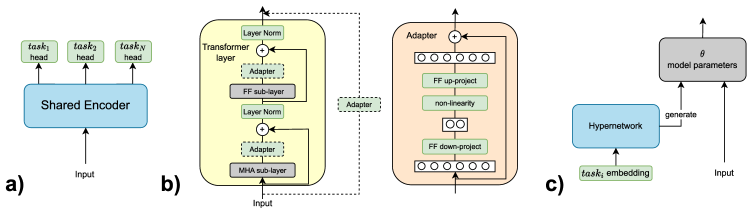
- 调研NLP中现有的基于Transformer的MTL架构,重点关注参数共享机制,如任务特定头、适配器和超网络。
- 将MTL组件映射到机器学习生命周期各阶段,以识别各阶段特有的挑战,如数据工程中的数据不平衡问题和监控阶段的模型陈旧问题。
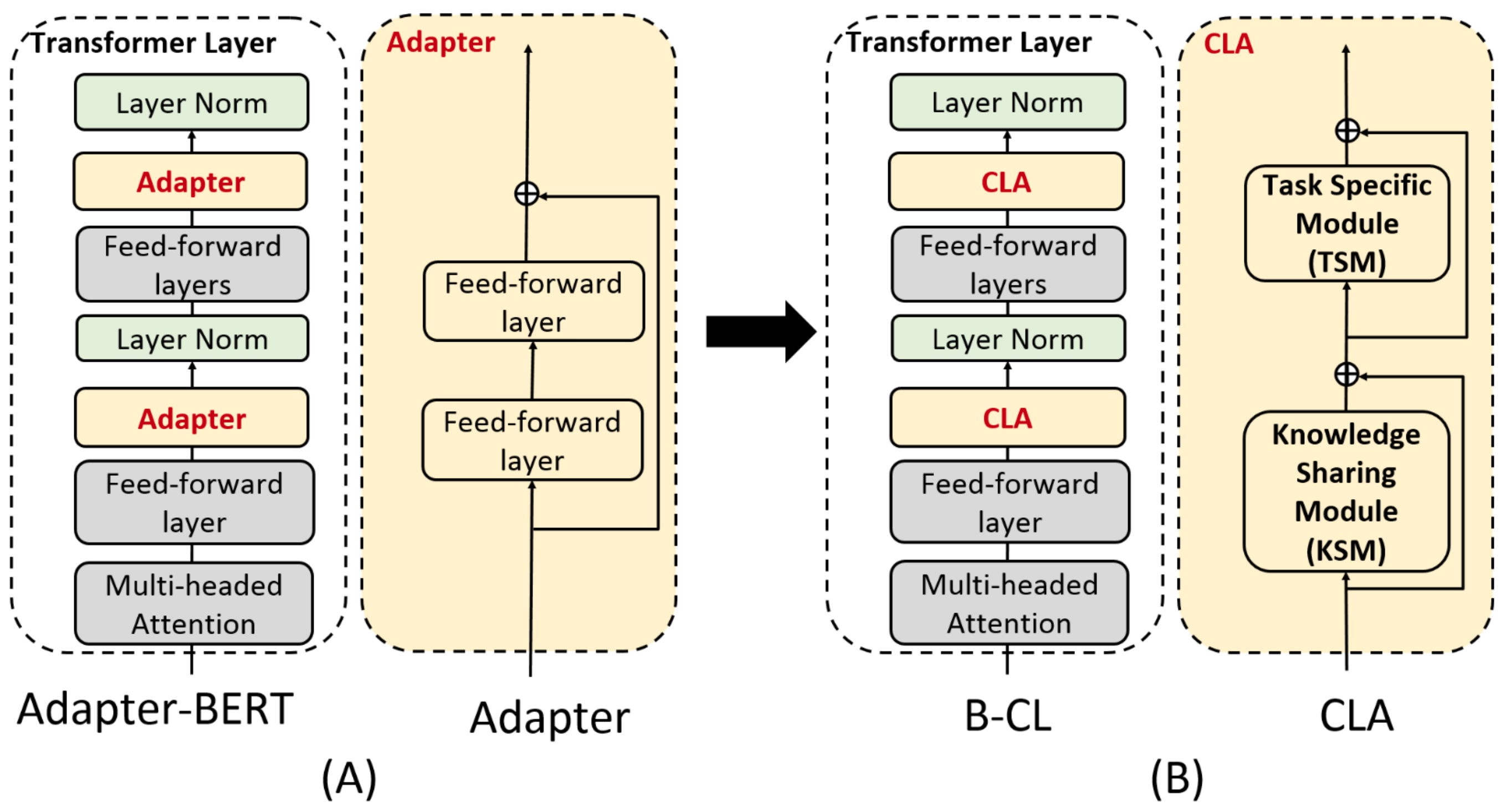
- 分析MTL与持续学习(CL)在架构上的相似性,特别是在基于适配器和参数隔离的设计中,以支持CMTL的集成。
- 提出一种CMTL框架,将MTL的并行学习能力与CL的增量学习机制相结合,利用共享组件如适配器和超网络。
- 设计一种基准策略,以模拟现实世界条件,包括任务到达频率的变化、微调周期和分布漂移。
- 通过可视化和架构对比(例如图3)说明MTL与CL组件如何互换或组合使用,例如用CL感知模块替代MTL适配器。
实验结果
研究问题
- RQ1如何有效将基于Transformer的MTL集成到完整的机器学习生命周期中?在数据工程、模型开发、部署和监控阶段面临的关键挑战是什么?
- RQ2MTL与持续学习(CL)之间存在哪些架构相似性,可支持统一的CMTL框架构建?
- RQ3如何扩展MTL以支持生产环境中顺序任务学习和对分布漂移的适应?
- RQ4需要何种基准策略,才能在真实生产条件下公平评估CMTL模型?
- RQ5现有的MTL组件(如适配器和超网络)能否被重新用于支持持续学习,从而实现高效且模块化的CMTL模型?
主要发现
- 基于Transformer的MTL通过在多个NLP任务间共享参数,提升了模型效率,并降低了计算与经济成本。
- MTL通过支持模块化、可重用的架构及共享主干组件,简化了生产环境中的模型部署与维护。
- 适配器和超网络等架构组件在MTL与CL之间共享,表明其为构建CMTL模型提供了坚实基础。
- 将MTL与CL整合为CMTL框架,可使模型在不发生灾难性遗忘的前提下,应对新任务和分布漂移。
- 构建一个能模拟周期性微调、任务到达频率和分布漂移的基准,对有效评估CMTL模型至关重要。
- 所提出的CMTL方法复用了现有MTL组件,仅需修改适配器或参数隔离模块即可实现,具备与现有MTL系统的后向兼容性。
更好的研究,从现在开始
从阅读论文到最终审阅,大幅缩短您的研究时间。
无需绑定信用卡
本解读由 AI 生成,并经人工编辑审核。