
[论文解读] Collectively-modified inter-molecular electron correlations: The connection of polaritonic chemistry and spin glass physics
本聚焦评述将 dressed electronic-structure 问题在集体振动强耦合下映射到 Sherrington-Kirkpatrick 自旋玻璃模型,揭示了 polarization glass 和可能的类似相变行为,将极子化学与自旋玻璃物理相互联系。
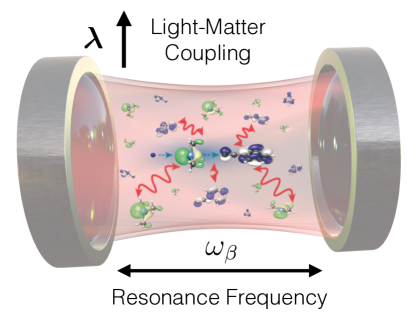
Polaritonic chemistry has garnered increasing attention in recent years due to pioneering experimental results, which show that site- and bond-selective chemistry at room temperature is achievable through strong collective coupling to field fluctuations in optical cavities. Despite these notable experimental strides, the underlying theoretical mechanisms remain unclear. In this focus review, we highlight a fundamental theoretical link between the seemingly unrelated fields of polaritonic chemistry and spin glasses, exploring its profound implications for the theoretical framework of polaritonic chemistry. Specifically, we present a mapping of the dressed many-molecules electronic-structure problem under collective vibrational strong coupling to the spherical Sherrington-Kirkpatrick (SSK) model of a spin glass. This mapping uncovers a collectively induced instability of the intermolecular electron correlations, which could provide the long sought-after seed for significant local chemical modifications in polaritonic chemistry. Overall, the qualitative predictions made from the SSK model (e.g., dispersion effects, phase transitions, differently modified bulk and rare event properties, heating,...) agree well with available experimental observations. Our connection paves the way to incorporate, adjust and probe numerous spin glass concepts in polaritonic chemistry, such as modified fluctuation-dissipation relations, (non-equilibrium) aging dynamics, time-reversal symmetry breaking or stochastic resonances. Ultimately, the connection also offers fresh insights into the applicability of spin glass theory beyond condensed matter systems suggesting novel theoretical directions such as spin glasses with explicitly time-dependent (random) interactions.
研究动机与目标
- 激励在光学腔中光物质耦合如何在分子电子结构上诱导集体、非局部效应。
- 通过映射到 Sherrington-Kirkpatrick 模型,提出极子化学与自旋玻璃物理之间的理论联系。
- 识别在集体耦合下出现的挫折、极化模式及潜在的相变。
- 讨论自旋玻璃概念如挫折、老化动力学和随机共振如何揭示 polaritonic chemistry 的机理。
提出的方法
- 在长波长、少模近似下使用 Pauli-Fierz ab initio 理论来描述集合-腔耦合。
- 在腔耦合下将 dressed electronic problem 以腔 Born-Oppenheimer 近似处理核和位移场。
- 推导电子部分的 N 耦合腔 Hartree 方程(cH),其中来自 X 和 x 偶极耦合的全耦合相互作用项。
- 使用 Shin-Metiu 一维模型分析该系统,展示集体强耦合和自洽极化模式。
- 将 cH 方程映射到 Sherrington-Kirkpatrick 自旋玻璃模型以揭示极化-玻璃不稳定性并讨论其含义。
实验结果
研究问题
- RQ1集体振动强耦合在光学腔中是否能驱动集体电子效应并反馈到单个分子?
- RQ2在 VSC 下的 dressed electronic-structure 问题如何与自旋玻璃物理相关,及其对极化有序与挫折的潜在影响?
- RQ3在 VSC 下的极化模式是否类似于自旋玻璃现象,如 replica symmetry breaking、aging,或 stochastic resonances?
- RQ4有哪些实验信号(如 NMR 观测)支持极化-玻璃图景及潜在的腔引发相变?
- RQ5通过用自旋玻璃概念解释极子化学,会带来哪些新的理论方向?
主要发现
- 在集体 VSC 下,分子极化通过一个二次、全耦合项耦合,导致对单分子产生非局部反馈。
- 在热力学极限下局部分子极化仍然存在,而宏观极化消失,指示极化-玻璃有序。
- 使用 Shin-Metiu 模型的数值模拟显示局部极化模式有限且极化分布粗糙、几乎不连续,与挫折相符。
- 存在类似相变的不稳定性证据,在较高的集体耦合下自洽腔-Hartree 解无法收敛。
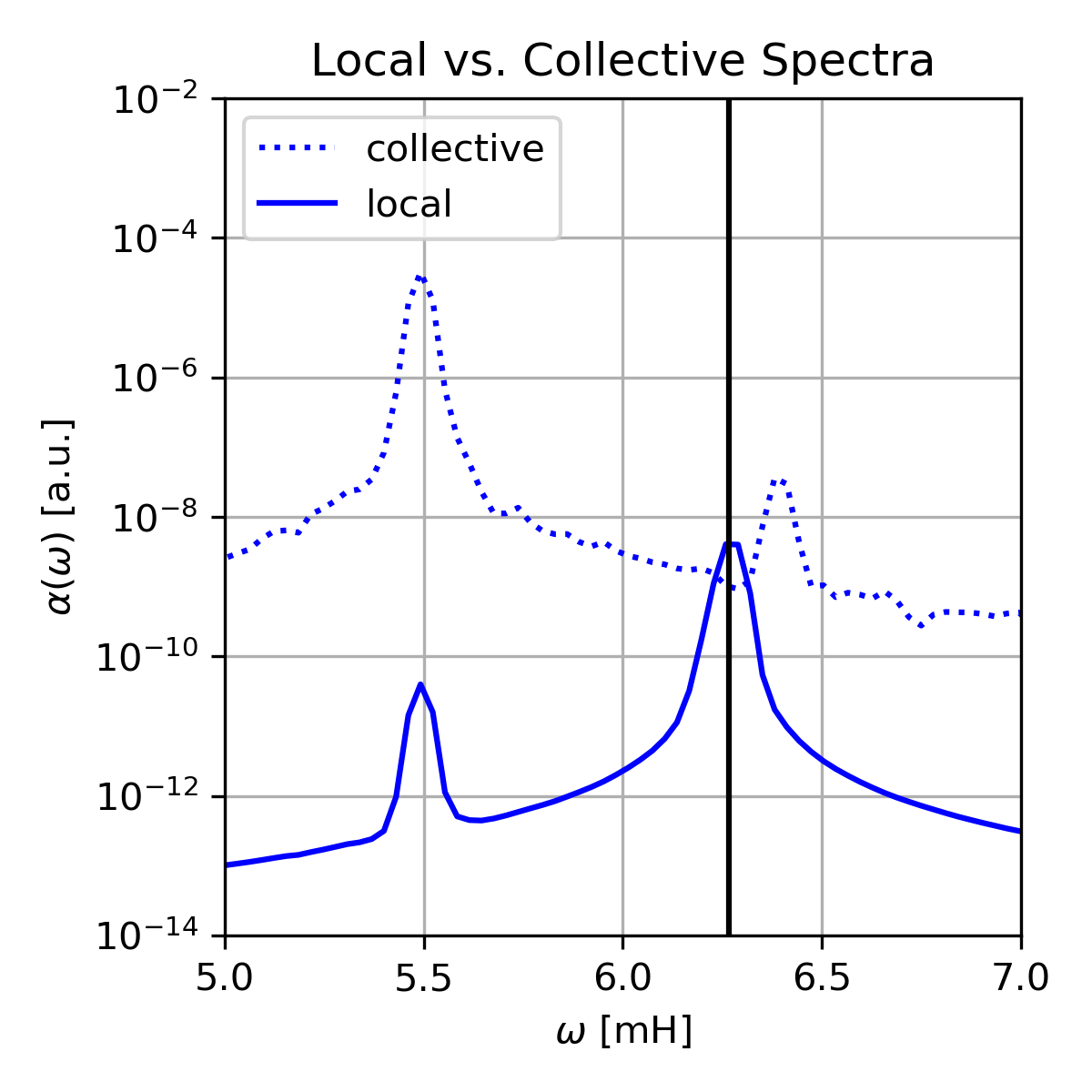
- 在 VSC 下的 NMR 实验显示平均化学位移不存在但谱带宽度改变,以及与共振相关的构象平衡改变,符合极化-玻璃图景。
- 将其明确映射到 SK 自旋玻璃模型为将自旋玻璃概念(挫折、老化、随机共振)应用于极子化学提供了框架。
- 该工作提出新的理论方向,如具有时变序参量的极化玻璃,以及自旋玻璃理论在凝聚态之外的更广泛适用性。
更好的研究,从现在开始
从论文设计到论文写作,大幅缩短您的研究时间。
无需绑定信用卡
本解读由 AI 生成,并经人工编辑审核。