
[论文解读] Compact realization of all-attosecond pump-probe spectroscopy
本文提出一种紧凑型、1 kHz激光系统,基于后压缩的少周期飞秒近红外脉冲与瞬态蓝移增强的高次谐波产生(HHG)几何结构,实现全阿秒泵浦-探测光谱。该系统产生峰值强度高达1×10¹³ W/cm²的近孤立阿秒XUV脉冲,实现了对原子和分子中电子动力学的元素特异性、高时间分辨率研究。
The ability to perform attosecond-pump attosecond-probe spectroscopy (APAPS) is a longstanding goal in ultrafast science. While first pioneering experiments demonstrated the feasibility of APAPS, the low repetition rates (10-120 Hz) and the large footprints of existing setups have so far hindered the widespread exploitation of APAPS. Here we demonstrate two-color APAPS using a commercial laser system at 1 kHz, straightforward post-compression in a hollow-core fiber and a compact high-harmonic generation (HHG) setup. The latter enables the generation of intense extreme-ultraviolet (XUV) pulses by using an out-of-focus HHG geometry and by exploiting a transient blueshift of the driving laser in the HHG medium. Near-isolated attosecond pulses are generated, as demonstrated by one-color and two-color XUV-pump XUV-probe experiments. Our concept allows selective pumping and probing on extremely short timescales and permits investigations of fundamental processes that are not accessible by other pump-probe techniques.
研究动机与目标
- 克服以往低重复频率、大尺寸装置的局限,推动阿秒泵浦-阿秒探测光谱(APAPS)的广泛应用。
- 通过紧凑型商用激光系统生成高强度、近孤立的阿秒极端紫外(XUV)脉冲,实现高时间分辨率的电子动力学研究。
- 利用XUV脉冲选择性地探测和泵浦核心电子与内价层电子的动力学,其空间局域性与元素特异性优于近红外(NIR)脉冲。
- 证明XUV泵浦与XUV探测的APAPS可实现10%–100%的信号变化,显著高于XUV-NIR实验中常见的10⁻⁴变化,从而实现更稳健的测量。
- 开发一种可扩展、稳定且紧凑的平台,适用于常规实验室使用,并为复杂体系的未来应用提供支持。
提出的方法
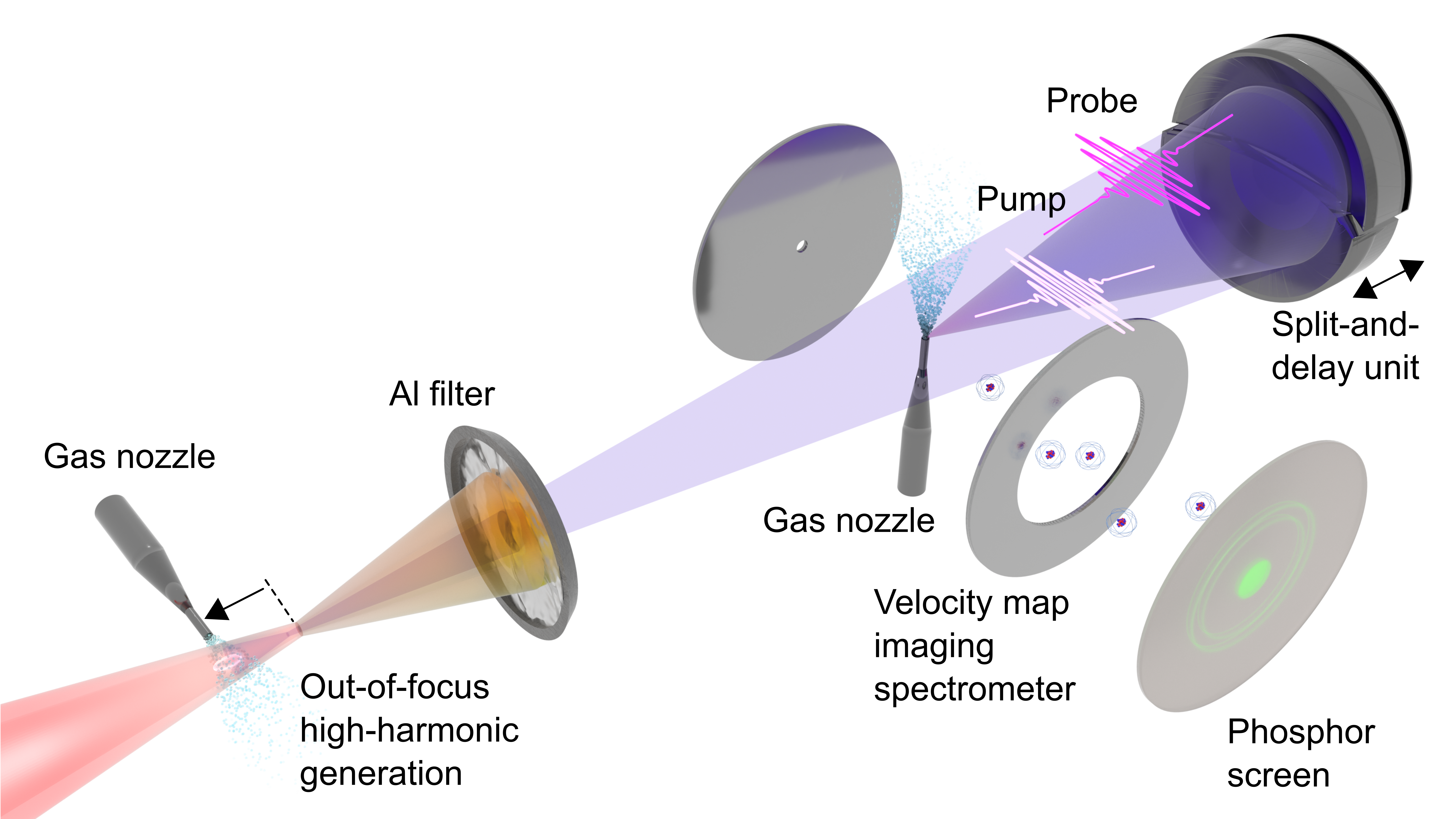
- 采用商用1 kHz、36 fs、13 mJ、800 nm激光系统作为高次谐波产生(HHG)的驱动源。
- 通过填充氦气(3.5 bar)的1 m长、400 µm芯径空芯光纤实现激光脉冲的后压缩,获得3.8 fs的压缩脉冲宽度。
- 利用离焦几何结构在HHG介质中引入瞬态蓝移效应,增强高强度、短时长XUV脉冲的生成。
- 通过1 mm光阑与氪或氙气(4 bar背压)的脉冲气流喷射,优化HHG效率。
- 利用光栅与微通道板/荧光屏的光谱仪表征XUV脉冲,结合铝滤光片(100 nm与200 nm)抑制残留的NIR光。
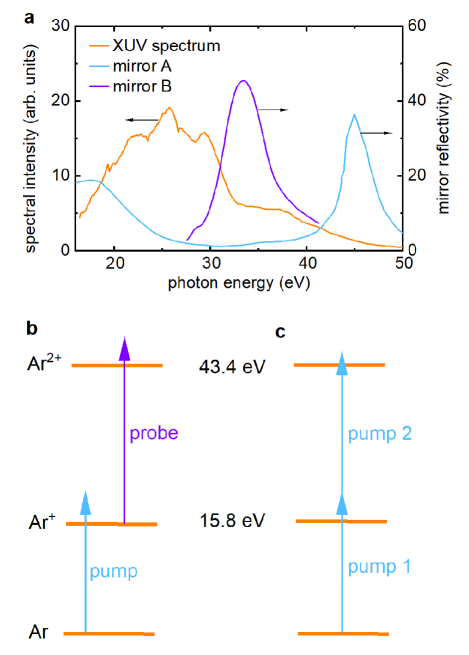
- 采用分束与延迟装置,结合球面多层膜镜(反射率峰值位于<25 eV与33.5 eV),控制泵浦-探测延迟并实现XUV脉冲的空间重叠。
实验结果
研究问题
- RQ1紧凑型、高重复频率(1 kHz)激光系统能否生成适用于泵浦-探测实验的高强度、近孤立阿秒XUV脉冲?
- RQ2在离焦HHG几何结构中引入的瞬态蓝移效应是否能显著提升XUV脉冲生成效率与强度?
- RQ3能否实现XUV脉冲作为泵浦与探测光的全阿秒泵浦-探测光谱,从而实现高于XUV-NIR方案的信噪比?
- RQ4在紧凑、稳定且商业可行的装置中,可实现的XUV脉冲持续时间与峰值强度为何?
- RQ5该装置能否在阿秒至数飞秒时间尺度上分辨电子动力学,并具备元素特异性灵敏度?
主要发现
- 系统生成了持续时间约为100阿秒的近孤立阿秒XUV脉冲,经单色与双色XUV泵浦-XUV探测实验验证。
- XUV峰值强度最高达1×10¹³ W/cm²,样品处脉冲能量为0.15 nJ(来自33.5 eV处的镜面B),支持强场相互作用。
- 源端XUV脉冲能量估计为10 nJ,经传输与反射损耗后,最终到达目标的脉冲能量为0.12–0.15 nJ。
- XUV泵浦-XUV探测实验中实现了10%–100%的信号变化,显著高于XUV-NIR实验中常见的10⁻⁴变化。
- 采用1 kHz激光系统实现了高信噪比与稳定运行,克服了以往APAPS实验中低重复频率系统的局限。
- 在离焦HHG几何结构中引入的瞬态蓝移效应显著增强了高强度XUV脉冲的生成,即使在中等激光脉冲能量(1 mJ)下也实现了高效转换。
更好的研究,从现在开始
从阅读论文到最终审阅,大幅缩短您的研究时间。
无需绑定信用卡
本解读由 AI 生成,并经人工编辑审核。