
[论文解读] Conformal Dynamics for TeV Physics and Cosmology
本文提出了一套统一的非超对称规范理论中的共形动力学框架,引入了一种全新的逐阶beta函数,用于映射SU(N)、Sp(2N)和SO(N)规范理论在不同规范表示下费米子存在的相图。该研究识别出最小共形模型——特别是最小行走顶夸克色理论——可产生TeV尺度以下的复合希格斯玻色子,为标准模型希格斯玻色子提供了一种可观测的可行替代方案。
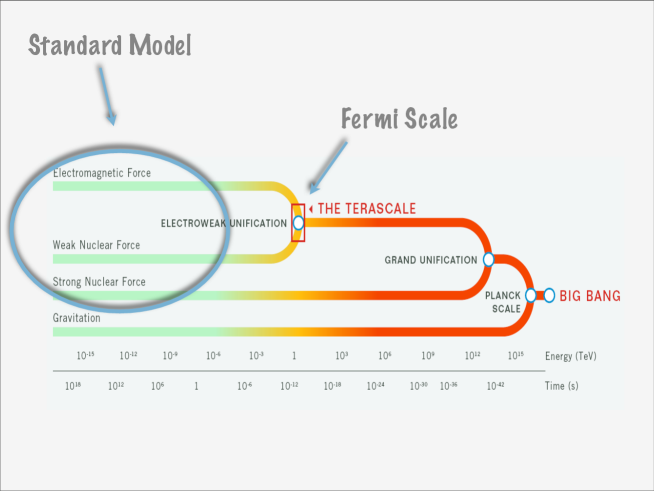
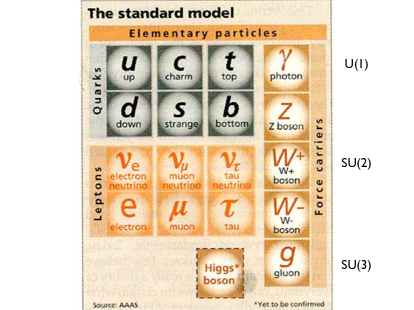
We introduce the topic of dynamical breaking of the electroweak symmetry and its link to unparticle physics and cosmology. The knowledge of the phase diagram of strongly coupled theories plays a fundamental role when trying to construct viable extensions of the standard model (SM). Therefore we present the state-of-the-art of the phase diagram for SU, Sp and SO gauge theories with fermionic matter transforming according to arbitrary representations of the underlying gauge group. We summarize several analytic methods used recently to acquire information about these gauge theories. We also provide new results for the phase diagram of the generalized Bars-Yankielowicz and Georgi-Glashow chiral gauge theories. These theories have been used for constructing grand unified models and have been the template for models of extended technicolor interactions. To gain information on the phase diagram of chiral gauge theories we will introduce a novel all orders beta function for chiral gauge theories. This permits the first unified study of all non-supersymmetric gauge theories with fermionic matter representation both chiral and non-chiral. To the best of our knowledge the phase diagram of these complex models appears here for the first time. We will introduce recent extensions of the SM featuring minimal conformal gauge theories known as minimal walking models. Finally we will discuss the electroweak phase transition at nonzero temperature for models of dynamical electroweak symmetry breaking.
研究动机与目标
- 通过分析具有费米子物质的强耦合规范理论,扩展对标准模型之外动力电弱对称性自发破缺的理解。
- 通过识别在TeV尺度以下产生轻量复合希格斯玻色子的理论,解决构建可行复合希格斯模型的挑战。
- 首次使用一种全新的逐阶beta函数,对非超对称手征与非手征规范理论进行统一研究。
- 探索行走顶夸克色理论中的电弱相变,并评估其宇宙学与现象学可行性。
- 建立与电弱精确测量数据及LHC约束相容的最小共形模型——特别是最小行走顶夸克色理论。
提出的方法
- 为手征规范理论提出一种猜想性的逐阶beta函数,使能够系统研究其相结构。
- 应用解析方法,包括雨衣近似下的施温格-戴逊方程及热场自由度计数。
- 利用大N标度和't Hooft极限,将QCD类谱系外推至具有更高色数和味数的顶夸克色理论。
- 为最小行走顶夸克色理论构建有效拉格朗日量,并通过轴矢量谱函数将其与温伯格求和规则及S参数关联。
- 利用几何标度与异常约束,将复合态(如技术矢量介子与标量)映射到物理可观测量。
- 使用热场论技术与共形窗口分析,评估行走顶夸克色理论中的电弱相变。
实验结果
研究问题
- RQ1非超对称SU(N)、Sp(2N)和SO(N)规范理论在费米子处于任意表示时的相图是什么?
- RQ2在不违反电弱精确约束的前提下,能否在行走顶夸克色理论模型中实现轻量复合希格斯玻色子?
- RQ3手征规范理论的逐阶beta函数如何实现对共形相与破缺相的统一描述?
- RQ4最小行走顶夸克色理论模型的宇宙学与对撞机信号特征是什么?
- RQ5高维费米子表示(如二重对称/反对称表示)如何影响复合希格斯与技术矢量共振态之间的质量谱系?
主要发现
- 本文首次提出了非超对称手征规范理论的统一相图,包括广义Bars-Yankielowicz与Georgi-Glashow模型。
- 对于具有二重反对称费米子的SU(N)与Sp(2N)规范理论,最轻的标量态(被识别为复合希格斯)在所有N_TC ≥ 3时均轻于其关联的技术矢量介子。
- 在大N_TC极限下,复合希格斯质量满足M_H ~ v_weak / F_π × √(3√2 / (N_D N_TC (N_TC - 1))),表明在大N_TC时希格斯玻色子质量较轻。
- 在共形固定点附近,标量质量与π介子衰变常数之比保持有限,表明在行走顶夸克色理论中可能产生轻量复合希格斯玻色子。
- 最小行走顶夸克色理论(MWT)模型被证明与温伯格求和规则及S参数相容,且对新轻子与规范对称性扩展施加了约束。
- 在二重对称表示中,矢量与标量共振态的谱系随N_TC增加而比反对称情况更快趋向轻质量,表明在大N极限下呈现类似无希格斯的行为。
更好的研究,从现在开始
从论文设计到论文写作,大幅缩短您的研究时间。
无需绑定信用卡
本解读由 AI 生成,并经人工编辑审核。