
[论文解读] Construction of perfect tensors using biunimodular vectors
本文提出了一种新颖的解析与数值构造方法,用于在局部维度六中构建完美张量与对偶酉门,具体为 AME(4,6) 态,其核心是双模向量(biunimodular vectors),即二维模为1的数组,其离散傅里叶变换亦为模1。该方法可将完美张量实现为受控酉电路,从而解决了长期以来在基于码或图态构造之外的 AME(4,6) 存在性问题。
Dual unitary gates are highly non-local two-qudit unitary gates that have been studied extensively in quantum many-body physics and quantum information in the recent past. A special class of dual unitary gates consists of rank-four perfect tensors that are equivalent to highly entangled multipartite pure states called absolutely maximally entangled (AME) states. In this work, numerical and analytical constructions of dual unitary gates and perfect tensors that are diagonal in a special maximally entangled basis are presented. The main ingredient in our construction is a phase-valued (unimodular) two-dimensional array whose discrete Fourier transform is also unimodular. We obtain perfect tensors for several local Hilbert space dimensions, particularly, in dimension six. A perfect tensor in local dimension six is equivalent to an AME state of four qudits, denoted as AME(4,6). Such a state cannot be constructed from existing constructions of AME states based on error-correcting codes and graph states. An explicit construction of AME(4,6) states is provided in this work using two-qudit controlled and single-qudit gates making it feasible to generate such states experimentally.
研究动机与目标
- 为解决 AME(4,6) 态的存在性这一长期开放问题,该问题在基于纠错码、组合设计与图态的先前构造中均未能解决。
- 开发一种新方法,用于构造在最大纠缠基下对角化的完美张量与对偶酉门,尤其针对局部维度 d=6。
- 利用双模向量与受控酉操作,提供维度六中完美张量的显式、电路友好的构造方法。
- 探索偶数维度中双模向量的结构,特别是当可分解解法失效的 d=6 维度。
- 建立双模向量与 36 阶 2-酉复 Hadamard 矩阵之间的联系,实现此前未达成的构造。
提出的方法
- 以双模向量——即二维模为1的数组,其离散傅里叶变换亦为模1——为核心构造元素,用于构建完美张量。
- 将对偶酉门构造为在 Weyl-Heisenberg 最大纠缠基下对角化的酉算符,其参数由双模向量 Λ 表示。
- 采用包含傅里叶门 F₆、广义 CNOT(受控置换)门 P 与对角酉门 D(Λ) 的电路分解,得到形式 𝒰(Λ) = P(F₆⊗I)D(Λ)(F₆†⊗I)Pᵀ。
- 引入对称变体 𝒰′(Λ) = P(F₆⊗I)D(Λ)(F₆⊗I)P,以简化量子电路实现,尽管其在最大纠缠基下失去对角化性质。
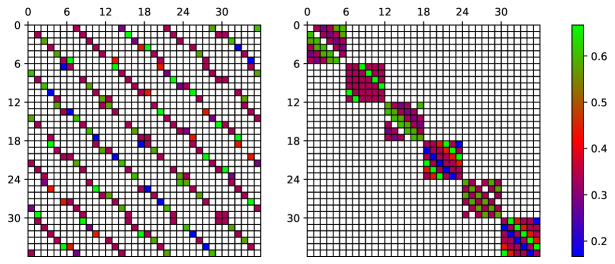
- 通过共轭构造 36 阶 2-酉复 Hadamard 矩阵:𝒰_CHM(Λ) = (F₆⊗I)𝒰(Λ)(F₆†⊗I),实现 2-酉性,而此前构造方法未能达成此目标。
- 结合数值与解析技术,验证在 d=6 中不存在可分解的双模向量能生成完美张量,从而确认该解的非平凡性。
实验结果
研究问题
- RQ1当基于码与组合的方法失效时,能否利用双模向量在局部维度六中构造出等价于 AME(4,6) 态的完美张量?
- RQ2双模向量在生成在最大纠缠基下对角化的对偶酉门中起何种作用?
- RQ3为何在偶数维度(如 d=6)中,可分解的双模向量无法生成完美张量,尽管其在奇数维度中可行?
- RQ4能否显式构造 36 阶 2-酉复 Hadamard 矩阵?其是否源于双模向量?
- RQ5双模数组与阿贝尔群中差集之间是否存在结构对应关系,从而推广已知的二元序列结果?
主要发现
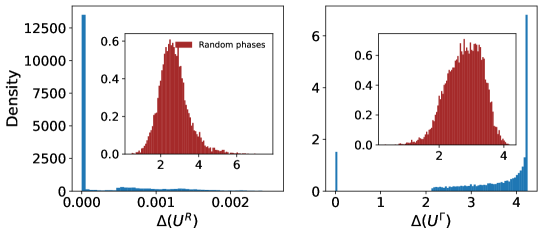
- 本文首次提供了维度六中完美张量的显式构造,解决了此前未解决的 AME(4,6) 态存在性问题。
- 对长度为 6 的全部 48 个双模向量进行了数值检查,其 48² = 2,304 种可分解组合均未产生完美张量,确认了 d=6 中解的非平凡性。
- 所构造的完美张量可通过受控酉门实现量子电路表示,形式为 𝒰′(Λ) = P(F₆⊗I)D(Λ)(F₆⊗I)P,支持实验实现。
- 通过与傅里叶门共轭,该构造实现了 36 阶 2-酉复 Hadamard 矩阵,此结果此前方法无法达成。
- 在奇数维度(如 d=3 与 d=5)中,可分解双模向量可生成完美张量,但在偶数维度中失效,凸显了结构上的本质差异。
- 该方法通过双酉复合建立了统一框架,表明完美张量可由一系列双酉操作(包括受控酉门与傅里叶门)构建。
更好的研究,从现在开始
从阅读论文到最终审阅,大幅缩短您的研究时间。
无需绑定信用卡
本解读由 AI 生成,并经人工编辑审核。