
[论文解读] Cosmic muon flux attenuation methods for superconducting qubit experiments
本文提出了两种实用方法以减少超导量子比特实验中的宇宙μ子通量:将芯片朝向地平线以实现μ子计数1.6倍的降低,以及利用浅层地下环境(例如100米深度)实现最高达35倍的衰减。作者通过自制μ子探测器验证了这两种方法,表明通过环境屏蔽和器件布局优化,可显著缓解μ子诱导的噪声——这对量子比特稳定性至关重要。
We propose and demonstrate two practical mitigation methods to attenuate the cosmic muon flux, compatible with experiments involving superconducting qubits: shallow underground sites and specific device orientation. Using a specifically-built cosmic muon detector, we identify underground sites, widely present in urban environments, where significant attenuation of cosmic muon flux, up to a factor 35 for 100-meter depths, can be attained. Furthermore, we employ two germanium wafers in an above-ground laboratory, each equipped with a particle sensor, to show how the orientation of the chip with respect to the sky affects the amount and type of energy deposited on the substrate by ionizing radiation. We observe that the horizontal detector sees more counts at lower energy, while the vertical one is impacted by more particles at higher energy. The methods here described proposed ways to directly understand and reduce the effects of cosmic rays on qubits by attenuating the source of this type of decoherence, complementing existing on-chip mitigation strategies. We expect that both on-chip and off-chip methods combined will become ubiquitous in quantum technologies based on superconducting qubit circuits.
研究动机与目标
- 为解决宇宙μ子引起的超导量子比特退相干问题,尽管目前尚非主要噪声源,但此问题日益受到关注。
- 识别并验证可在芯片外部实施的实用缓解策略,直接在μ子抵达量子比特器件前减少其通量。
- 证明通过环境屏蔽与器件取向可显著降低μ子通量,而无需依赖深层地下设施。
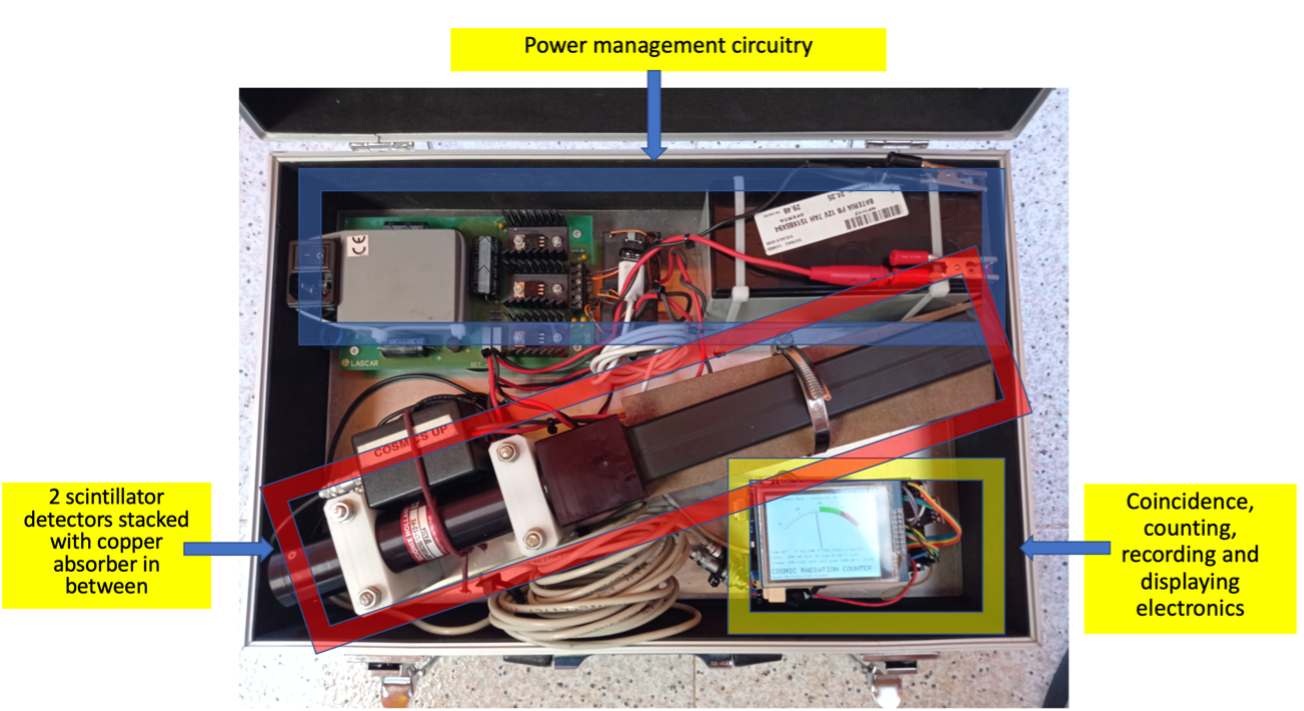
- 提供一种便携式、可重复使用的μ子探测系统,供其他研究团队复制使用。
- 将μ子通量衰减定位为未来容错量子计算中与芯片级噪声抑制相辅相成的关键策略。
提出的方法
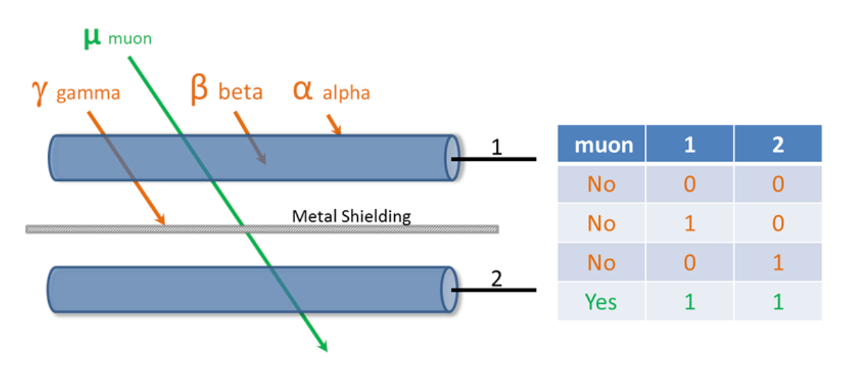
- 设计并构建了一套便携式双闪烁体符合μ子探测器,用于在真实环境中测量宇宙μ子通量。
- 利用该探测器测量了地表、多种浅层地下环境(如地铁隧道、同步辐射装置地下层)以及不同芯片朝向相对于天顶的μ子计数。
- 应用角度依赖性建模,量化μ子通量随芯片取向的变化,利用μ子在倾斜路径中经大气吸收的特性。
- 测量了μ子通量随岩层覆盖深度的变化,确认其衰减趋势符合已知的μ子吸收物理规律。
- 扣除因探测器死时间引起的虚假符合计数,确保通量测量的准确性。
- 以ALBA同步辐射装置地下层作为代表性浅层地下实验室站点,用于在中等屏蔽条件下评估性能表现。
实验结果
研究问题
- RQ1将芯片朝向地平线是否可降低超导量子比特实验中宇宙μ子通量的暴露?
- RQ2与地表暴露相比,浅层地下环境(10–100米深度)可将宇宙μ子通量衰减多少?
- RQ3通过结合芯片取向与浅层地下屏蔽,可实现多大程度的μ子通量定量降低?
- RQ4浅层地下环境中的环境放射性(如来自重矿物)对μ子探测有何影响,是否需要额外屏蔽?
- RQ5便携式、低成本的μ子探测器是否可被可靠地用于在多样化实验环境中表征μ子通量?
主要发现
- 与直接朝向天空的芯片相比,朝向地平线的芯片可使μ子通量降低1.6倍,这是由于路径变长及大气吸收增强所致。
- 在100米深度,μ子通量相比地表测量值衰减达35倍,Vallvidrera隧道站点实现36倍衰减。
- 在6米深度的浅层站点,μ子通量降低2倍,表明即使在极浅深度也具有显著防护效果。
- ALBA同步辐射装置地下层站点记录到1.1 CPM,相对于地表(40 CPM)实现36倍屏蔽因子,证实屏蔽效果良好。
- TMB地铁站点记录到1.4 CPM(29倍屏蔽),但略高于地表,系因局部重矿物放射性所致,需额外使用铅等材料屏蔽。
- 在100米深度,μ子事件率降至约3×10⁻⁴ s⁻¹ cm⁻²,每平方厘米器件面积仅对应0.3 mHz,相比地表的9 mHz,显著降低了电离辐射影响。
更好的研究,从现在开始
从阅读论文到最终审阅,大幅缩短您的研究时间。
无需绑定信用卡
本解读由 AI 生成,并经人工编辑审核。