
QUICK REVIEW
[论文解读] Dancing under the stars: video denoising in starlight
Kristina Monakhova, Stephan R. Richter|arXiv (Cornell University)|Apr 8, 2022
Image and Signal Denoising Methods被引用 4
一句话总结
本论文提出了一种在星光条件下(低于0.001 lux)实现首次逼真视频去噪的方法,采用经过GAN调优的基于物理的噪声模型来模拟真实的低光照噪声。通过将噪声生成器合成的噪声视频与真实高增益静止图像相结合,作者训练了一种视频去噪网络,在亚毫拉克斯条件下实现了卓越的时间一致性与细节保留,从而实现了在银河系下对运动物体的清晰视频捕捉。
ABSTRACT
Imaging in low light is extremely challenging due to low photon counts. Using sensitive CMOS cameras, it is currently possible to take videos at night under moonlight (0.05-0.3 lux illumination). In this paper, we demonstrate photorealistic video under starlight (no moon present, $
研究动机与目标
- 在极端低光照条件下(特别是低于0.001 lux的星光水平)实现逼真视频去噪。
- 解决高增益低光照成像中非高斯、传感器特异性噪声的问题,该问题会破坏传统去噪方法的性能。
- 开发一种数据高效的训练流程,通过利用静止图像序列和合成视频,避免对运动对齐的干净/噪声视频对的需求。
- 展示在无月夜条件下拍摄并去噪5–10 fps动态场景视频的可行性。
提出的方法
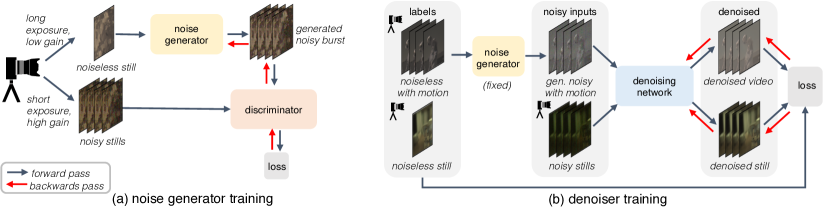
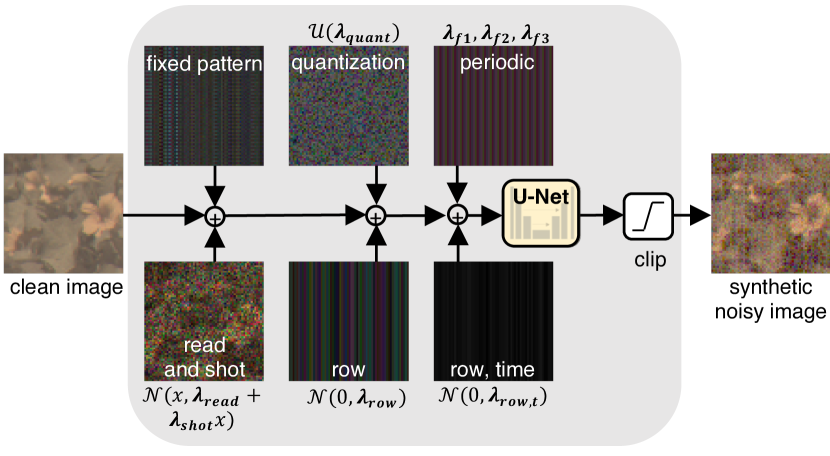
- 使用有限数量的长曝光与短曝光静止图像对,训练一种基于物理启发的噪声生成器,以在相机最高增益设置下合成逼真的噪声。
- 通过对抗生成网络(GAN)框架训练噪声生成器,其中判别器用于区分真实噪声与合成噪声,确保高保真度的噪声建模。
- 利用混合数据集训练视频去噪网络,该数据集结合了通过噪声模型生成的合成干净/噪声视频片段,以及来自同一台相机的真实噪声静止图像序列。
- 去噪网络基于改进的FastDVDnet架构,经微调以处理目标传感器特有的非高斯噪声特性。
- 训练过程将噪声建模与去噪分离,使噪声生成器可固定,而去噪网络则在合成与真实数据的组合上进行优化。
- 通过利用视频专用的架构组件和损失函数,提升时间一致性,最小化帧间闪烁。
实验结果
研究问题
- RQ1能否在极低光照条件(低于0.001 lux)的星光环境下实现逼真视频去噪?
- RQ2当传统噪声假设(如高斯分布)失效时,如何为高增益、低光照成像学习一个逼真的噪声模型?
- RQ3在亚毫拉克斯照度条件下,一种在合成数据和真实静止图像上训练的视频去噪网络,能在多大程度上泛化到真实世界的动态视频序列?
- RQ4与SOTA视频去噪方法(如V-BM4D和FastDVDnet)相比,所提方法在性能和时间一致性方面表现如何?
主要发现
- 作者成功在无月星光下(0.6–0.7毫拉克斯,即0.0006–0.0007 lux)捕捉到5–10 fps的视频,首次实现了在该光照水平下对运动物体的视频记录。
- 与V-BM4D和预训练的FastDVDnet相比,所提方法在图像质量方面表现更优,且闪烁现象显著减少,后者表现出严重的时序伪影和条纹噪声。
- 在10名参与者、共300次比较的盲测A/B测试中,所提方法在95%的情况下被评价为图像质量优于其他方法。
- 该去噪网络在保留细粒度细节(如恒星)和动态运动方面,优于经典方法(V-BM4D)和基于深度学习的方法(FastDVDnet、L2SID)。
- Noise2Self因结构化噪声模式而失败,凸显了当噪声高度相关且非独立同分布时,自监督方法的局限性。
- 该方法对快速移动物体(如流星)具有鲁棒性,在去噪输出中未出现细节丢失或严重伪影。
更好的研究,从现在开始
从阅读论文到最终审阅,大幅缩短您的研究时间。
无需绑定信用卡
本解读由 AI 生成,并经人工编辑审核。