
[论文解读] DAS-N2N: Machine learning Distributed Acoustic Sensing (DAS) signal denoising without clean data
DAS-N2N 是一种弱监督深度学习方法,用于去噪分布式声学传感(DAS)信号,且无需使用干净的训练数据。通过利用单根电缆中的两段拼接光纤提供成对的噪声输入,该模型能够抑制非相干噪声,同时保留真实信号,实现近乎实时的去噪处理(30秒985通道数据的去噪时间少于1秒),显著提升了南极野外数据中微地震事件的信噪比。
This article presents a weakly supervised machine learning method, which we call DAS-N2N, for suppressing strong random noise in distributed acoustic sensing (DAS) recordings. DAS-N2N requires no manually produced labels (i.e., pre-determined examples of clean event signals or sections of noise) for training and aims to map random noise processes to a chosen summary statistic, such as the distribution mean, median or mode, whilst retaining the true underlying signal. This is achieved by splicing (joining together) two fibres hosted within a single optical cable, recording two noisy copies of the same underlying signal corrupted by different independent realizations of random observational noise. A deep learning model can then be trained using only these two noisy copies of the data to produce a near fully-denoised copy. Once the model is trained, only noisy data from a single fibre is required. Using a dataset from a DAS array deployed on the surface of the Rutford Ice Stream in Antarctica, we demonstrate that DAS-N2N greatly suppresses incoherent noise and enhances the signal-to-noise ratios (SNR) of natural microseismic icequake events. We further show that this approach is inherently more efficient and effective than standard stop/pass band and white noise (e.g., Wiener) filtering routines, as well as a comparable self-supervised learning method based on masking individual DAS channels. Our preferred model for this task is lightweight, processing 30 seconds of data recorded at a sampling frequency of 1000 Hz over 985 channels (approx. 1 km of fiber) in $<$1 s. Due to the high noise levels in DAS recordings, efficient data-driven denoising methods, such as DAS-N2N, will prove essential to time-critical DAS earthquake detection, particularly in the case of microseismic monitoring.
研究动机与目标
- 解决 DAS 录制中高随机噪声的问题,该问题在偏远或恶劣环境中会阻碍对微弱微地震信号的检测。
- 开发一种无需手动整理的干净信号样本或标签的去噪方法,以实现可扩展部署。
- 利用现有光缆中双光纤配置的固有冗余性,仅使用来自两个独立噪声实现的噪声数据进行模型训练。
- 实现实时、高效且轻量化的去噪处理,适用于地震监测和条约核查等时间关键型应用中的边缘部署。
- 在南极罗斯福冰流的真实 DAS 数据上展示该方法的有效性,该数据中环境噪声严重降低了信噪比。
提出的方法
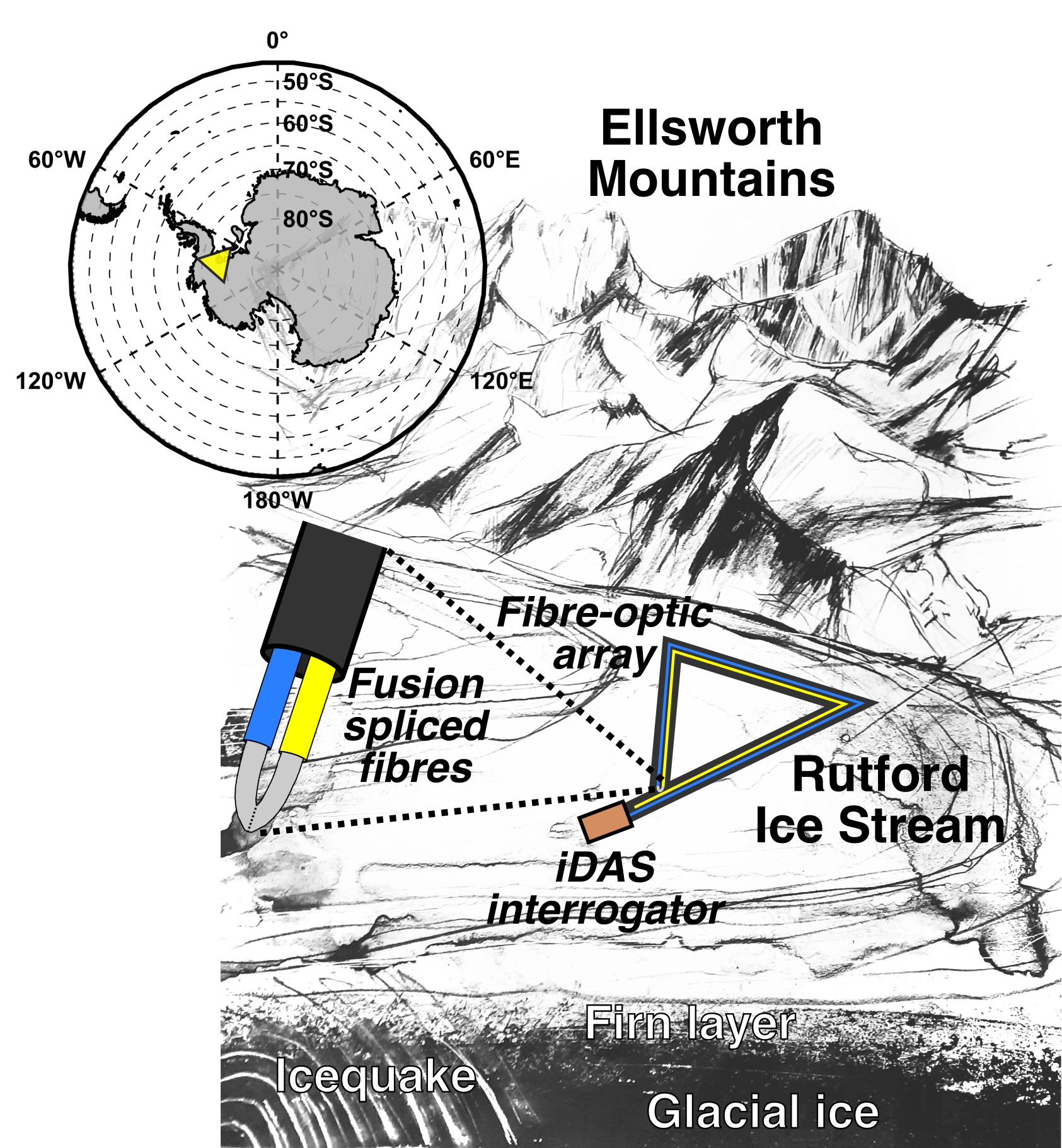
- 利用一根带有两段拼接光纤的单根光缆,记录同一原始地震信号的两个独立、噪声污染的副本,每个副本均受不同实现的随机噪声影响。
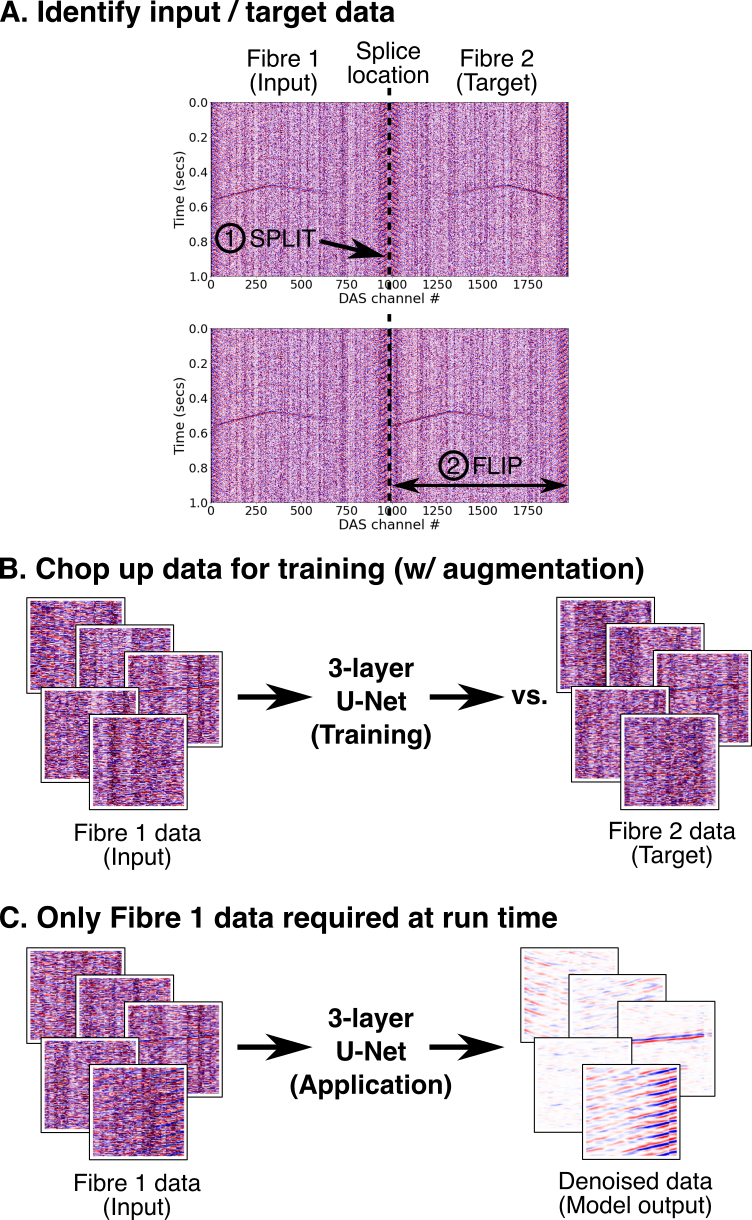
- 使用两个噪声光纤记录作为输入和目标,对深度神经网络进行训练,实现端到端学习,无需任何干净信号标签。
- 采用一对一映射策略,使模型学习将一个噪声输入转换为去噪版本,通过最小化与另一个噪声副本的差异,有效学习噪声分布。
- 采用轻量化、浅层网络架构(例如三层),以优化速度和低计算成本,实现在标准硬件上的实时推理。
- 以滑动窗口方式处理 1 公里光纤段上 985 个通道、采样率为 1000 Hz 的数据,推理时间少于 1 秒。
- 在训练后将训练好的模型部署于单光纤数据上,从而在实际应用中无需双光纤记录。
实验结果
研究问题
- RQ1机器学习模型是否能在无需任何手动标注的干净数据或信号样本的情况下,有效去噪 DAS 信号?
- RQ2与传统滤波技术(如带通滤波、维纳滤波)相比,DAS-N2N 在抑制信号带宽内的非相干噪声方面表现如何?
- RQ3在高噪声环境中,DAS-N2N 是否能在速度、准确性和噪声抑制方面优于基于通道掩码的自监督学习方法?
- RQ4轻量级 DAS-N2N 模型在多大程度上可实现实时处理,以适用于地震监测和早期预警系统等时间关键型应用?
- RQ5DAS-N2N 方法是否具有泛化能力,可通过使用拼接配置的回溯性模型微调,适用于现有未拼接光纤的 DAS 部署?
主要发现
- DAS-N2N 有效抑制了罗斯福冰流 DAS 录制中的非相干噪声,显著提升了自然微地震冰震事件的信噪比。
- 该模型在单张 GPU 上处理 30 秒、985 通道、1000 Hz 的 DAS 数据时间少于 1 秒,适用于实时或近实时应用。
- 由于省去了掩码和重建过程,DAS-N2N 的速度比基于掩码的同类自监督学习方法快一个多数量级。
- 与基于频率的滤波器不同,DAS-N2N 能有效抑制与信号感兴趣的频带重叠的噪声,克服了传统滤波的局限性。
- 通过输入与目标之间的一对一映射,该方法保留了真实信号,避免了在噪声水平增加时自监督掩码方法固有的插值挑战。
- 训练完成的模型可在单光纤数据上部署,实际应用中无需额外的数据存储或处理开销。
更好的研究,从现在开始
从阅读论文到最终审阅,大幅缩短您的研究时间。
无需绑定信用卡
本解读由 AI 生成,并经人工编辑审核。