
[论文解读] Data availability and requirements relevant for the Ariel space mission and other exoplanet atmosphere applications
本文建立了一个集中化、开放获取的GitHub平台——Ariel-data,以简化系外行星大气研究人员与数据提供者之间的数据共享。该平台概述了Ariel空间任务及更广泛的系外行星研究社区在光谱学数据方面的需求,强调通过社区驱动的数据请求和可见性实现跨任务应用和长期数据可持续性。
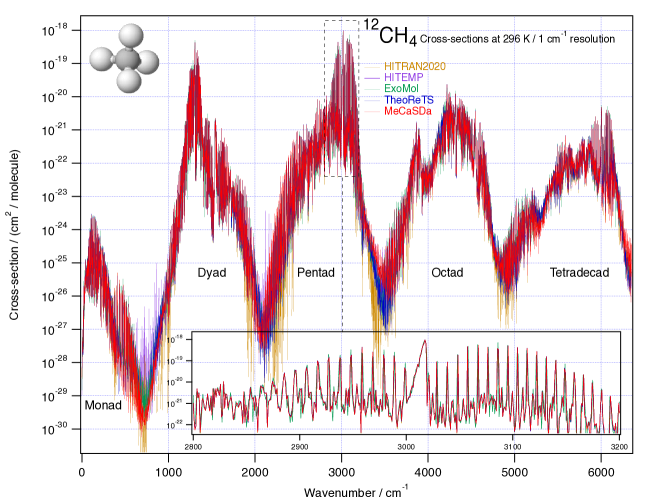
The goal of this white paper is to provide a snapshot of the data availability and data needs primarily for the Ariel space mission, but also for related atmospheric studies of exoplanets and brown dwarfs. It covers the following data-related topics: molecular and atomic line lists, line profiles, computed cross-sections and opacities, collision-induced absorption and other continuum data, optical properties of aerosols and surfaces, atmospheric chemistry, UV photodissociation and photoabsorption cross-sections, and standards in the description and format of such data. These data aspects are discussed by addressing the following questions for each topic, based on the experience of the "data-provider" and "data-user" communities: (1) what are the types and sources of currently available data, (2) what work is currently in progress, and (3) what are the current and anticipated data needs. We present a GitHub platform for Ariel-related data, with the goal to provide a go-to place for both data-users and data-providers, for the users to make requests for their data needs and for the data-providers to link to their available data. Our aim throughout the paper is to provide practical information on existing sources of data whether in databases, theoretical, or literature sources.
研究动机与目标
- 确定并编目Ariel空间任务大气表征目标所必需的光谱学数据需求。
- 建立一个可持续的、由社区驱动的数据基础设施,连接Ariel联盟以外的数据提供者与用户。
- 通过识别Ariel观测窗口以外光谱区域的数据缺口,支持理论建模和互补观测。
- 通过提供一个可访问、透明的平台,促进模型构建者与数据生产者之间的直接沟通,推动开放科学。
- 确保长期数据可获取性和可用性,以支持未来系外行星大气研究,而不仅限于Ariel特定目标。
提出的方法
- 开发一个公开的GitHub仓库(https://github.com/Ariel-data),作为数据请求和提供者链接的集中枢纽。
- 汇总与系外行星大气相关的多个光谱区域和分子种类的数据需求。
- 整合来自系外行星科学领域实验、理论和观测社区的多样化专家意见。
- 利用GitHub的问题系统,促进数据用户(如模型构建者)与提供者(如光谱学家)之间的实时对话。
- 整合Ariel任务之外的其他任务和仪器的数据需求,包括光谱覆盖范围重叠或互补的项目。
- 与现有的资金支持和机构结构保持一致,以确保平台的长期维护和采用。
实验结果
研究问题
- RQ1Ariel空间任务为准确表征系外行星大气,需要哪些关键光谱学数据?
- RQ2如何系统性地识别并跨全球研究社区沟通系外行星大气研究的数据需求?
- RQ3一个开放、协作的平台在减少数据缺口和提升系外行星科学数据可发现性方面能发挥什么作用?
- RQ4如何将数据需求扩展至Ariel观测窗口之外,以支持理论建模和未来任务?
- RQ5哪些机制能够维持系外行星光谱学领域长期的数据可获取性和社区参与?
主要发现
- Ariel-data GitHub平台已建立为系外行星大气数据需求的中心化、开放获取资源,获得数据提供者和用户的积极参与。
- 本文识别出多个分子种类和光谱区域的关键光谱学数据需求,其中许多超出Ariel的运行窗口。
- 数据需求在更广泛的系外行星社区中共享,表明其对未来的跨任务大气表征工作具有重要相关性。
- 该平台实现了模型构建者与数据生产者之间的直接、透明沟通,加速了数据生成并提高了与研究需求的契合度。
- 欧洲研究委员会(ERC)、美国国家航空航天局(NASA)、法国国家空间研究中心(CNES)、德国研究基金会(DFG)和欧洲空间局(ESA)等主要资金机构的支持,确保了平台的可持续性和可信度。
- 该倡议已促成跨学科的数据请求与合作,涵盖实验、理论和观测系外行星科学领域。
更好的研究,从现在开始
从阅读论文到最终审阅,大幅缩短您的研究时间。
无需绑定信用卡
本解读由 AI 生成,并经人工编辑审核。