
[论文解读] Data Combination: Interferometry and Single-dish Imaging in Radio Astronomy
本文提出并评估了先进的数据融合技术——Feather、SDINT 和 MACF,这些方法将干涉测量与单天线射电数据结合,以恢复缺失的大尺度流量,显著提升了图像保真度。结果表明,这些方法可将纯干涉测量成像中高达90%的流量损失减少至不足10%的误差,最优方法的误差和方差均低于5%,从而实现对具有复杂子结构的空间分辨源的准确物理解释。
Modern interferometers routinely provide radio-astronomical images down to subarcsecond resolution. However, interferometers filter out spatial scales larger than those sampled by the shortest baselines, which affects the measurement of both spatial and spectral features. Complementary single-dish data are vital for recovering the true flux distribution of spatially resolved astronomical sources with such extended emission. In this work, we provide an overview of the prominent available methods to combine single-dish and interferometric observations. We test each of these methods in the framework of the CASA data analysis software package on both synthetic continuum and observed spectral data sets. We develop a set of new assessment tools that are generally applicable to all radio-astronomical cases of data combination. Applying these new assessment diagnostics, we evaluate the methods' performance and demonstrate the significant improvement of the combined results in comparison to purely interferometric reductions. We provide combination and assessment scripts as add-on material. Our results highlight the advantage of using data combination to ensure high-quality science images of spatially resolved objects.
研究动机与目标
- 为解决干涉测量成像中的“短基线问题”,即由于(u,v)平面采样不完整导致大尺度发射被滤除。
- 评估并比较现有的数据融合方法——Feather、SDINT 和 MACF,用于连续谱和谱线成像中干涉测量与单天线数据的融合。
- 开发并验证一套新的评估诊断工具,以量化不同天文场景下数据融合技术的性能表现。
- 证明数据融合对于生成具有高动态范围、物理上准确的空间分辨源图像(尤其具有复杂子结构的源)至关重要。
- 为 CASA 软件生态系统提供开源脚本和工具,以促进这些方法在当前及未来干涉测量研究(如 ALMA、ngVLA、SKA)中的广泛应用。
提出的方法
- 作者在 CASA 数据分析软件包中实现并测试了三种主要数据融合方法——Feather、SDINT 和 MACF,使用合成数据和真实世界的连续谱与谱线数据集。
- 每种方法通过基于灵敏度和(u,v)覆盖重叠程度加权干涉测量(u,v)数据与单天线可见度数据的贡献,同时引入可调参数以调节单天线数据的相对影响。
- 本研究提出了一套新的评估诊断工具,包括幅度差异参数(A-par),用于量化不同空间尺度下流量恢复的准确性与图像保真度。
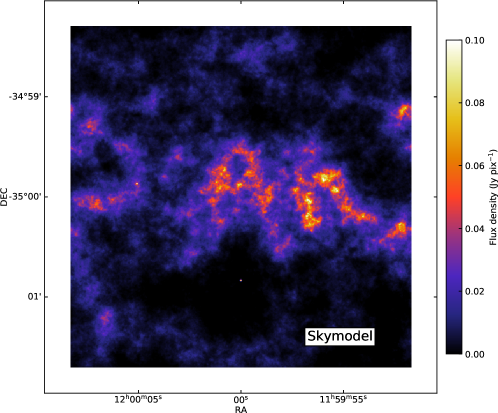
- 通过具有已知真实流量分布的合成数据集评估性能,实现融合图像与真实值的直接比较。
- 评估工具计算诸如平均绝对幅度差异(|A-par|)及其标准差(σ(A-par))等指标,以客观排名方法性能。
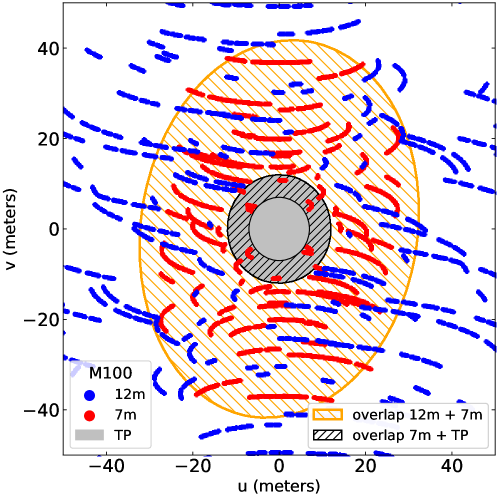
- 该框架在实测数据上进行了验证,包括 ALMA M100 观测数据,以确认其在真实场景中的鲁棒性。
实验结果
研究问题
- RQ1在具有扩展发射的源中,数据融合方法在恢复干涉测量图像中缺失的大尺度流量方面效果如何,尤其在复杂形态下?
- RQ2在流量恢复准确性和图像保真度方面,Feather、SDINT 和 MACF 之间的定量性能差异是什么?
- RQ3新的评估诊断工具(如 A-par)与传统指标相比,在评估数据融合结果时表现如何?
- RQ4数据融合在多大程度上提升了柱密度、谱指数和线轮廓形状等物理测量的准确性?
- RQ5如何根据灵敏度和科学目标,最优地调整干涉测量与单天线数据的相对权重?
主要发现
- 数据融合技术将纯干涉测量成像中高达90%的流量损失(A-par = -0.9)减少至不足10%的误差,最佳方法实现 |A-par| < 0.05 且 σ(A-par) < 0.05。
- Feather、SDINT 和 MACF 方法均显著优于仅使用干涉测量的处理方式,其中 MACF 在多种形态下均表现出最小的流量误差。
- 新的评估诊断工具(如 A-par)为量化不同数据组合下的图像保真度与方法性能提供了一个稳健且可推广的框架。
- 单天线数据提供的零基线信息对于生成具有复杂发射子结构的空间分辨目标的准确、高动态范围图像至关重要。
- 本研究证实,数据融合不仅是有益的,更是实现射电天文图像可靠物理解释的根本性要求,尤其在气体和尘埃柱密度、谱指数和分子谱线轮廓研究中。
- 作者通过 GitHub(https://github.com/teuben/DataComb)发布开源脚本和工具,推动射电天文学界广泛采用并确保结果可复现。
更好的研究,从现在开始
从阅读论文到最终审阅,大幅缩短您的研究时间。
无需绑定信用卡
本解读由 AI 生成,并经人工编辑审核。