
[论文解读] Deep Learning for Inertial Positioning: A Survey
本综述全面回顾了利用低成本MEMS惯性传感器进行惯性定位的深度学习技术,涵盖传感器校准、误差漂移抑制以及多传感器融合。其强调了数据驱动方法在处理误差漂移方面优于传统物理模型方法,并为未来在效率、基准测试以及混合学习-物理模型方面的研究提供了路线图。
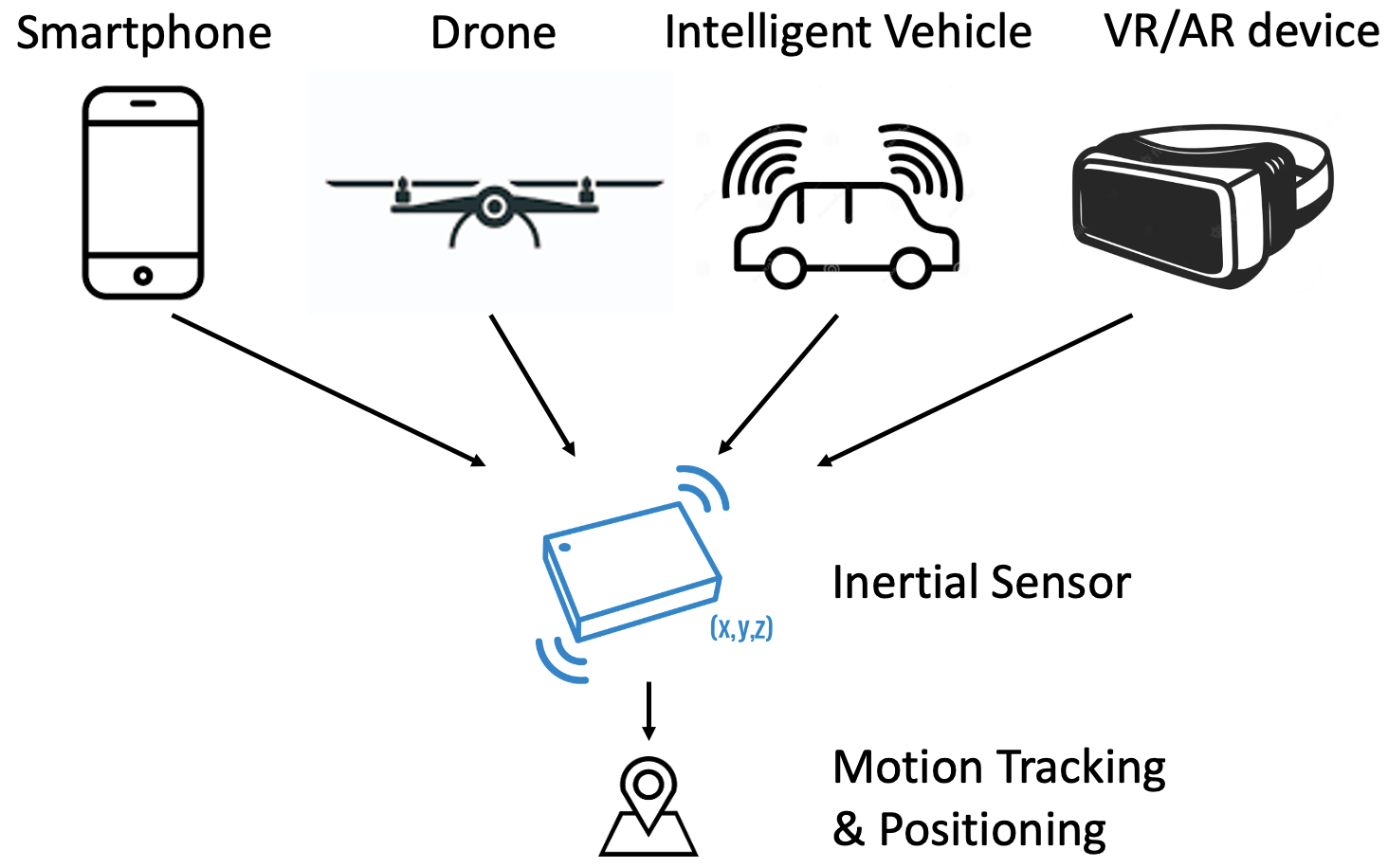
Inertial sensors are widely utilized in smartphones, drones, robots, and IoT devices, playing a crucial role in enabling ubiquitous and reliable localization. Inertial sensor-based positioning is essential in various applications, including personal navigation, location-based security, and human-device interaction. However, low-cost MEMS inertial sensors' measurements are inevitably corrupted by various error sources, leading to unbounded drifts when integrated doubly in traditional inertial navigation algorithms, subjecting inertial positioning to the problem of error drifts. In recent years, with the rapid increase in sensor data and computational power, deep learning techniques have been developed, sparking significant research into addressing the problem of inertial positioning. Relevant literature in this field spans across mobile computing, robotics, and machine learning. In this article, we provide a comprehensive review of deep learning-based inertial positioning and its applications in tracking pedestrians, drones, vehicles, and robots. We connect efforts from different fields and discuss how deep learning can be applied to address issues such as sensor calibration, positioning error drift reduction, and multi-sensor fusion. This article aims to attract readers from various backgrounds, including researchers and practitioners interested in the potential of deep learning-based techniques to solve inertial positioning problems. Our review demonstrates the exciting possibilities that deep learning brings to the table and provides a roadmap for future research in this field.
研究动机与目标
- 解决低成本MEMS惯性导航系统中误差漂移无界这一根本性挑战。
- 回顾基于深度学习的方法,通过从大规模传感器数据中学习,以提高惯性定位的精度。
- 识别当前研究中的空白,包括缺乏标准化基准、模型效率以及在实际部署中的鲁棒性。
- 探索将物理约束与深度学习相结合,以构建更安全、更可靠的惯性定位系统。
- 为数据驱动的惯性导航未来研究提供统一路线图,涵盖新兴的深度学习架构和训练范式。
提出的方法
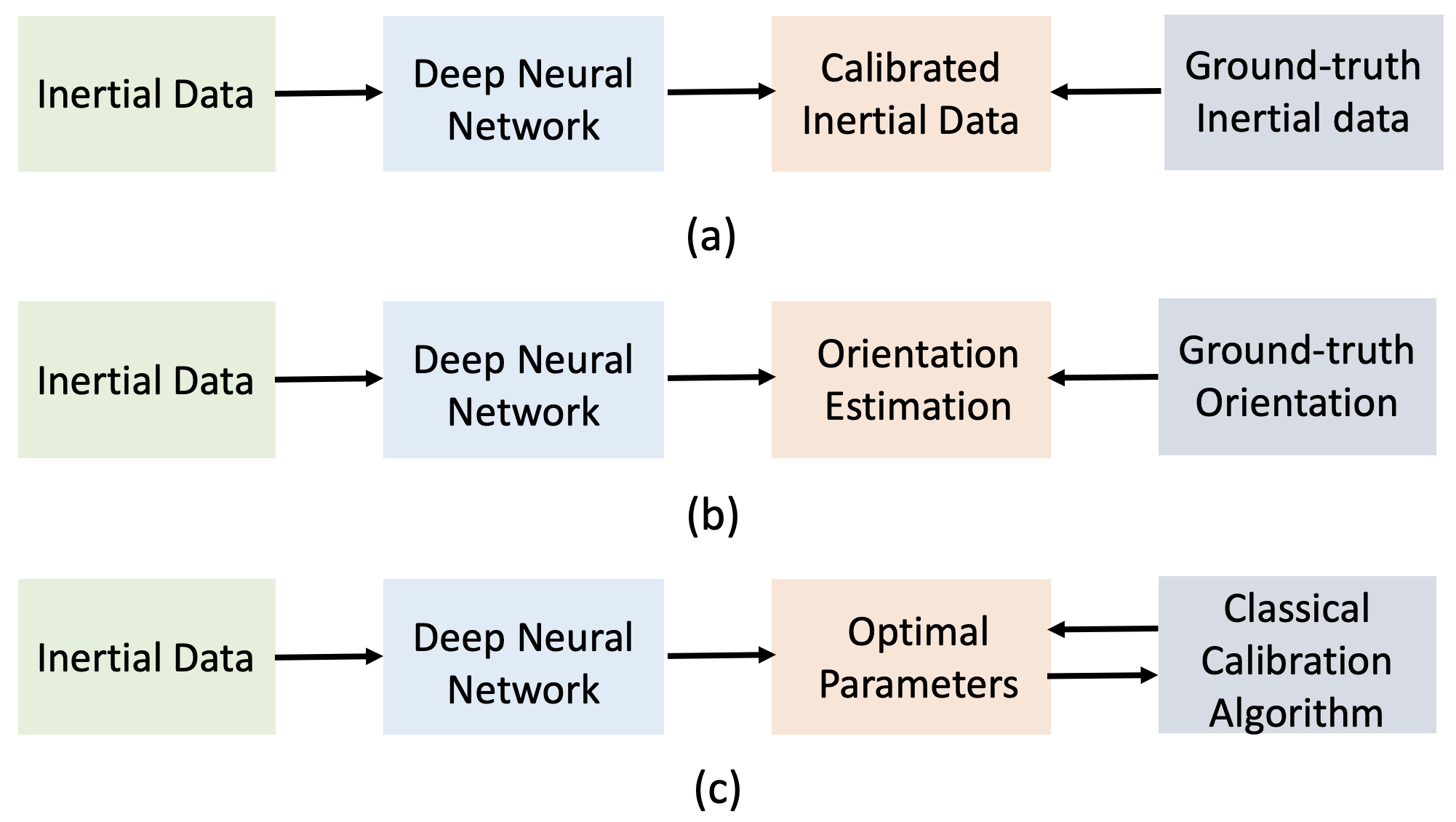
- 系统性地将深度学习在惯性定位中的应用划分为三大主要领域:传感器校准、误差漂移抑制和多传感器融合。
- 回顾用于学习运动模式和传感器噪声特性的神经网络架构,如CNN、RNN和Transformer。
- 分析结合可微分物理导航与端到端深度学习的混合模型,以提升鲁棒性。
- 讨论知识蒸馏等模型压缩技术,以实现在物联网和VR/AR系统等低功耗设备上的部署。
- 研究从跨用户、跨平台和多运动动力学的多样化数据集中学习的数据驱动方法,以提升泛化能力。
- 提出将物理约束整合到深度神经网络中,以增强在安全关键应用中的可靠性与可解释性。
实验结果
研究问题
- RQ1如何利用深度学习有效减少使用低成本MEMS传感器的惯性导航系统中的误差漂移?
- RQ2哪些关键的深度学习架构和训练策略能提升在多样化运动模式和设备上的惯性定位精度?
- RQ3如何使深度学习模型在计算和内存资源受限的平台(如智能手机和无人机)上实现高效且可部署?
- RQ4物理约束在提升数据驱动惯性定位模型的鲁棒性与可解释性方面发挥什么作用?
- RQ5基准测试基于深度学习的惯性定位面临的主要挑战是什么?如何通过标准化数据集加速未来研究?
主要发现
- 与传统卡尔曼滤波和纯死推算相比,基于深度学习的惯性定位方法显著减少了误差漂移,尤其是在结合周期性人体步态模型或ZUPT时效果更明显。
- 将可微分物理与深度学习结合的混合模型在长期跟踪场景中表现出更强的鲁棒性和泛化能力。
- 知识蒸馏等模型压缩技术使大型深度神经网络能够在计算和内存资源有限的边缘设备上成功部署。
- 尽管性能优异,但深度学习模型因缺乏物理约束而易发生突发性故障,凸显了构建混合学习-物理框架的必要性。
- 缺乏标准化基准和多样化、高精度的数据集,限制了当前方法在不同平台和用户之间的公平比较与泛化能力。
- 新兴的深度学习范式,如对比学习、自监督学习和扩散模型,在减少监督需求方面展现出巨大潜力,可显著提升惯性定位性能。
更好的研究,从现在开始
从阅读论文到最终审阅,大幅缩短您的研究时间。
无需绑定信用卡
本解读由 AI 生成,并经人工编辑审核。