
[论文解读] Design optimisation of piezoelectric energy harvesters for bridge infrastructure
本文提出了一种基于等几何分析、模态降阶和粒子群优化的压电能量收集器(PEHs)形状优化框架,用于桥梁结构,旨在最大化真实交通激励振动下的能量输出。该方法识别出基于事件的最优设计,其性能优于传统频率调谐方法,单辆车辆能量输出最高达7.8 µJ,日均连续发电量达2.5 mJ。
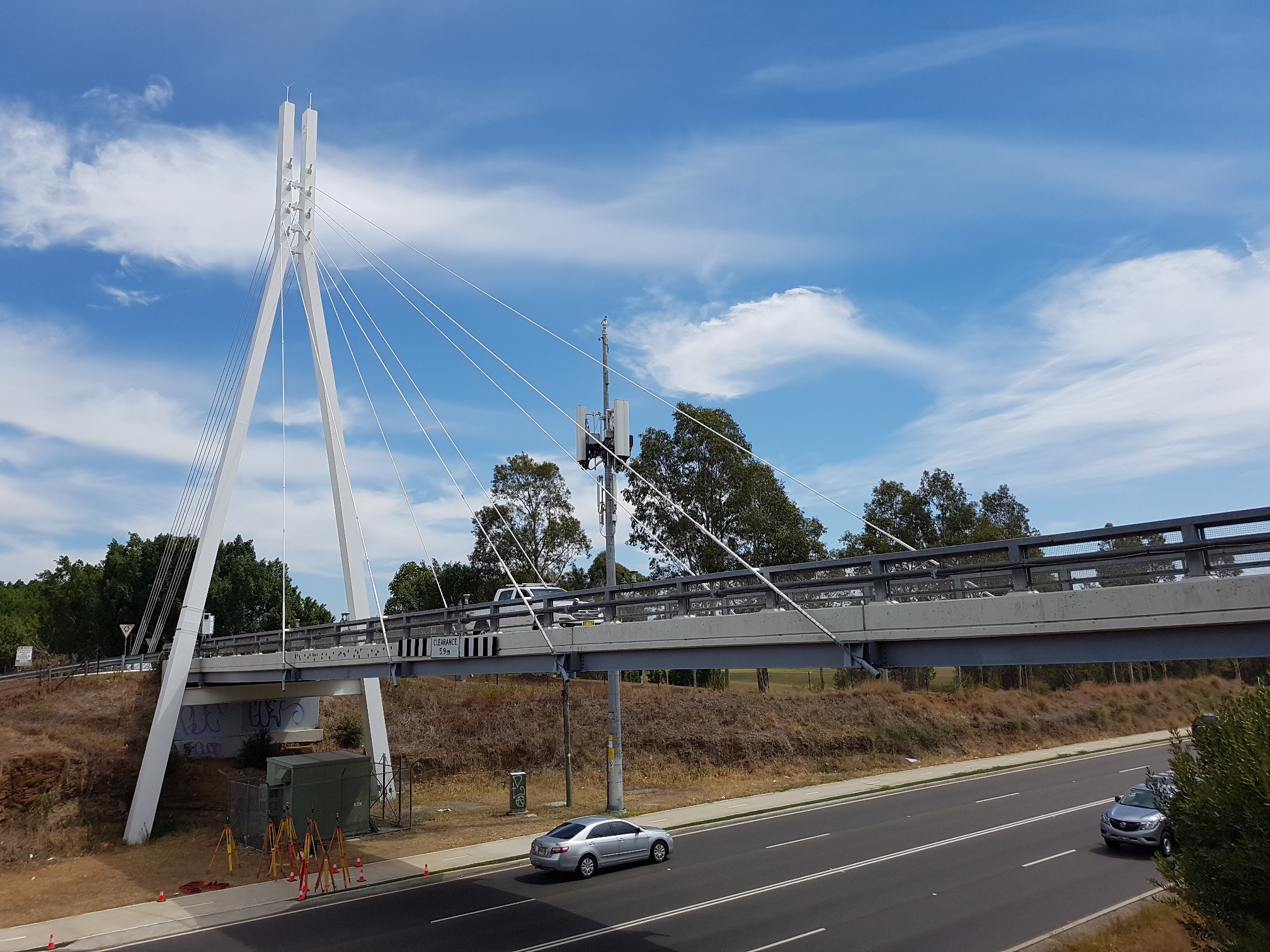
Vibrational energy harvested from the bridge excitation due to the traffic flow or the wind load can be supplied to sensors in a Structural Health Monitoring (SHM) system and help prolong its service life, reduce chemical battery waste and enable its use in remote locations. A common approach to designing a Piezoelectric Energy Harvester (PEH) consists in tuning its fundamental frequency to some target value (e.g., the fundamental frequency of a bridge). However, such approach does not answer the question if the chosen target frequency is optimal, and does not take into account the possibility to have multiple design configurations with the same fundamental frequency. In this work, we approach the problem of a PEH design optimisation in a rigorous way, using a PEH model based on the Kirchhoff-Love plate theory and Isogeometric Analysis (IGA), coupled with the Modal Order Reduction (MOR) approach and Runge-Kutta time integration method. The model is further equipped with the Particle Swarm Optimisation (PSO) algorithm that allows finding geometry which maximises energy output from a given base acceleration signal. A comprehensive study is conducted to infer the impact of a PEH geometry on its energy harvesting performance in a real-world setting by considering field health monitoring data of a large-scale cable-stayed bridge in NSW, Australia. A shape optimisation framework is developed based on acceleration events, i.e., where the level of response exceeds a certain threshold. Designs obtained in the event-based optimisation are then clustered to propose several best candidates for continuous energy generation. This work represents the first study on PEH design optimisation for real operational conditions.
研究动机与目标
- 解决传统PEH设计中仅将共振频率调谐至桥梁固有频率而未验证最优性的局限性。
- 开发一种严格的基于事件的优化框架,以识别在真实运行条件下实现连续能量收集最大化的PEH几何形状。
- 通过集成模态降阶和高效时间积分方法,克服全阶建模中的计算瓶颈。
- 利用澳大利亚新南威尔士州一座大型斜拉桥的真实现场数据验证该框架。
- 通过基于事件优化结果的聚类分析,提出多种高性能PEH设计方案,以支持实际部署。
提出的方法
- 基于Kirchhoff-Love板理论和电弹性体的广义Hamilton原理构建PEH模型。
- 采用等几何分析(IGA)对模型进行离散化,以实现高保真度的结构与机电耦合分析。
- 应用模态降阶(MOR)技术,在保持动态响应精度的同时降低计算成本。
- 采用Runge-Kutta时间积分格式,从任意基底加速度信号计算输出电压。
- 集成粒子群优化(PSO)算法,搜索使能量收集量最大化的PEH几何形状。
- 并行优化负载电阻值,以进一步提升能量输出。
实验结果
研究问题
- RQ1在真实交通条件下,将PEH基频调谐至桥梁固有频率是否能获得最优能量收集配置?
- RQ2当受到多样化的真实交通激励振动事件作用时,PEH几何形状如何影响能量收集性能?
- RQ3基于事件的优化框架在连续发电方面是否优于传统频率匹配设计策略?
- RQ4在不同振动模态和交通强度下,哪些PEH几何形状最有利于持续能量收集?
- RQ5桥上设备安装位置的选择如何影响最优设计与能量输出?
主要发现
- 基于事件的优化框架识别出的PEH设计,单辆车辆能量输出最高达7.8 µJ,1000次交通事件下日均能量输出达2.5 mJ。
- 最优设计集中于约2 Hz,表明所选桥位更有利于第一阶振动模态,但该位置未必是全局最优。
- 该框架通过考虑真实交通激励的完整频谱,实现了高于传统频率调谐设计的能量输出。
- PSO优化的PEH几何形状在多个事件聚类中表现出一致性能,其中第6组聚类记录到最高能量输出(7.76 µJ),第7组聚类发生频率最高(占一周的95%)。
- 与实验数据对比验证了模型的准确性,证实该仿真框架能有效预测真实世界中的能量收集性能。
- 研究发现能量收集性能对器件几何形状和位置高度敏感,不存在在所有振动模态下均最优的单一设计。

更好的研究,从现在开始
从阅读论文到最终审阅,大幅缩短您的研究时间。
无需绑定信用卡
本解读由 AI 生成,并经人工编辑审核。