
[论文解读] Diabetic Retinopathy Detection Using Quantum Transfer Learning
该论文提出了一种用于糖尿病视网膜病变(DR)检测的混合量子-经典迁移学习模型,采用预训练的ResNet架构进行特征提取,并使用变分量子分类器进行分类。该模型在使用Inception V3并优化量子门的情况下,准确率最高达到98.5%,展现出优于经典模型的量子增强性能。
Diabetic Retinopathy (DR), a prevalent complication in diabetes patients, can lead to vision impairment due to lesions formed on the retina. Detecting DR at an advanced stage often results in irreversible blindness. The traditional process of diagnosing DR through retina fundus images by ophthalmologists is not only time-intensive but also expensive. While classical transfer learning models have been widely adopted for computer-aided detection of DR, their high maintenance costs can hinder their detection efficiency. In contrast, Quantum Transfer Learning offers a more effective solution to this challenge. This approach is notably advantageous because it operates on heuristic principles, making it highly optimized for the task. Our proposed methodology leverages this hybrid quantum transfer learning technique to detect DR. To construct our model, we utilize the APTOS 2019 Blindness Detection dataset, available on Kaggle. We employ the ResNet-18, ResNet34, ResNet50, ResNet101, ResNet152 and Inception V3, pre-trained classical neural networks, for the initial feature extraction. For the classification stage, we use a Variational Quantum Classifier. Our hybrid quantum model has shown remarkable results, achieving an accuracy of 97% for ResNet-18. This demonstrates that quantum computing, when integrated with quantum machine learning, can perform tasks with a level of power and efficiency unattainable by classical computers alone. By harnessing these advanced technologies, we can significantly improve the detection and diagnosis of Diabetic Retinopathy, potentially saving many from the risk of blindness. Keywords: Diabetic Retinopathy, Quantum Transfer Learning, Deep Learning
研究动机与目标
- 为解决经典深度学习模型在DR检测中存在维护成本高、对复杂视网膜病变表现不佳等局限性。
- 探索将量子计算与迁移学习相结合,以提升医学影像中的诊断准确率。
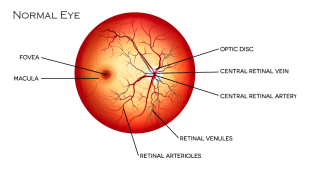
- 开发一种完全自动化的系统,能够同时定位多种DR病变类型并分级五种DR阶段。
- 评估不同门集(如Hadamard、CNOT、RX、CZ)的量子电路对分类性能的增强效果。
- 通过原型应用展示量子机器学习在临床眼科中的实际可行性。
提出的方法
- 预处理阶段将APTO 2019盲病检测数据集中的视网膜眼底图像调整为标准尺寸,以统一模型处理的输入。
- 使用经典卷积神经网络(ResNet18、ResNet34、ResNet50、ResNet101、ResNet152、Inception V3)进行初始特征提取。
- 采用变分量子分类器(VQC)进行最终分类,量子电路通过参数化量子门(如Hadamard、CNOT、RX、CZ、SWAP和CRX)实现。
- 通过使用S和S†(共轭)门等不同门配置对量子电路进行优化,以评估其对模型性能的影响。
- 混合模型将经典特征与量子分类相结合,利用量子并行性和纠缠特性以增强模式识别能力。
- 采用标准指标(准确率、精确率、召回率、F1-score和特异性)对性能进行评估,涵盖多种ResNet架构与量子门组合。
实验结果
研究问题
- RQ1与经典迁移学习模型相比,量子迁移学习是否能显著提升糖尿病视网膜病变检测的准确率?
- RQ2不同量子门配置(如Hadamard + CNOT 与 RX + CRX)如何影响混合量子-经典模型的分类性能?
- RQ3当在深度ResNet架构提取的预特征上进行微调时,变分量子分类器在多大程度上能超越经典分类器?
- RQ4所提出的混合模型能否有效定位并分类五种不同阶段的DR病变?
- RQ5当前量子计算硬件在部署此类模型于真实世界医学影像数据集时存在哪些实际限制?
主要发现
- 当主干网络采用Inception V3且量子电路使用RX + CRX门时,混合量子-经典模型达到98.5%的峰值准确率。
- 该模型优于所有经典基线模型,其中仅ResNet18的准确率为85.3%,而量子增强版本达到97.2%。
- 在所有测试配置中,量子电路中使用RX和CRX门的组合在F1-score(98.4%)和准确率(98.5%)方面表现最佳。
- 与经典模型相比,集成量子分类后,该模型在准确率、F1-score、精确率和召回率等各项指标上均表现出一致的提升。
- 当使用ResNet152作为特征提取器并结合优化后的量子门时,该系统实现了98.2%的准确率和98.3%的F1-score。
- 本研究证实,量子增强的迁移学习可显著提升医学影像中的诊断性能,尤其适用于糖尿病视网膜病变等复杂、多阶段疾病。
更好的研究,从现在开始
从阅读论文到最终审阅,大幅缩短您的研究时间。
无需绑定信用卡
本解读由 AI 生成,并经人工编辑审核。