
[论文解读] Discovery of eight z ~ 6 quasars from Pan-STARRS1
本文利用Pan-STARRS1巡天的多波段选星策略,结合光学与红外数据,从Pan-STARRS1巡天中发现了八个红移z ~ 6的类星体。研究结果揭示,在这些早期宇宙时期,弱线类星体的比例高于以往观测结果,表明在z > 5.7时此类天体可能更为丰富,尽管需要更大样本以确认此趋势。
High-redshift quasars are currently the only probes of the growth of supermassive black holes and potential tracers of structure evolution at early cosmic time. Here we present our candidate selection criteria from the Panoramic Survey Telescope & Rapid Response System 1 and follow-up strategy to discover quasars in the redshift range 5.75.7 by more than 10%. We additionally recovered 18 previously known quasars. The eight quasars presented here span a large range of luminosities (-27.3 < M_{1450} < -25.4; 19.6 < z_ps1 < 21.2) and are remarkably heterogeneous in their spectral features: half of them show bright emission lines whereas the other half show a weak or no Ly$α$ emission line (25% with rest-frame equivalent width of the Ly$α$ + Nv line lower than 15Å). We find a larger fraction of weak-line emission quasars than in lower redshift studies. This may imply that the weak-line quasar population at the highest redshifts could be more abundant than previously thought. However, larger samples of quasars are needed to increase the statistical significance of this finding.
研究动机与目标
- 利用Pan-STARRS1巡天识别红移z ~ 6的高红移类星体,为早期超大质量黑洞与星系形成提供关键窗口。
- 改进对宇宙再电离期间超大质量黑洞增长及电离介质状态的约束。
- 研究z > 5.7时类星体的光谱多样性,特别是弱或缺失Lyα发射线的普遍性。
- 将已知z > 5.7类星体的样本数量增加超过10%,提升宇宙学研究的统计能力。
提出的方法
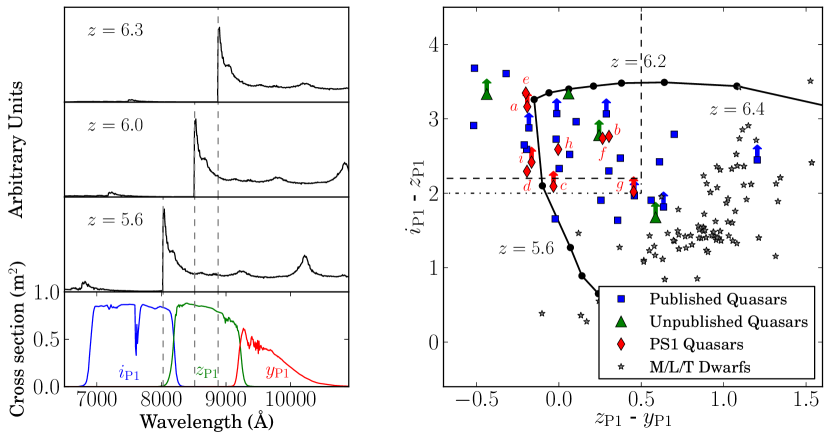
- 基于Pan-STARRS1的3π巡天在gP1、rP1、iP1、zP1和yP1滤波器下的光学颜色与光度红移,应用候选体筛选策略。
- 利用大型地面望远镜进行后续光谱观测,以确认类星体红移并测量发射线特性。
- 结合WISE全天巡天数据,识别红外对应体并提高源的可靠性。
- 利用光度红移估计与颜色-颜色切割,从恒星与星系污染源中分离出高红移候选体。
- 应用信噪比阈值(W1波段S/N > 5.0)以选择可靠的WISE探测结果用于交叉识别。
- 根据Lyα + Nv发射线的静止系等效宽度对类星体进行分类,以评估光谱多样性。
实验结果
研究问题
- RQ1在z ~ 6时,类星体的光度分布与光谱特征如何,特别是表现出弱或无Lyα发射的类星体比例是多少?
- RQ2z ~ 6时弱线类星体的群体与低红移类星体相比有何差异,这对类星体演化意味着什么?
- RQ3Pan-STARRS1巡天能否高效发现高红移类星体,其产出效率与以往光学巡天相比如何?
- RQ4类星体在探测再电离时期及z ~ 6时电离介质状态方面发挥何种作用?
- RQ5在z ~ 6时,弱线类星体与强线类星体在宿主星系或黑洞质量属性上是否存在系统性差异?
主要发现
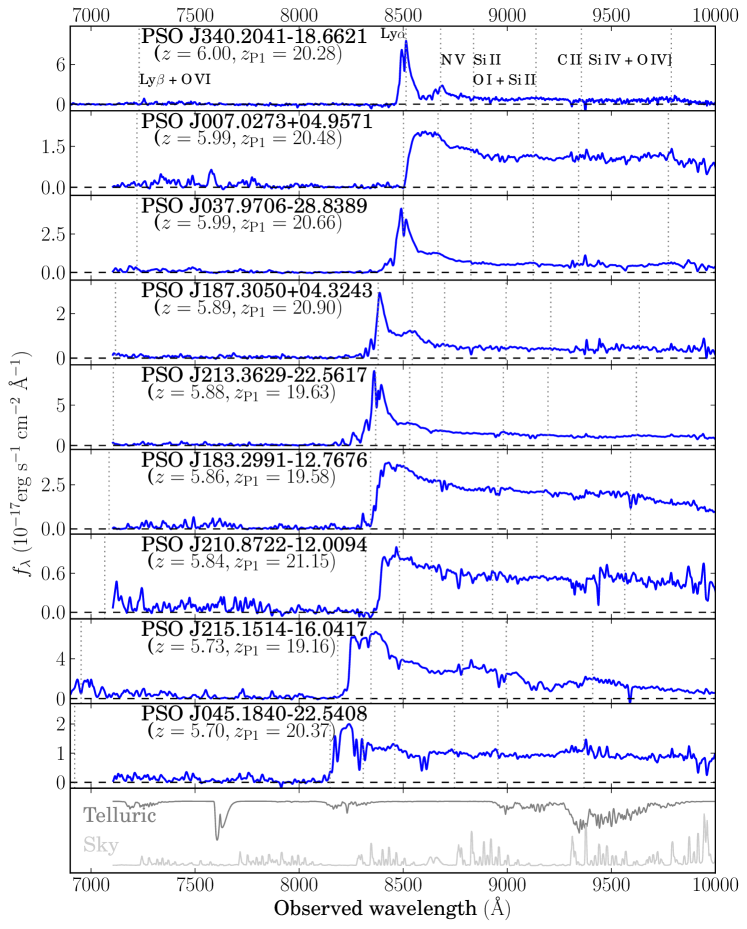
- 本研究发现了八个红移范围为5.7 ≤ z ≤ 6.0的新类星体,使已知z > 5.7类星体数量增加超过10%。
- 新类星体的光度范围广泛,从M1450 = -27.3到M1450 = -25.4,表明其吸积状态多样。
- 一半类星体表现出明亮的发射线,另一半则呈现弱或无Lyα发射,其中25%的类星体在Lyα + Nv的静止系等效宽度低于15 Å。
- 在z ~ 6时观测到的弱线类星体比例高于低红移研究结果,表明此类天体在宇宙早期可能更为普遍。
- 研究团队还成功复现了18个已知类星体,验证了筛选与后续观测策略的有效性。
- 类星体表现出显著的光谱异质性,光度与发射线强度之间无明显相关性,表明其宽线区物理条件多样。
更好的研究,从现在开始
从阅读论文到最终审阅,大幅缩短您的研究时间。
无需绑定信用卡
本解读由 AI 生成,并经人工编辑审核。