
[论文解读] Discrete Event Simulation: It's Easy with SimPy!
本论文展示了如何使用 Python 的 SimPy 构建并分析离散事件仿真模型,使用哲学家就餐问题及其对资源、统计和类似客户服务交互的扩展作为示例。
This paper introduces the practicalities and benefits of using SimPy, a discrete event simulation (DES) module written in Python, for modeling and simulating complex systems. Through a step-by-step exploration of the classical Dining Philosophers Problem, we demonstrate how SimPy enables the efficient construction of discrete event models, emphasizing system states, transitions, and event handling. We extend the scenario to introduce resources, such as chopsticks, to model contention and deadlock conditions, and showcase SimPy's capabilities in managing these scenarios. Furthermore, we explore the integration of SimPy with other Python libraries for statistical analysis, showcasing how simulation results inform system design and optimization. The versatility of SimPy is further highlighted through additional modeling scenarios, including resource constraints and customer service interactions, providing insights into the process of building, debugging, simulating, and optimizing models for a wide range of applications. This paper aims to make DES accessible to practitioners and researchers alike, emphasizing the ease with which complex simulations can be constructed, analyzed, and visualized using SimPy and the broader Python ecosystem.
研究动机与目标
- 介绍 SimPy 作为在 Python 中进行离散事件仿真的实用工具。
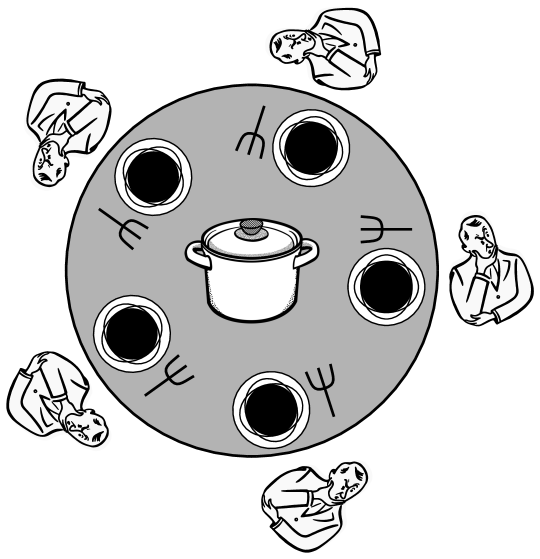
- 展示如何在 SimPy 中使用资源与进程对经典并发问题(哲学家就餐问题)进行建模。
- 展示将 SimPy 仿真与 Python 数据分析和可视化库集成。
- 探讨扩展如容器、急躁进程以及直接进程通信,以建模更贴近现实的情景。
- 提供关于调试、运行和解读仿真结果以进行设计优化的指南。
提出的方法
- 创建一个 SimPy 环境并定义资源(例如作为 Resource 对象的筷子)以建模争用与互斥。
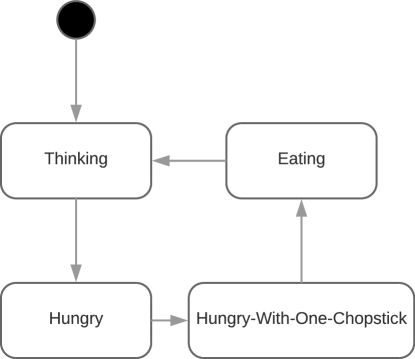
- 将活动实体(哲学家)表示为基于 Python 生成器的进程,产生超时、请求和释放等事件。
- 使用子进程(get_hungry)来封装子任务并返回用于后续释放的资源句柄。
- 对仿真进行量化测量以获取性能指标(例如等待时间),并与 NumPy、Pandas、SciPy 和 matplotlib 集成以进行分析和可视化。
- 以容器(饭碗)和补给机制(厨师)扩展模型,以研究资源消耗和再补充的影响。
- 展示如何使用组合事件(AnyOf)和超时来处理死锁、避免死锁的替代方案以及急躁行为。
实验结果
研究问题
- RQ1如何使用 SimPy 在 Python 中建模具备清晰状态和事件处理的离散事件系统?
- RQ2在用 SimPy 实现的哲学家就餐问题情景中,资源争用和死锁的影响有哪些?
- RQ3如何使用 Python 库收集、分析和可视化仿真结果,以为设计决策提供信息?
- RQ4哪些扩展(容器、急躁性、直接通信)可以使离散事件系统模型更真实、鲁棒?
- RQ5模型参数的变化(例如哲学家数量、补充速率)如何影响等待时间等性能指标?
主要发现
- SimPy 通过定义环境、资源和进程来实现对离散事件系统的逐步执行,并通过事件来让出控制。
- 在经典的哲学家就餐问题设置中,哲学家数量的增加会提高等待时间,在基本模型中,当哲学家数量达到三人及以上时呈现出类似平台的行为。
- 加入饭碗容器和补充厨师引入一个现实的瓶颈,尤其随着就餐人数增加时会影响等待时间。
- 急躁的哲学家与超时机制可以缓解死锁影响并改变等待时间,尤其在高争用情况下。
- 直接沟通模式(中断和基于事件的同步)展示了类似客户服务的实际交互与进程协调。
- SimPy 模型可以与统计与可视化库无缝集成,以分析如等待时间等性能指标。
更好的研究,从现在开始
从阅读论文到最终审阅,大幅缩短您的研究时间。
无需绑定信用卡
本解读由 AI 生成,并经人工编辑审核。