
[论文解读] Doubly Coupled Designs for Computer Experiments with both Qualitative and Quantitative Factors
本文提出双重耦合设计(DCDs)用于包含定性与定量因子的计算机实验,确保在定量因子与每个定性因子之间以及每对定性因子之间均实现最优分层。通过扩展边际耦合设计,DCDs 利用正交数组和排列的代数构造方法,实现更优的空间填充特性,建立了存在性条件,并提出三种不同的构造方法以实现实际应用。
Computer experiments with both qualitative and quantitative input variables occur frequently in many scientific and engineering applications. How to choose input settings for such experiments is an important issue for accurate statistical analysis, uncertainty quantification and decision making. Sliced Latin hypercube designs are the first systematic approach to address this issue. However, it comes with the increasing cost associated with an increasing large number of level combinations of the qualitative factors. For the reason of run size economy, marginally coupled designs were proposed in which the design for the quantitative factors is a sliced Latin hypercube design with respect to each qualitative factor. The drawback of such designs is that the corresponding data may not be able to capture the effects between any two (and more) qualitative factors and quantitative factors. To balance the run size and design efficiency, we propose a new type of designs, doubly coupled designs, where the design points for the quantitative factors form a sliced Latin hypercube design with respect to the levels of any qualitative factor and with respect to the level combinations of any two qualitative factors, respectively. The proposed designs have the better stratification property between the qualitative and quantitative factors compared with marginally coupled designs. The existence of the proposed designs is established. Several construction methods are introduced, and the properties of the resulting designs are also studied.
研究动机与目标
- 为解决边际耦合设计(MCDs)无法捕捉多个定性因子与定量因子之间交互效应的局限性。
- 开发一类新设计,保持定量因子与所有单一定性因子之间以及所有定性因子对之间的强分层特性。
- 在实验运行规模经济性与模拟复杂计算机模拟器中混合因子类型时的改进设计效率之间取得平衡。
- 建立双重耦合设计(DCDs)的存在性条件,并提供系统化的构造方法,确保其结构与统计特性。
提出的方法
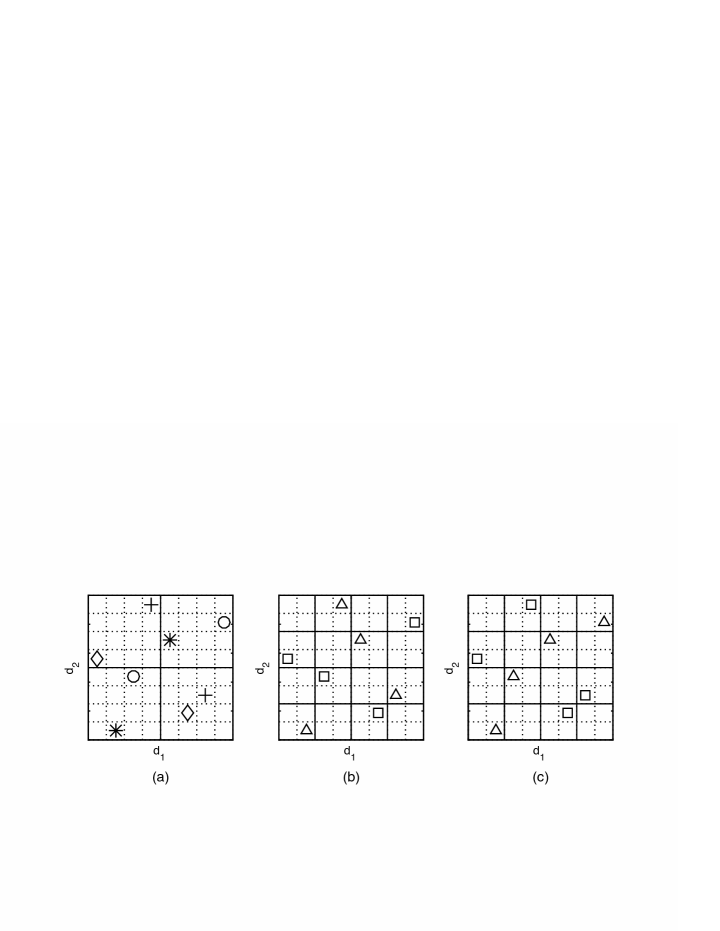
- 提出双重耦合设计(DCDs),其中定量因子设计相对于每个单一定性因子以及每对定性因子均为切片拉丁超立方(SLHD)。
- 采用正交数组(OAs)作为定性因子的设计,特别使用 OA(n, q, s, 2) 作为定性因子设计 D₁ 的基础结构。
- 提出三种代数构造方法:构造1与构造2利用排列生成定量因子设计 D₂,采用不同方式安排区块与排列。
- 构造3使用一对满足特定正交性与组合条件的数组 A 与 B,基于正交数组的性质提供两种情形。
- 确保对于每个定性因子的每一水平以及每对定性因子的每一水平组合,D₂ 的对应投影均为拉丁超立方(LHD),从而保证一维分层。
- 利用组合设计(如完全可分解正交数组与强正交数组)确保理论上的空间填充与结构特性。
实验结果
研究问题
- RQ1能否构造出一种设计,使得定量因子设计不仅相对于每个单一定性因子,也相对于每对定性因子,均保持最优的一维分层?
- RQ2当定性因子设计为二阶强度正交数组时,此类双重耦合设计存在的必要与充分条件是什么?
- RQ3如何利用代数与组合方法系统化地构造双重耦合设计,同时保持理想的空间填充与分层特性?
- RQ4由于设计约束增加,定性因子数量与定量因子数量之间存在何种权衡?
- RQ5在存在多个定性因子交互作用的情况下,所生成的设计是否能保证优于边际耦合设计的空间填充特性?
主要发现
- 所提出的双重耦合设计(DCDs)在定量因子与单一定性因子以及所有定性因子对之间均实现了更优的分层,其设计效率优于边际耦合设计。
- 当定性因子设计为二阶强度正交数组时,DCDs 的存在性得以确立,并给出了定性因子数量的紧致上界。
- 提出了三种不同的构造方法:两种基于排列与区块排列,一种基于满足特定组合条件的数组对 A 与 B。
- 构造3在数组 B 与 R 均为正交数组时,能保证定量因子的最优空间填充特性,确保在高维设置下性能更优。
- 由于更强的耦合要求,定性因子数量受到设计约束限制,对于给定的运行规模,DCDs 可容纳的定性因子数量少于 MCDs。
- 所有构造方法均为代数方法,计算高效,无需迭代优化,可快速生成适用于实际应用的 DCDs。
更好的研究,从现在开始
从阅读论文到最终审阅,大幅缩短您的研究时间。
无需绑定信用卡
本解读由 AI 生成,并经人工编辑审核。