
[论文解读] Dynamical properties and mechanisms of metastability: a perspective in neuroscience
本文提出了一种统一的、与上下文无关的神经元临界稳定性框架,通过将临界稳定性定义为大脑动力学中的短暂但持久的状态,其理论基础源自非线性动力系统理论。该研究识别出相空间中吸引方向与排斥方向共存作为实现临界稳定性的普遍动力学原理,统一了多种实验观测结果,并通过理论分析与模拟揭示了新的机制。
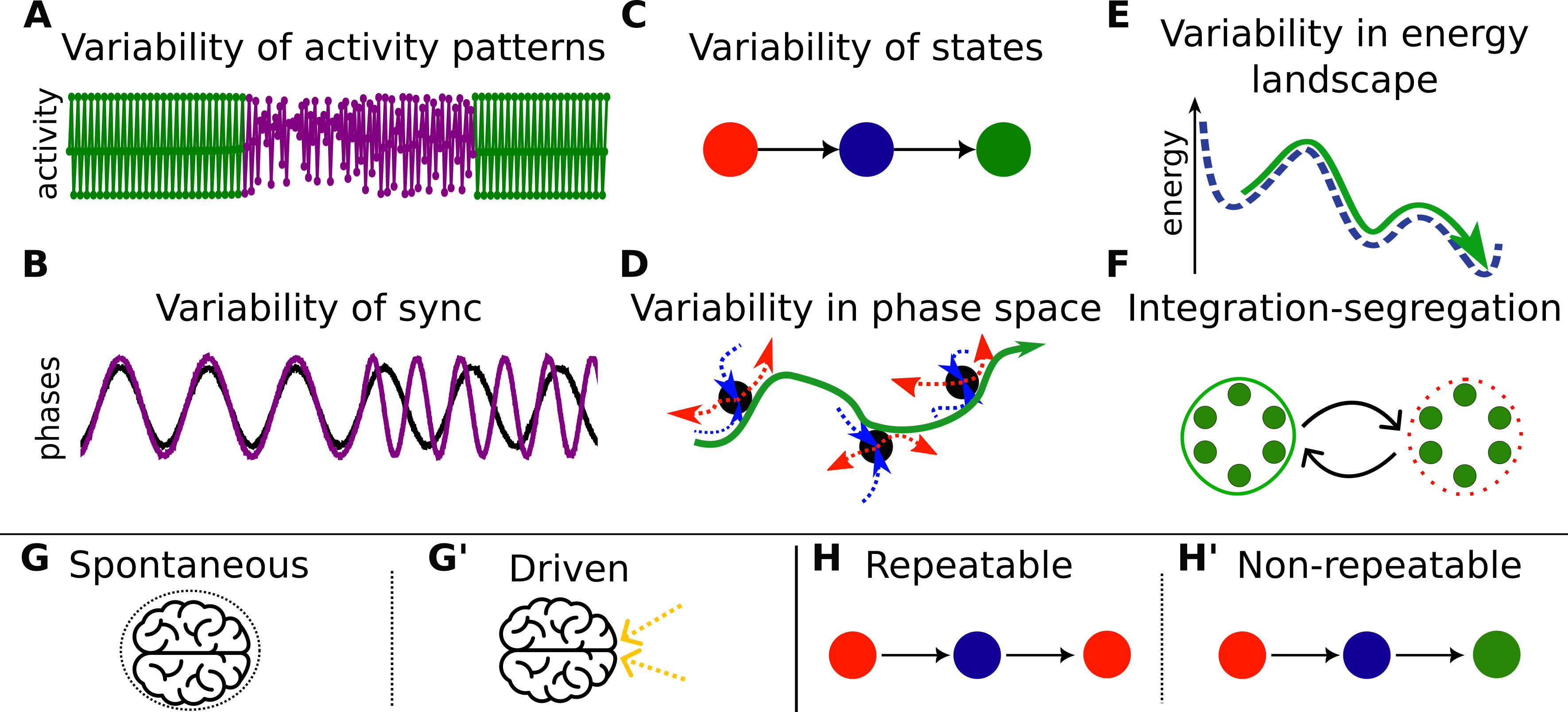
Metastability, characterized by a variability of regimes in time, is a ubiquitous type of neural dynamics. It has been formulated in many different ways in the neuroscience literature, however, which may cause some confusion. In this Perspective, we discuss metastability from the point of view of dynamical systems theory. We extract from the literature a very simple but general definition through the concept of metastable regimes as long-lived but transient epochs of activity with unique dynamical properties. This definition serves as an umbrella term that encompasses formulations from other works, and readily connects to concepts from dynamical systems theory. This allows us to examine general dynamical properties of metastable regimes, propose in a didactic manner several dynamics-based mechanisms that generate them, and discuss a theoretical tool to characterize them quantitatively. This perspective leads to insights that help to address issues debated in the literature and also suggest pathways for future research.
研究动机与目标
- 解决神经科学中临界稳定性缺乏统一定义的问题,目前的定义依赖于特定上下文的表述。
- 建立一种普遍的、与上下文无关的临界稳定性定义,即神经活动中的短暂但持久状态。
- 利用非线性系统理论推导出临界稳定性的普遍动力学原理。
- 识别并分类已知与新型机制,这些机制通过该原理实现临界稳定性。
- 基于该框架,推动发展用于脑动力学的预测与控制工具。
提出的方法
- 将临界稳定性定义为神经活动中短暂但持久状态的存在,适用于多种实验数据。
- 利用非线性动力系统理论识别核心原理:相空间中吸引方向与排斥方向的共存。
- 通过数值模拟分析五种不同的动力学机制——带噪声的双稳态系统、异宿环、吸引子合并危机、I型间歇性以及混沌鞍点。
- 使用Julia中的计算工具(包括DifferentialEquations.jl、DynamicalSystems.jl和Makie.jl)进行模拟与可视化。
- 通过将已知神经现象(如EEG微状态、UP/DOWN状态)映射到统一结构中的特定机制,验证该框架。
- 通过将已知动力系统行为扩展至新情境,推导出新的机制以解释临界稳定态之间的转换。
![Figure 1: Brain activity typically evolves as a sequence of well-defined states that are transient but long lived. The panels illustrate important observations taken from the literature, namely EEG microstates [ 5 ] , hidden Markov states of firing rates [ 12 ] , UP and DOWN states [ 15 ] , cortical](https://ar5iv.labs.arxiv.org/html/2305.05328/assets/observationsmetastability.png)
实验结果
研究问题
- RQ1在多种神经系统的背景下,支撑临界稳定性的普遍动力学原理是什么?
- RQ2如何以一种与上下文无关的方式定义临界稳定性,以统一现有的实验观测?
- RQ3哪些已知的动力学机制可以映射到神经元临界稳定态?从该普遍原理中又能推导出哪些新机制?
- RQ4所提出的框架能否生成可实验检验且可证伪的关于脑动力学的假设?
- RQ5在相空间中,吸引与排斥的相互作用如何导致短暂但持久状态的出现?
主要发现
- 该框架将临界稳定性定义为短暂但持久的状态,统一了多种神经现象(如EEG微状态、UP/DOWN状态、皮层波)的定义。
- 核心动力学原理是相空间中吸引方向与排斥方向的共存,使系统能够在长时间内保持某一状态,之后再发生转换。
- 带噪声的双稳态系统(带噪声的Duffing振子)成功再现了两种状态之间的临界稳定切换,其转换由势阱中噪声诱导的逃逸引起。
- 速率模型中的异宿环可产生序列状态转换,与观察到的神经动力学(如皮层波传播)相匹配。
- 吸引子合并危机与I型间歇性被证明可通过分岔诱导的转换产生临界稳定行为,并具有清晰的相空间特征。
- 混沌鞍点被识别为一种新型临界稳定机制,其中轨迹在长时间内靠近不稳定流形,随后才发生逃逸,从而解释了持久的瞬态状态。
更好的研究,从现在开始
从阅读论文到最终审阅,大幅缩短您的研究时间。
无需绑定信用卡
本解读由 AI 生成,并经人工编辑审核。