
[论文解读] Ecovisor: A Virtual Energy System for Carbon-Efficient Applications
本文提出 Ecovisor,一种软件定义的虚拟能效系统,向应用程序暴露电网碳强度和可再生能源可用性的实时信息,使应用程序能够通过动态电源与电池控制优化碳效率。通过虚拟化能源基础设施并提供应用级别的可见性与控制权,Ecovisor 允许多样化的工作负载独立适应能源供应的波动性,显著提升碳效率,超越整体系统级策略。
Cloud platforms' rapid growth is raising significant concerns about their carbon emissions. To reduce emissions, future cloud platforms will need to increase their reliance on renewable energy sources, such as solar and wind, which have zero emissions but are highly unreliable. Unfortunately, today's energy systems effectively mask this unreliability in hardware, which prevents applications from optimizing their carbon-efficiency, or work done per kilogram of carbon emitted. To address this problem, we design an "ecovisor", which virtualizes the energy system and exposes software-defined control of it to applications. An ecovisor enables each application to handle clean energy's unreliability in software based on its own specific requirements. We implement a small-scale ecovisor prototype that virtualizes a physical energy system to enable software-based application-level i) visibility into variable grid carbon-intensity and renewable generation and ii) control of server power usage and battery charging/discharging. We evaluate the ecovisor approach by showing how multiple applications can concurrently exercise their virtual energy system in different ways to better optimize carbon-efficiency based on their specific requirements compared to a general system-wide policy.
研究动机与目标
- 为应对因能源需求增长而加剧的超大规模云平台碳排放问题。
- 解决当前能源系统隐藏可再生能源波动性与电网碳强度信息给应用程序的问题,从而阻碍碳效率优化。
- 通过暴露能源供应特性可见性与控制权,使应用程序能够独立管理其碳足迹。
- 设计并实现一个原型 Ecovisor,虚拟化物理能源系统(包括电网、可再生能源与电池),实现应用级别的控制。
- 证明基于应用的碳效率优化是可行的,并优于单一的整体系统级策略。
提出的方法
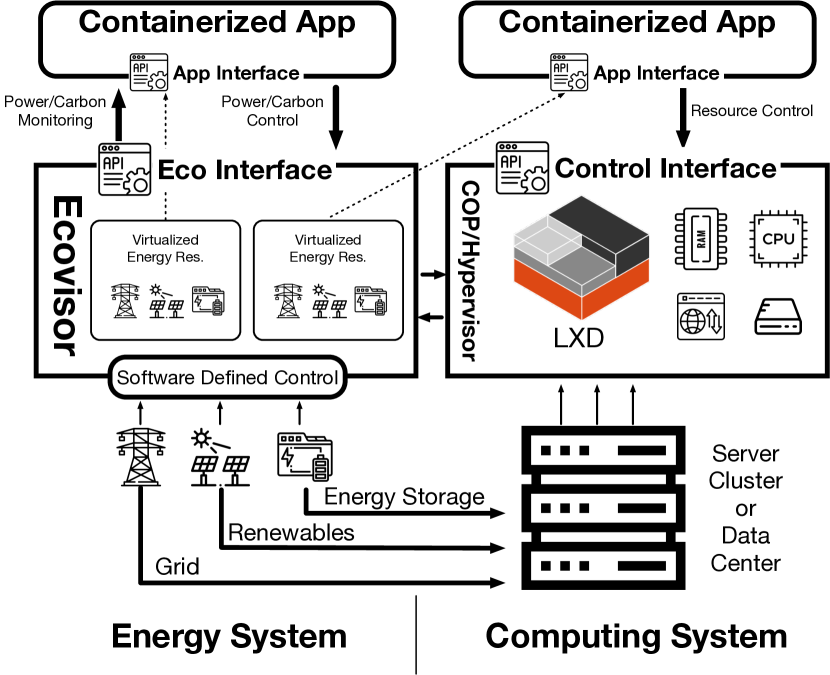
- 设计并实现一个虚拟能效系统(Ecovisor),抽象化物理能源基础设施,包括电网电力、现场可再生能源与电池储能。
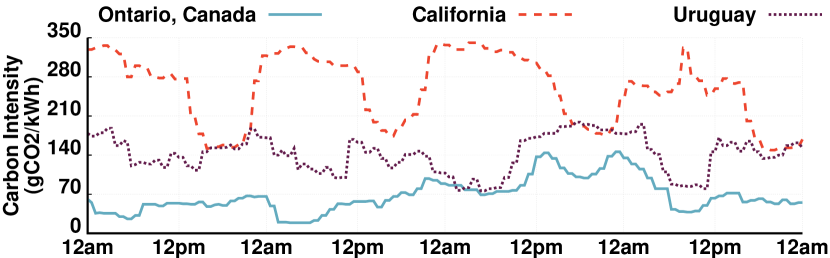
- 通过软件定义接口,向应用程序暴露实时碳强度数据(例如来自 electricityMap)与可再生能源发电水平。
- 为每个应用程序实现虚拟功耗上限与电池充放电控制,使其能够动态适应能源供应状况。
- 利用现有的虚拟化与资源控制技术(如功耗容器、功耗限制)在应用层面实现能源使用的归属与调控。
- 集成应用层策略,根据碳强度与可再生能源可用性响应,允许工作负载根据可持续性目标进行调度调整或降速。
- 通过多种应用程序评估 Ecovisor 原型,对比应用特定策略与整体系统策略下的碳效率表现。
实验结果
研究问题
- RQ1应用层面是否能够通过实时掌握电网碳强度与可再生能源可用性,实现超越整体系统能效管理策略的碳效率提升?
- RQ2如何将软件定义的虚拟化能源资源控制(如功耗上限、电池充放电)暴露给应用程序,以支持碳感知的工作负载调度?
- RQ3当多个具有不同优先级的应用程序使用同一虚拟能效系统时,性能与碳效率之间存在何种权衡?
- RQ4Ecovisor 是否能够支持在共享基础设施上对异构工作负载实现并发、多样化的碳效率优化?
- RQ5虚拟化能源系统如何使新型类别的碳感知优化成为可能,而这些优化在当前硬件抽象模型下不可行?
主要发现
- Ecovisor 原型成功虚拟化了物理能源系统,使应用程序能够实时掌握电网碳强度与可再生能源可用性。
- 使用 Ecovisor 的应用程序可基于自身需求与可持续性目标,独立优化碳效率,通过调节功耗使用与电池交互实现。
- Ecovisor 支持并发、多样化的碳效率策略——如将工作迁移至低碳时段,或在高碳阶段降速运行——且各策略之间互不冲突。
- 与整体系统策略相比,Ecovisor 使应用程序能够通过针对其在时间、性能与能效方面独特灵活性进行行为定制,实现更高的碳效率。
- 原型表明,基于软件的能源系统控制可有效暴露并管理清洁能源固有的波动性,从而实现细粒度的碳感知调度。
- Ecovisor 为未来跨分布式 Ecovisor 集群的协调提供了基础,支持地理分布式的碳优化工作负载。
更好的研究,从现在开始
从阅读论文到最终审阅,大幅缩短您的研究时间。
无需绑定信用卡
本解读由 AI 生成,并经人工编辑审核。