
[论文解读] Edge Learning for 6G-enabled Internet of Things: A Comprehensive Survey of Vulnerabilities, Datasets, and Defenses
本文针对6G赋能的物联网中的边缘学习,提出了一项全面的综述,分析了集中式、联邦式和分布式学习模式下存在的后门、对抗性和中毒攻击等漏洞。论文对八种威胁模型进行分类,回顾了最先进的防御机制,并提出了保障人工智能驱动的6G-IoT系统安全的未来研究方向。
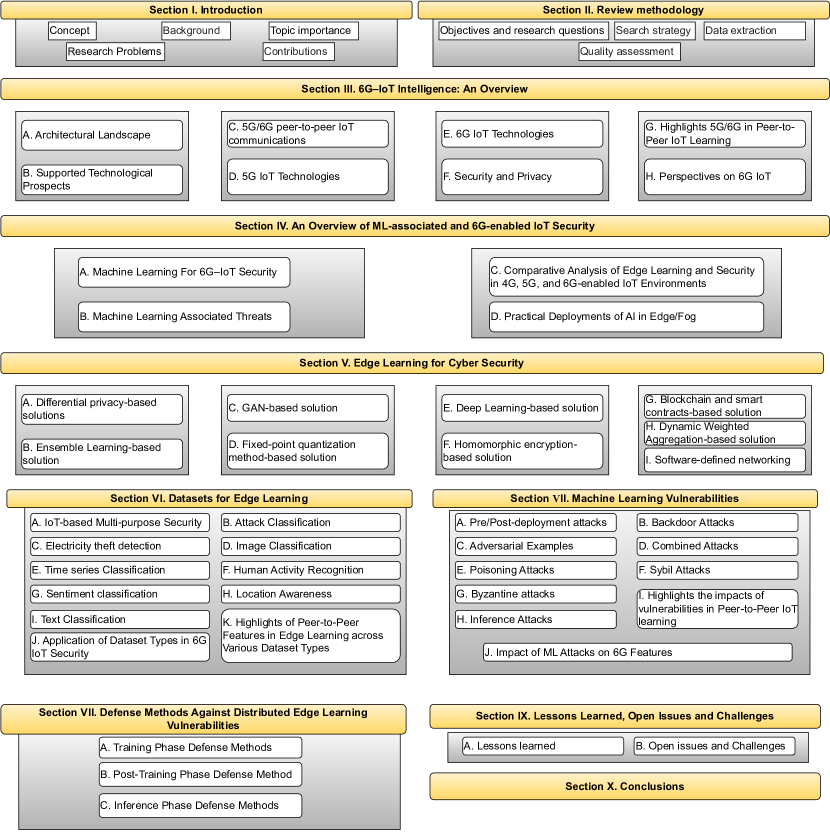
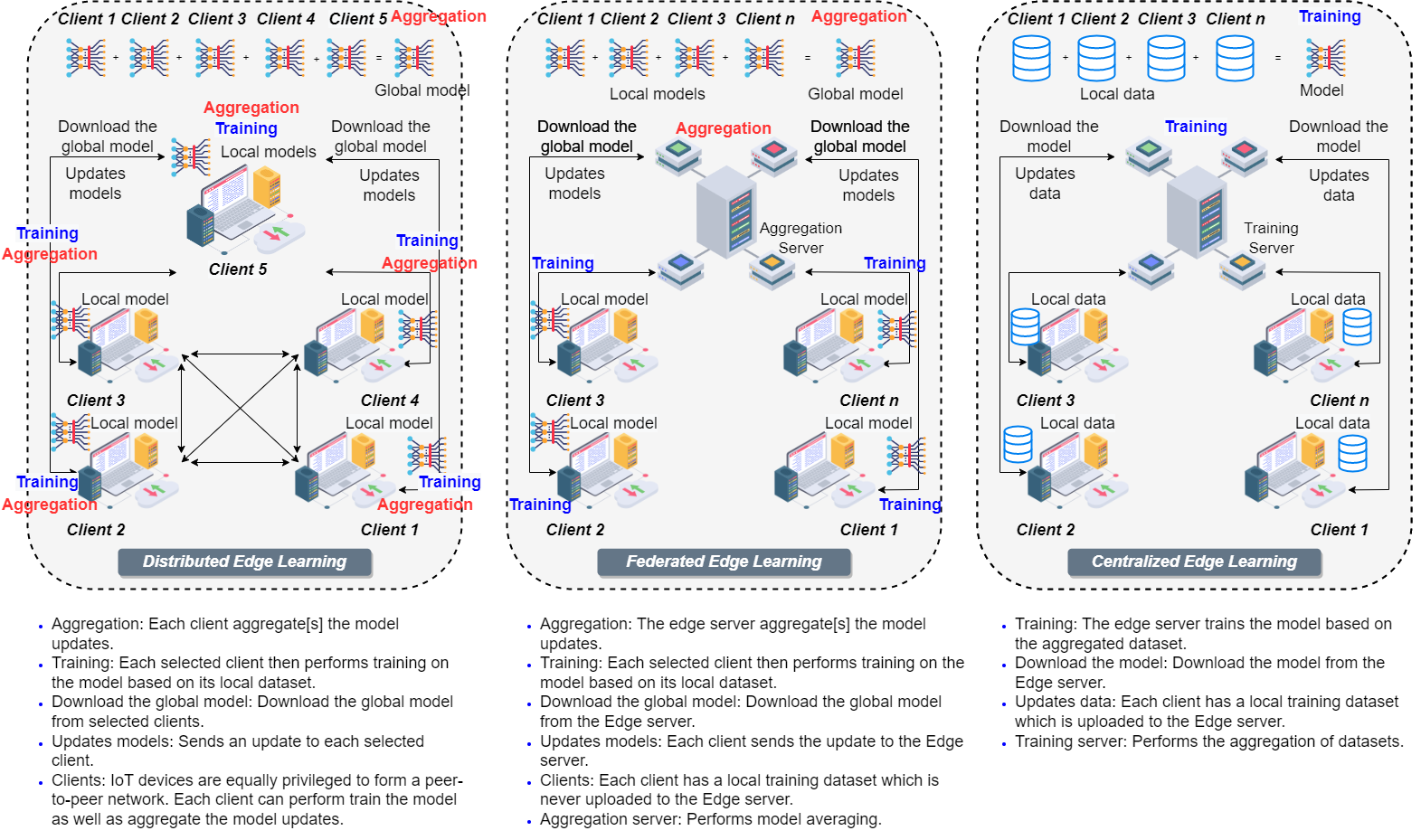
The ongoing deployment of the fifth generation (5G) wireless networks constantly reveals limitations concerning its original concept as a key driver of Internet of Everything (IoE) applications. These 5G challenges are behind worldwide efforts to enable future networks, such as sixth generation (6G) networks, to efficiently support sophisticated applications ranging from autonomous driving capabilities to the Metaverse. Edge learning is a new and powerful approach to training models across distributed clients while protecting the privacy of their data. This approach is expected to be embedded within future network infrastructures, including 6G, to solve challenging problems such as resource management and behavior prediction. This survey article provides a holistic review of the most recent research focused on edge learning vulnerabilities and defenses for 6G-enabled IoT. We summarize the existing surveys on machine learning for 6G IoT security and machine learning-associated threats in three different learning modes: centralized, federated, and distributed. Then, we provide an overview of enabling emerging technologies for 6G IoT intelligence. Moreover, we provide a holistic survey of existing research on attacks against machine learning and classify threat models into eight categories, including backdoor attacks, adversarial examples, combined attacks, poisoning attacks, Sybil attacks, byzantine attacks, inference attacks, and dropping attacks. In addition, we provide a comprehensive and detailed taxonomy and a side-by-side comparison of the state-of-the-art defense methods against edge learning vulnerabilities. Finally, as new attacks and defense technologies are realized, new research and future overall prospects for 6G-enabled IoT are discussed.
研究动机与目标
- 识别并分类6G赋能物联网系统中边缘学习的安全漏洞。
- 分析新兴人工智能威胁(如后门攻击和对抗性攻击)对6G-IoT环境中联邦学习和分布式学习的影响。
- 提供针对基于机器学习攻击的现有防御机制的综合分类法与对比分析。
- 探讨在6G-IoT边缘部署大语言模型所面临的挑战,包括隐私保护、资源限制以及模型一致性问题。
- 探索通过稳健的防御策略与自适应威胁缓解方法,保障人工智能驱动的6G网络的安全未来研究方向。
提出的方法
- 系统性地将6G-IoT中的机器学习威胁划分为八类威胁模型:后门攻击、对抗性样本攻击、组合攻击、中毒攻击、Sybil攻击、拜占庭攻击、推理攻击和丢弃攻击。
- 回顾6G–IoT智能所依赖的使能技术,包括多接入边缘计算(MEC)、可重构智能表面(RIS)和软件定义网络(SDN)。
- 分析差分隐私(DP)、联邦蒸馏(FD)、同态加密(HE)以及可验证随机函数(VRF)等防御策略,以保障模型完整性。
- 评估可解释人工智能(XAI)与移动目标防御(MTD)在提升透明度和抵御模型操纵方面的有效性。
- 研究生成对抗网络(GANs)和自编码器(如CVAE、AEA)在边缘学习中用于异常检测与数据重建的应用。
- 提出一种基于安全性、效率以及与6G-IoT约束兼容性的比较框架,用于评估防御技术。
实验结果
研究问题
- RQ1在6G赋能的物联网环境中部署的边缘学习系统中,主要存在哪些安全漏洞?
- RQ2不同威胁模型(如后门攻击和对抗性攻击)如何影响6G-IoT中联邦学习的完整性与可靠性?
- RQ3在分布式边缘学习架构中,哪些防御机制对缓解基于机器学习的攻击最为有效?
- RQ4在6G-IoT网络边缘部署大语言模型时会面临哪些挑战,以及如何应对?
- RQ5为应对不断演变的网络威胁,保障人工智能驱动的6G网络安全性,未来哪些研究方向至关重要?
主要发现
- 本文在6G-IoT的边缘学习中识别出八类不同的威胁模型,包括后门攻击、对抗性样本攻击和拜占庭攻击,每类均对模型完整性构成独特风险。
- 对大语言模型(LLMs)的对抗性攻击尤其具有挑战性,原因在于文本的离散特性;近期方法通过基于梯度的后缀生成技术,已在GPT和Claude等模型间实现高度可迁移的攻击效果。
- 差分隐私与联邦蒸馏等防御机制在联邦学习环境中显著降低了模型反演攻击与成员推断攻击的风险。
- 同态加密与可验证随机函数的集成增强了模型安全性,并支持在分布式边缘学习中实现无信任协作。
- 在边缘部署大语言模型面临重大挑战,主要源于资源限制、数据敏感性以及异构物联网设备间模型一致性的难题。
- 未来研究必须优先关注自适应、轻量化且可解释的防御机制,以在6G-IoT生态系统中实现安全、效率与向后兼容性的平衡。
更好的研究,从现在开始
从阅读论文到最终审阅,大幅缩短您的研究时间。
无需绑定信用卡
本解读由 AI 生成,并经人工编辑审核。