
[论文解读] Education 5.0: Requirements, Enabling Technologies, and Future Directions
本文综述教育5.0,概述其需求、支撑技术、挑战与未来方向,并提出一个将目标与技术连接的二维框架。
We are currently in a post-pandemic era in which life has shifted to a digital world. This has affected many aspects of life, including education and learning. Education 5.0 refers to the fifth industrial revolution in education by leveraging digital technologies to eliminate barriers to learning, enhance learning methods, and promote overall well-being. The concept of Education 5.0 represents a new paradigm in the field of education, one that is focused on creating a learner-centric environment that leverages the latest technologies and teaching methods. This paper explores the key requirements of Education 5.0 and the enabling technologies that make it possible, including artificial intelligence, blockchain, and virtual and augmented reality. We analyze the potential impact of these technologies on the future of education, including their ability to improve personalization, increase engagement, and provide greater access to education. Additionally, we examine the challenges and ethical considerations associated with Education 5.0 and propose strategies for addressing these issues. Finally, we offer insights into future directions for the development of Education 5.0, including the need for ongoing research, collaboration, and innovation in the field. Overall, this paper provides a comprehensive overview of Education 5.0, its requirements, enabling technologies, and future directions, and highlights the potential of this new paradigm to transform education and improve learning outcomes for students.
研究动机与目标
- 定义教育5.0及其以学习者为中心的范式。
- 识别实现教育5.0的核心需求(个性化、协作、福祉、灵活性、数据驱动决策、安全、无障碍)。
- 分析推动教育5.0的支撑技术(AI、区块链、VR/AR、物联网、5G、云、大数据)。
- 评估对学习成果、参与度和教育获取的潜在影响。
- 提出评估教育5.0实施的路线图与指标。
提出的方法
- 对相关概念(教育1.0–4.0)及正在兴起的教育5.0概念进行文献综述。
- 建立将教育目标(x 轴)映射到技术(y 轴)的二维框架。
- 综合现有调查和教程中的需求与支撑技术。
- 讨论挑战、伦理考量及应对策略。
- 提出未来方向,强调研究、协作与创新。
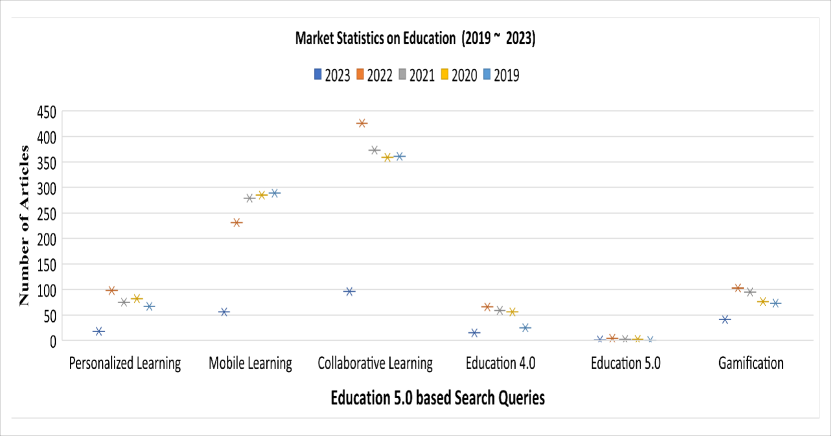
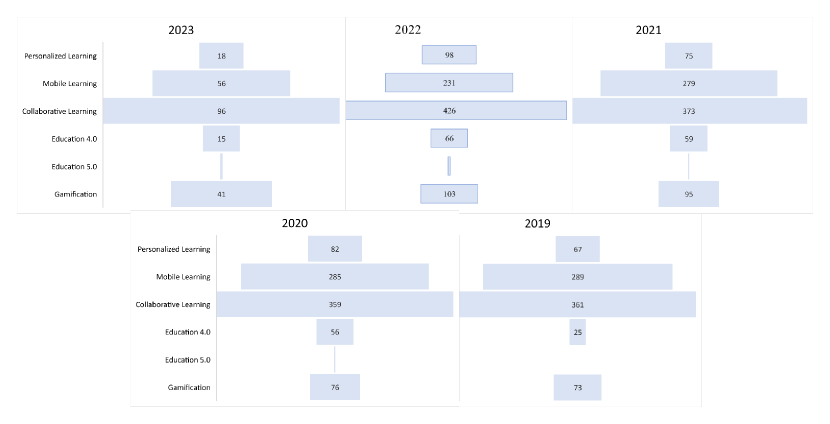
实验结果
研究问题
- RQ1实现教育5.0 的核心需求是什么?
- RQ2哪些支撑教育5.0目标的技术是必不可少的?
- RQ3在实施教育5.0 过程中,主要挑战与伦理考量是什么?
- RQ4推进教育5.0 所需的未来方向与研究需求是什么?
- RQ5指标与治理如何引导教育5.0倡议的采用与评估?
主要发现
- 教育5.0旨在通过AI、VR/AR、物联网、区块链等数字工具促进个性化学习、协作与福祉。
- 全球教育科技市场预计在2021–2025年间以17%的复合年增长率增长,在线学习市场预计到2026年达到3743亿美元,2021–2026年的复合增长率为14.6%。
- 本文指出多项需求,如个性化学习、协作、21世纪技能、灵活性/可及性、数据驱动决策、安全/隐私,以及高速网络。
- 它讨论了挑战与伦理考量,包括公平性、数据隐私,以及治理与持续创新的必要性。
- 提出一个将教育目标与支撑技术连接起来的二维框架,为教育5.0绘制路线图。
更好的研究,从现在开始
从阅读论文到最终审阅,大幅缩短您的研究时间。
无需绑定信用卡
本解读由 AI 生成,并经人工编辑审核。