
[论文解读] Enhanced Detection Classification via Clustering SVM for Various Robot Collaboration Task
该论文提出了一种k-SVM方法,通过将k-means聚类与支持向量机结合,提升多机器人协作任务中机器人类型分类的性能。在SVM训练前对机器人特征数据进行聚类,可减少支持向量数量并加快识别速度,在各类机器人分布下,尤其在数据集规模增大时,分类误差低于传统SVM。
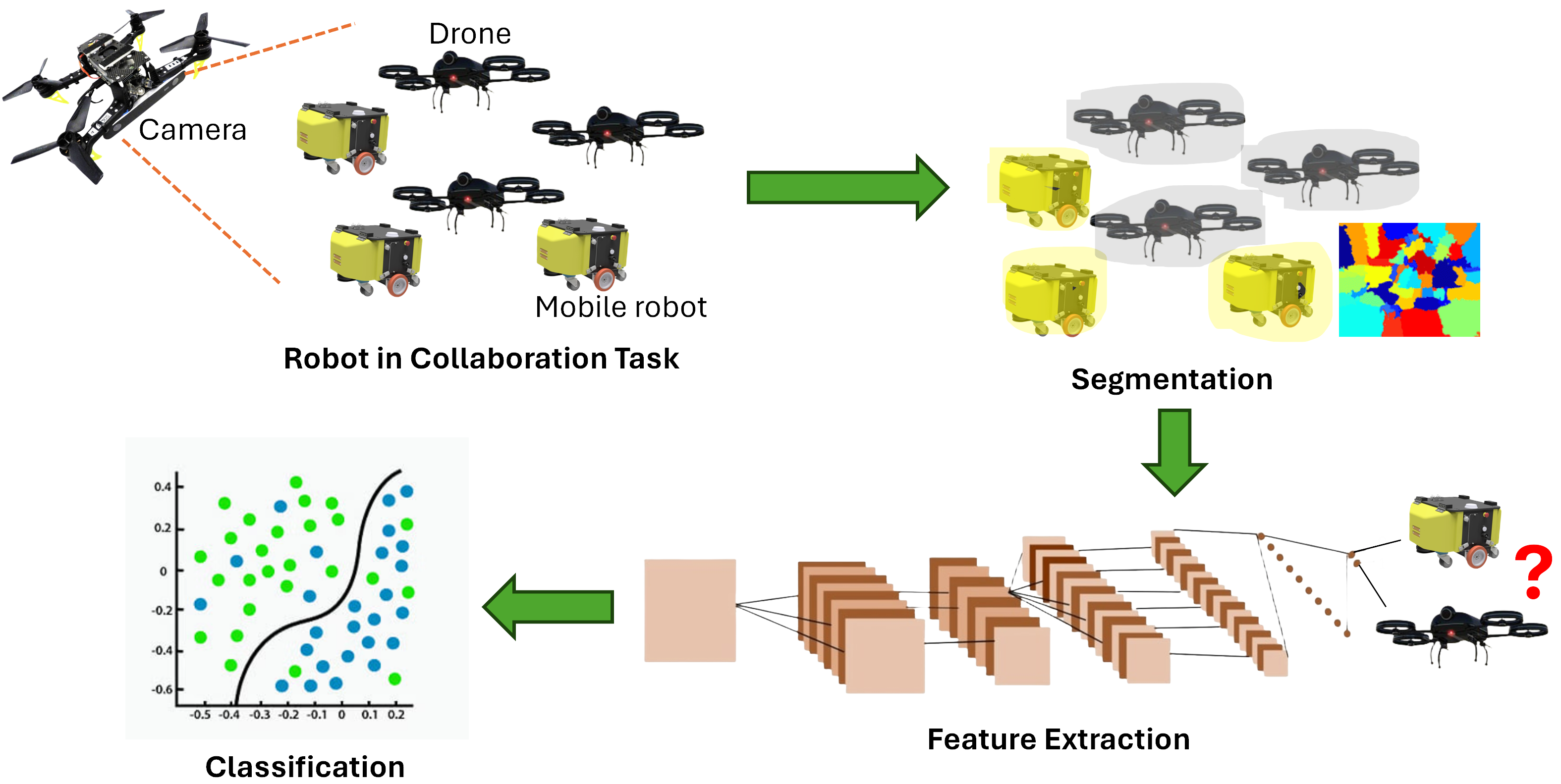
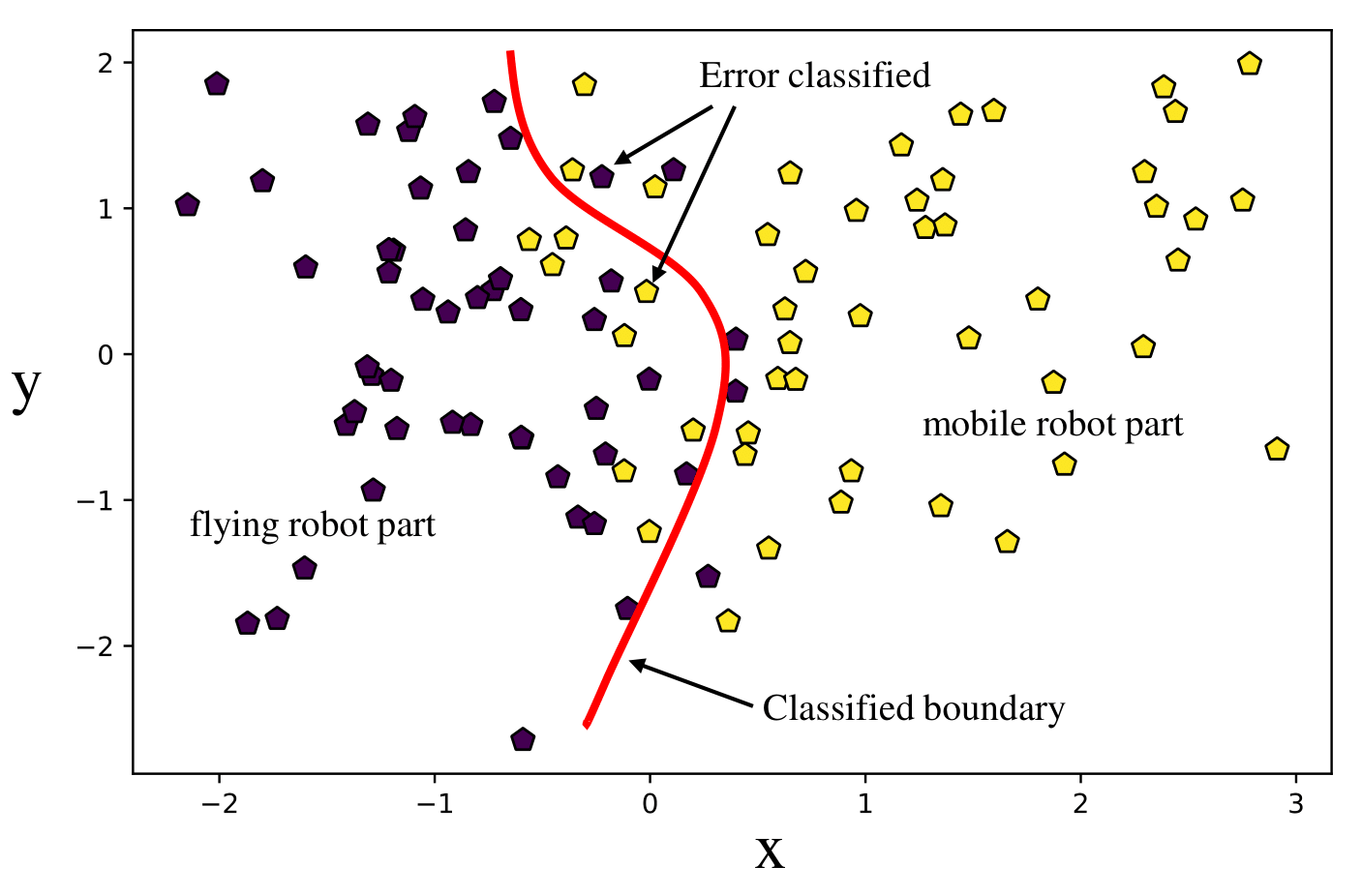
We introduce an advanced, swift pattern recognition strategy for various multiple robotics during curve negotiation. This method, leveraging a sophisticated k-means clustering-enhanced Support Vector Machine algorithm, distinctly categorizes robotics into flying or mobile robots. Initially, the paradigm considers robot locations and features as quintessential parameters indicative of divergent robot patterns. Subsequently, employing the k-means clustering technique facilitates the efficient segregation and consolidation of robotic data, significantly optimizing the support vector delineation process and expediting the recognition phase. Following this preparatory phase, the SVM methodology is adeptly applied to construct a discriminative hyperplane, enabling precise classification and prognostication of the robot category. To substantiate the efficacy and superiority of the k-means framework over traditional SVM approaches, a rigorous cross-validation experiment was orchestrated, evidencing the former's enhanced performance in robot group classification.
研究动机与目标
- 为在协作曲线避让任务中实现高精度、高速度地分类机器人类型(飞行型与移动型)
- 解决传统SVM在多机器人系统中常见的非线性可分数据集上计算效率低下的问题
- 通过在SVM训练前对数据进行聚类,减少支持向量数量,从而提升分类性能
- 通过在不同机器人种群规模和分布类型下进行交叉验证,验证k-SVM方法相对于标准SVM的优越性
提出的方法
- 该方法使用k-means聚类将机器人特征数据划分为K个独立聚类,降低数据复杂度并提升特征区分度,再应用SVM
- 对每个聚类应用支持向量机,基于其空间和特征特性构建分类机器人类型(飞行型或移动型)的判别超平面
- 目标函数最小化松弛变量之和与权重向量范数,确保非线性可分数据的全局最优解
- 使用交叉验证评估性能,将数据集划分为η=1个子集用于训练和验证,实现稳健的模型评估
- 在固定时间跨度δ=0.12内应用时间聚类,每个质心代表一个聚类后的机器人模式,实现动态模式识别
- 使用误差度量e_s = ℜ(w_{s−δ,p}, y_{s−δ})量化分类误差,跨正态分布、均匀分布和泊松分布的机器人种群评估性能
实验结果
研究问题
- RQ1k-means聚类能否提升多机器人协作任务中基于SVM的机器人类型分类效率与准确性?
- RQ2在不同机器人分布模式下,k-SVM方法与传统SVM相比,分类误差表现如何?
- RQ3随着数据集规模增大,k-SVM在分类飞行型与移动型机器人方面相对于标准SVM的性能是否进一步提升?
- RQ4聚类在多大程度上减少了支持向量数量并加速了非线性可分机器人数据的识别?
主要发现
- k-SVM在所有测试的机器人分布类型下均实现低于传统SVM的分类误差,尤其在大数据集下表现更优
- 在正态分布场景下,k-SVM将误差从SVM在N=100时的0.2941降低至k-SVM在N=400时的0.0996,展现出优异的可扩展性
- 在均匀分布场景中,k-SVM表现出持续改进,将误差从SVM在N=100时的0.2302降低至SVM在N=400时的0.0912,但k-SVM在N=300和N=400时误差偏高,表明对分布形状较为敏感
- 在泊松分布场景下,k-SVM将误差从SVM在N=100时的0.3189降低至k-SVM在N=400时的0.0851,显示出随着数据量增加而显著提升的性能优势
- 通过有效聚类显著缩短了训练时间,并通过减少支持向量数量提升了识别准确率
- 交叉验证结果证实,k-SVM在处理复杂、非线性可分的机器人模式分布方面优于标准SVM,尤其在高数据量条件下表现更优
更好的研究,从现在开始
从阅读论文到最终审阅,大幅缩短您的研究时间。
无需绑定信用卡
本解读由 AI 生成,并经人工编辑审核。