
[论文解读] Enhanced sensitivity via non-Hermitian topology
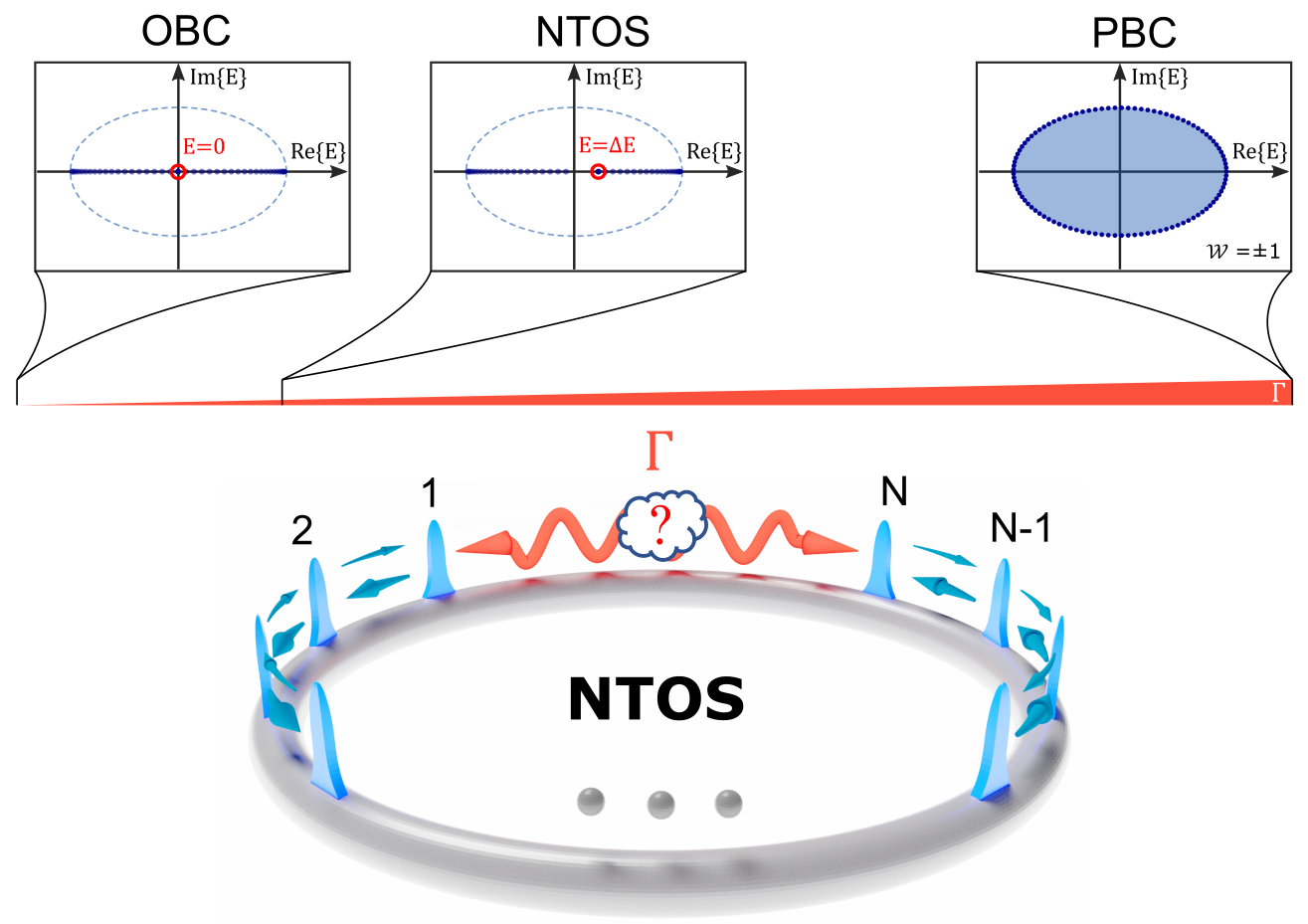
该论文通过基于哈纳诺-尼尔森模型的光子时间复用谐振器网络,实验演示了非厄米拓扑传感器(NTOS)。通过利用非厄米性与拓扑的协同作用,该系统实现了随着晶格尺寸增大而指数增强的灵敏度,实验验证了最多 N=23 个晶格位点的情况,超越了传统传感极限。
Sensors are indispensable tools of modern life that are ubiquitously used in diverse settings ranging from smartphones and autonomous vehicles to the healthcare industry and space technology. By interfacing multiple sensors that collectively interact with the signal to be measured, one can go beyond the signal-to-noise ratios (SNR) than those attainable by the individual constituting elements. Such distributed sensing techniques have also been implemented in the quantum regime, where a linear increase in the SNR has been achieved via using entangled states. Along similar lines, coupled non- Hermitian systems have provided yet additional degrees of freedom to obtain better sensors via higher-order exceptional points. Quite recently, a new class of non-Hermitian systems, known as non-Hermitian topological sensors (NTOS) has been theoretically proposed. Remarkably, the synergistic interplay between non-Hermiticity and topology is expected to bestow such sensors with an enhanced sensitivity that grows exponentially with the size of the sensor network. Here, we experimentally demonstrate NTOS using a network of photonic time-multiplexed resonators in the synthetic dimension represented by optical pulses. By judiciously programming the delay lines in such a network, we realize the archetypical Hatano-Nelson model for our non-Hermitian topological sensing scheme. Our experimentally measured sensitivities for different lattice sizes confirm the characteristic exponential enhancement of NTOS. We show that this peculiar response arises due to the combined synergy between non-Hermiticity and topology, something that is absent in Hermitian topological lattices. Our demonstration of NTOS paves the way for realizing sensors with unprecedented sensitivities.
研究动机与目标
- 实验验证非厄米拓扑传感器(NTOS)能够实现随晶格尺寸指数增长的灵敏度。
- 验证理论预测:NTOS 中的灵敏度增强源于非厄米性与拓扑的协同作用,这种效应在厄米系统中并不存在。
- 在具有可调边界耦合的时间复用光子平台上实现并表征非厄米拓扑晶格。
- 将 NTOS 的灵敏度标度与传统分布式传感和厄米拓扑系统进行比较,展示其优越性能。
- 为适用于量子传感、LiDAR 和引力波探测的高灵敏度传感器提供概念验证。
提出的方法
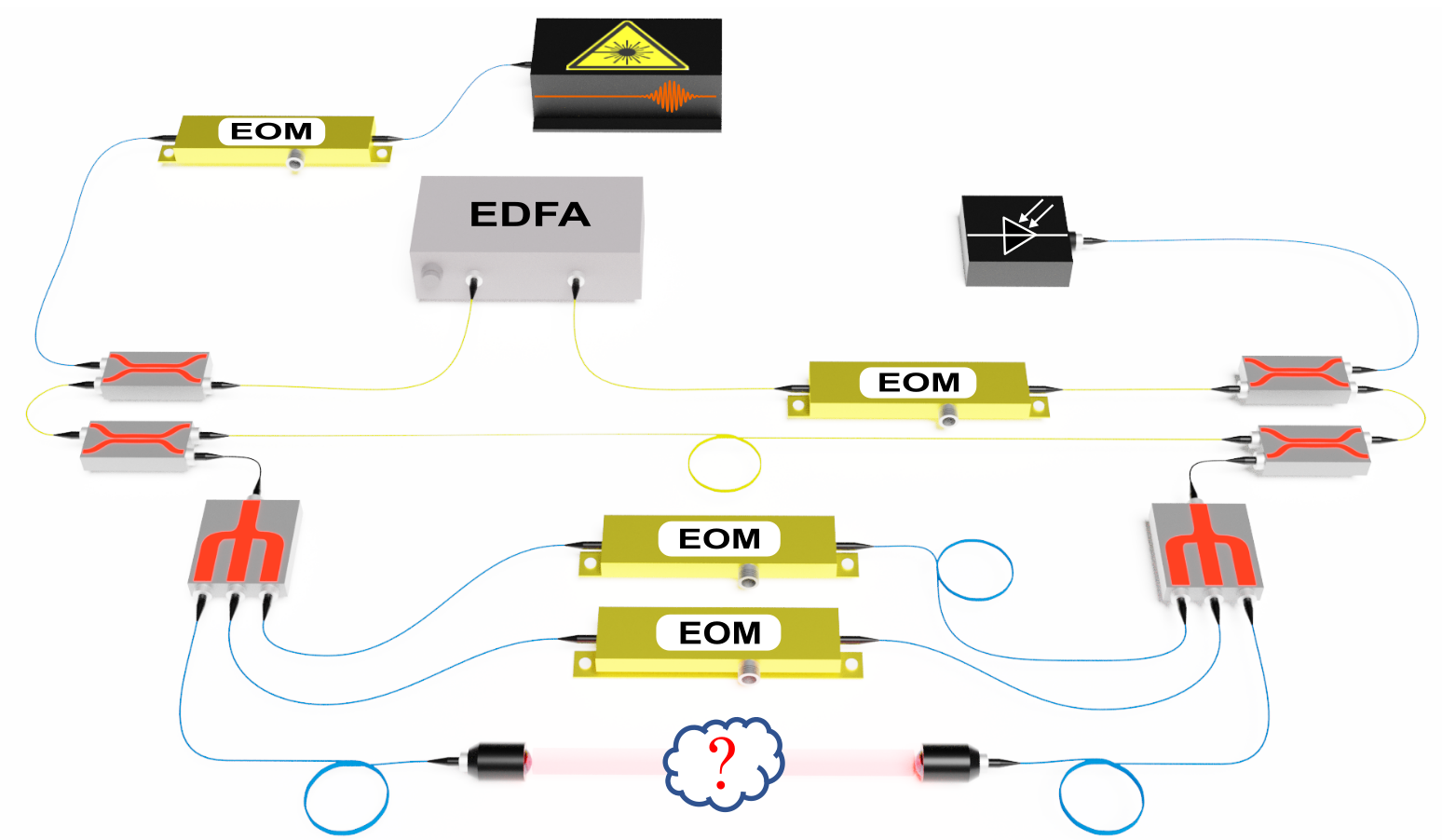
- 实验采用基于光纤的时间复用谐振器网络,利用由时间延迟定义的合成维度中的光脉冲。
- 通过电光调制器实现哈纳诺-尼尔森哈密顿量,以在相邻脉冲之间产生非对称、非互易的耦合。
- 通过带有可调电光调制器的长延迟线控制首尾脉冲之间的边界耦合,以模拟扰动。
- 将零模注入哈纳诺-尼尔森晶格,并在 10 轮往返后激活最近邻耦合。
- 记录 50 次重复的腔震荡衰减曲线,以提取衰减率的偏移,同时使用参考脉冲校准本征衰减。
- 灵敏度通过边界耦合扰动引起的零模本征值(衰减率)偏移来量化,并按晶格尺寸进行归一化。
实验结果
研究问题
- RQ1非厄米拓扑传感器(NTOS)是否能在真实实验系统中实现随晶格尺寸指数增长的灵敏度?
- RQ2NTOS 中的灵敏度增强是否仅源于非厄米性与拓扑的协同作用,而非其他机制?
- RQ3NTOS 的灵敏度标度与传统分布式传感和厄米拓扑系统相比如何?
- RQ4哈纳诺-尼尔森模型中理论预测的指数灵敏度标度是否可在光子平台上实验验证?
- RQ5增强的灵敏度是否具有鲁棒性,且无需对系统参数进行微调即可观测?
主要发现
- 实验测得的非厄米拓扑传感器灵敏度随晶格位点数呈指数增长,证实了理论预测。
- 对于最多 N=23 个晶格位点的情况,灵敏度相比具有 √N 标度的传统分布式传感提高了两个多数量级。
- 灵敏度增强无需对系统参数进行微调,这使 NTOS 区别于其他非厄米传感方案。
- 响应主要由非厄米性与拓扑的协同作用主导,这一点由厄米拓扑系统(如 SSH 模型)中未观察到类似标度关系得到证实。
- 由于边界耦合扰动引起的零模本征值偏移随晶格尺寸呈指数增长,测得的灵敏度增强因子与理论预期一致。
- 参考脉冲证实,观测到的衰减率偏移源于非厄米拓扑效应,而非本征腔体损耗。
更好的研究,从现在开始
从阅读论文到最终审阅,大幅缩短您的研究时间。
无需绑定信用卡
本解读由 AI 生成,并经人工编辑审核。