
[论文解读] Envisioning the Future of Cyber Security in Post-Quantum Era: A Survey on PQ Standardization, Applications, Challenges and Opportunities
本文对后量子密码学(PQC)进行了全面综述,分析了NIST标准化及入围的PQC方案,涵盖基于格、基于哈希、基于编码、基于同源性以及多变量密码学等类别。评估了安全性、性能、侧信道抗性及标准化指标,结论指出由于物联网、区块链和机器学习等不同领域间需求相互冲突,应用特定的PQC设计至关重要。
The rise of quantum computers exposes vulnerabilities in current public key cryptographic protocols, necessitating the development of secure post-quantum (PQ) schemes. Hence, we conduct a comprehensive study on various PQ approaches, covering the constructional design, structural vulnerabilities, and offer security assessments, implementation evaluations, and a particular focus on side-channel attacks. We analyze global standardization processes, evaluate their metrics in relation to real-world applications, and primarily focus on standardized PQ schemes, selected additional signature competition candidates, and PQ-secure cutting-edge schemes beyond standardization. Finally, we present visions and potential future directions for a seamless transition to the PQ era.
研究动机与目标
- 分析后量子密码学(PQC)标准化的现状,重点关注NIST的选择流程与评估指标。
- 评估标准化及入围PQC方案的安全性、性能及侧信道脆弱性。
- 识别将遗留系统(如智能电网、物联网、区块链)迁移到PQC所面临的挑战与需求。
- 探索在机器学习、区块链及嵌入式系统等领域的应用特定PQC需求。
- 预测面向密码敏捷性与向后量子时代安全迁移的未来研究方向。
提出的方法
- 对NIST PQC入围方案及选定的替代方案进行了系统性分析,评估其数学基础与构造设计。
- 通过硬问题的正式分析(如学习误差问题、基于编码的问题、SIKE)评估安全性,包括对量子攻击的抵抗能力。
- 通过性能基准测试与侧信道防护措施的集成,评估实现效率与侧信道漏洞。
- 将评估指标(如密钥大小、签名大小、运行时间)映射到物联网、区块链及机器学习等实际应用场景的约束条件。
- 提出一种面向应用特定PQC采纳的框架,强调密码敏捷性与早期迁移,以减轻SNDL威胁。
- 探索非传统PQC方法,如Raccoon——一种受Dilithium启发、具备侧信道抗性的基于格的签名方案。
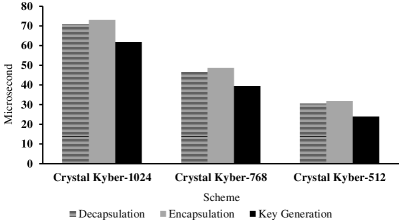
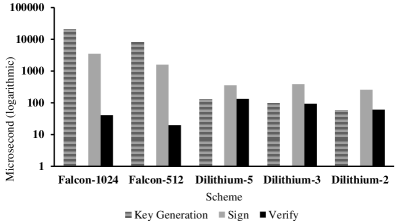
实验结果
研究问题
- RQ1NIST标准化的PQC方案在安全性、性能及侧信道抗性方面存在哪些关键差异?
- RQ2物联网、区块链及机器学习系统中的应用特定需求(如尺寸、速度、隐私)如何与通用PQC标准产生冲突?
- RQ3在设计阶段而非实现后补丁的方式中,侧信道抗性能在多大程度上被集成到PQC方案中?
- RQ4存储现在、稍后解密(SNDL)攻击对长期数据机密性有何影响,以及向PQC迁移的紧迫性如何?
- RQ5是否存在一种单一标准化的PQC方案可满足所有实际应用场景,还是应用特定PQC开发不可避免?
主要发现
- NIST的标准化流程已选定基于格的方案(如Kyber,密钥封装机制)和Dilithium(签名)作为主要候选方案,因其在安全性和效率之间实现了良好平衡。
- 侧信道攻击仍是PQC实现中的关键威胁,从设计之初就具备侧信道抗性的方案(如Raccoon)相比后期加固的现有方案展现出更高的效率。
- 存储现在、稍后解密(SNDL)攻击对长期数据机密性构成严重风险,即使在大规模量子计算机出现之前,也亟需向PQC迁移。
- 没有单一PQC方案能满足所有应用需求:物联网侧重低成本与低功耗,区块链要求紧凑签名,而机器学习则需要强隐私保护原 primitive。
- 通用PQC的标准化是必要但不充分的;标准化之后,专门的PQC竞赛与应用特定方案很可能会陆续出现。
- 密码敏捷性——即快速迁移到新密码系统的能力——至关重要,应优先考虑,以确保后量子时代系统的长期韧性。
更好的研究,从现在开始
从阅读论文到最终审阅,大幅缩短您的研究时间。
无需绑定信用卡
本解读由 AI 生成,并经人工编辑审核。