
[论文解读] Experimental analysis of energy transfers between a quantum emitter and light fields
该论文通过半导体微腔中的量子点,实验测量了量子发射体与光场之间的幺正能量转移和关联能量转移。通过在自发辐射过程中进行自混合外差测量,作者发现幺正能量转移仅占总能量的约50%,且随退相位效应而减少;并证明了与经典场的干涉揭示了能量交换对量子纯度的依赖性。
Energy transfer between quantum systems can either be achieved through an effective unitary interaction or through the generation of entanglement. This observation defines two types of energy exchange: unitary and correlation energy. Here we propose and implement experimental protocols to access these energy transfers in interactions between a quantum emitter and light fields. Upon spontaneous emission, we measure the unitary energy transfer from the emitter to the optical field and show that it never exceeds half of the total energy and is reduced when introducing decoherence. We then study the interference of the emitted field and a laser field at a beam splitter and show that the energy transfers quantitatively depend on the quantum purity of the emitted field.
研究动机与目标
- 实验探测量子能量转移过程中幺正与关联能量的区分。
- 测量量子发射体向光子场自发辐射过程中所转移的幺正能量比例。
- 研究量子相干性和纯度如何影响封闭量子系统中的能量交换。
- 实验验证能量转移效率取决于所发射场的量子特性。
- 验证关于自发辐射中最大50%幺正能量转移极限的理论预测。
提出的方法
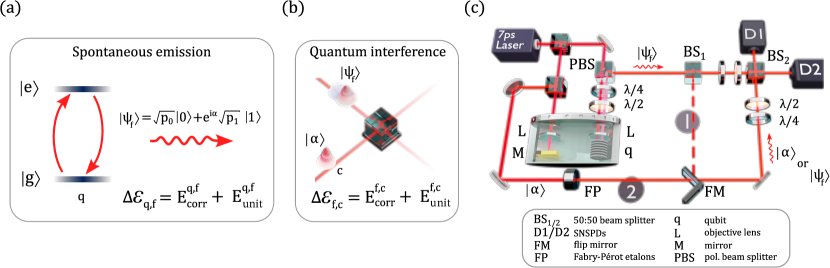
- 使用嵌入光学微腔中的单个InGaAs/GaAs量子点作为可调谐量子发射体。
- 采用自混合外差干涉测量法,通过发射光子与其延迟副本之间的干涉来测量幺正能量比例。
- 利用分束器将自发辐射的光子场与来自同一激光源的相干经典场进行干涉。
- 使用超导纳米线单光子探测器(SNSPDs)记录两种干涉构型下的输出强度。
- 通过温度调谐控制量子发射体的相干性,以研究退相位对能量转移的影响。
- 利用二阶相关函数和不可区分性度量对光子态纯度进行定量分析。
实验结果
研究问题
- RQ1在自发辐射过程中,转移总能量中幺正能量所占比例是多少?是否达到理论上的50%极限?
- RQ2由提高发射体温度引起的环境退相位如何影响幺正能量转移比例?
- RQ3所发射光子场的量子纯度在多大程度上影响其与经典场之间的能量交换?
- RQ4量子场与相干经典场之间的干涉能否定量揭示关联能量分量?
- RQ5一阶与二阶场相关性如何与能量向幺正和关联分量的分配相关联?
主要发现
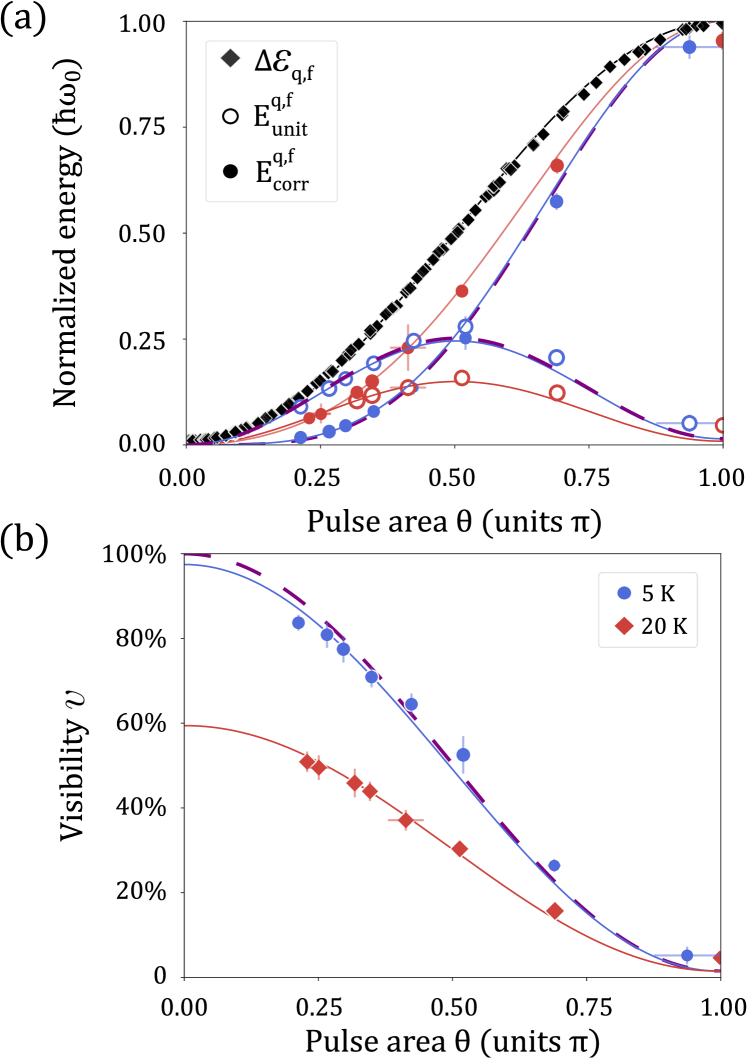
- 实验测得的自发辐射过程中的幺正能量转移最大值约为总能量的50%,与理论预测一致。
- 提高发射体温度会降低幺正能量比例,表明退相位与能量转移中相干性的损失存在直接关联。
- 与经典场干涉的能量转移效率在定量上依赖于所发射光子场的量子纯度,该结果通过二阶相关测量得到证实。
- 退相位导致的幺正能量转移减少与二阶强度相关性的增加相关,表明单光子特性减弱。
- 所测得的不可区分性与光子数纯度与能量分配存在强相关性,验证了理论框架。
- 实验装置成功实现了对封闭双粒子量子系统中幺正与关联能量分量的隔离与定量测量。
更好的研究,从现在开始
从阅读论文到最终审阅,大幅缩短您的研究时间。
无需绑定信用卡
本解读由 AI 生成,并经人工编辑审核。