
[论文解读] Exposing Provenance Metadata Using Different RDF Models
本文评估了五种RDF provenance模型——N元、单属性、Nanopublication及其基数断言变体——在表示生命科学关系及其 provenance 元数据方面的表现。基于一个大规模整合的化学-基因-疾病关系数据集,研究结果表明,基数断言显著减少了查询执行时间,通过消除冗余三元组实现,但最佳性能因RDF存储系统而异,表明在不同系统中并无单一模型始终最优。
A standard model for exposing structured provenance metadata of scientific assertions on the Semantic Web would increase interoperability, discoverability, reliability, as well as reproducibility for scientific discourse and evidence-based knowledge discovery. Several Resource Description Framework (RDF) models have been proposed to track provenance. However, provenance metadata may not only be verbose, but also significantly redundant. Therefore, an appropriate RDF provenance model should be efficient for publishing, querying, and reasoning over Linked Data. In the present work, we have collected millions of pairwise relations between chemicals, genes, and diseases from multiple data sources, and demonstrated the extent of redundancy of provenance information in the life science domain. We also evaluated the suitability of several RDF provenance models for this crowdsourced data set, including the N-ary model, the Singleton Property model, and the Nanopublication model. We examined query performance against three commonly used large RDF stores, including Virtuoso, Stardog, and Blazegraph. Our experiments demonstrate that query performance depends on both RDF store as well as the RDF provenance model.
研究动机与目标
- 评估不同RDF provenance模型对生命科学知识图谱中查询性能和图大小的影响。
- 解决包含数百万对关系的集成生物医学数据集中provenance元数据冗余的问题。
- 评估基数断言模型是否可减少基于证据的假设生成中的计算开销。
- 在三个主要RDF存储系统中,比较N元、单属性和Nanopublication模型在有无基数断言情况下的性能表现。
- 为语义网在生物医学研究中的标准化、高效且互操作的provenance模型设计提供依据。
提出的方法
- 从14个生命科学数据库中收集并标准化了150万个化学、基因与疾病之间的成对关系,使用标准化标识符(CIDs、GIDs、UMLS CUIs)。
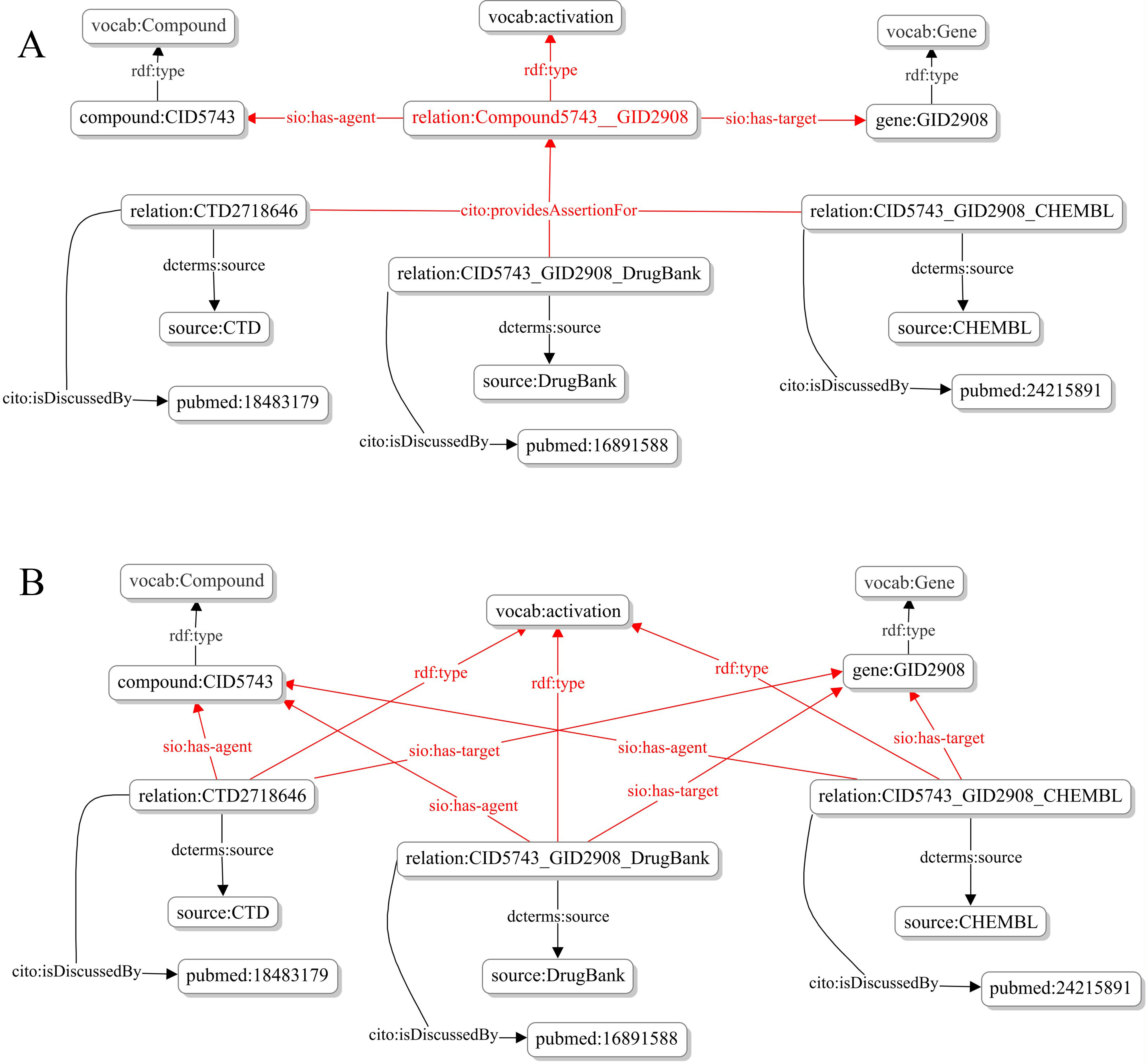
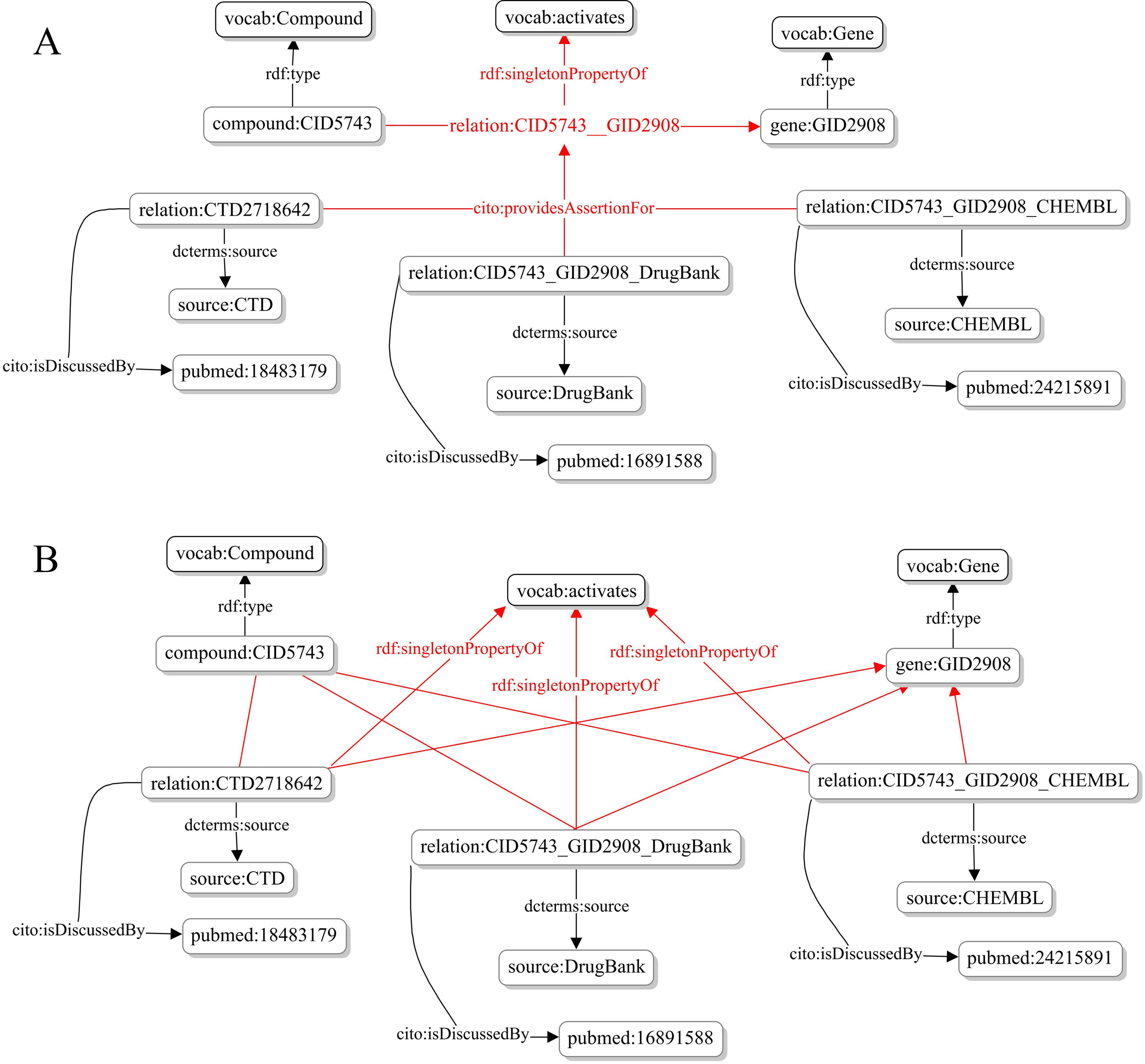
- 实现了五种RDF provenance模型:N元、单属性和Nanopublication模型,均包含与不包含基数断言,使用cito:providesAssertionFor将断言与证据关联。
- 为每种模型生成RDF图,并在三个RDF存储系统(Virtuoso、Stardog和Blazegraph)上测量图大小和查询执行时间。
- 设计了四个SPARQL查询(Q1–Q4),分别针对provenance和关系遍历的不同方面,以评估在不同工作负载下的性能表现。
- 使用统计分析比较不同模型和存储系统下平均执行时间与标准差,重点关注有无基数断言带来的性能差异。
实验结果
研究问题
- RQ1在生命科学数据集中,包含基数断言如何影响表示provenance元数据的RDF图的大小?
- RQ2在不同RDF存储系统中,N元、单属性或Nanopublication模型中哪一种能提供最佳查询性能?
- RQ3provenance元数据冗余在大规模生物医学知识图谱中对查询执行时间的影响程度如何?
- RQ4基数断言的性能优势是否在不同RDF存储系统(Virtuoso、Stardog、Blazegraph)中存在差异?
- RQ5是否可通过标准化的、非冗余的provenance模型提升基于证据的知识发现的可扩展性与效率?
主要发现
- 在Virtuoso中,无基数断言的N元模型查询性能最慢,Q1耗时269.854 ± 99.266秒,而采用基数断言的变体(模型III)将时间缩短至0.665 ± 0.263秒。
- 在Blazegraph中,Nanopublication模型(模型V)在Q4上实现了最快的平均查询时间(0.732 ± 0.133秒),显著优于N元模型(83.384 ± 1.612秒)。
- 对于Q3,Blazegraph中采用基数断言的SP模型(模型IV)表现最快(0.465 ± 0.054秒),而Virtuoso中采用基数断言的N元模型(模型III)最快(3.075 ± 0.243秒)。
- 基数断言模型通过消除冗余三元组,显著降低了图遍历中的计算开销,尤其在执行笛卡尔积的联合查询中效果明显。
- 查询性能在不同RDF存储系统中表现差异显著:Virtuoso偏好Nanopublication模型,Stardog更倾向使用基数断言的SP模型,而Blazegraph在Nanopublication模型上表现最佳。
- 尽管存在性能差异,但在应用provenance限制后,有无基数断言的模型性能表现相近,表明基数断言在无过滤或广泛搜索场景中效益最大。
更好的研究,从现在开始
从阅读论文到最终审阅,大幅缩短您的研究时间。
无需绑定信用卡
本解读由 AI 生成,并经人工编辑审核。