
[论文解读] Fast UAV Trajectory Optimization using Bilevel Optimization with Analytical Gradients
该论文提出了一种双层优化框架,将无人机轨迹规划分解为空间(状态)和时间(时机)变量,实现了高效且全局最优的轨迹生成。通过利用来自二次规划对偶性的解析梯度,该方法加速了收敛并提升了精度,相较于有限差分法具有显著优势,在反应式目标跟踪任务中实现了实时性能,且在速度和可靠性方面均有显著提升。
We present an efficient optimization framework that solves trajectory optimization problems by decoupling state variables from timing variables, thereby decomposing a challenging nonlinear programming (NLP) problem into two easier subproblems. With timing fixed, the state variables can be optimized efficiently using convex optimization, and the timing variables can be optimized in a separate NLP, which forms a bilevel optimization problem. The challenge of obtaining the gradient of the timing variables is solved by sensitivity analysis of parametric NLPs. The exact analytic gradient is computed from the dual solution as a by-product, whereas existing finite-difference techniques require additional optimization. The bilevel optimization framework efficiently optimizes both timing and state variables which is demonstrated on generating trajectories for an unmanned aerial vehicle. Numerical experiments demonstrate that bilevel optimization converges significantly more reliably than a standard NLP solver, and analytical gradients outperform finite differences in terms of computation speed and accuracy. Physical experiments demonstrate its real-time applicability for reactive target tracking tasks.
研究动机与目标
- 为解决无人机轨迹优化中时间参数化低效且不可靠的问题,该问题常导致高加加速度(jerk)与高能耗。
- 开发一种可扩展且实时的轨迹优化框架,联合优化空间路径与时间变量。
- 克服传统有限差分梯度估计在双层轨迹优化中面临的计算与精度局限。
- 通过高效的梯度计算,实现反应式无人机任务(如目标跟踪)的实时应用。
- 确保在所有优化阶段均实现收敛与可行性,即使在非光滑条件下亦然。
提出的方法
- 将轨迹优化问题分解为两个层次:下层为固定时机下的凸二次规划(QP),用于空间变量(位置、速度、加速度);上层为非线性规划(NLP),用于时机变量优化。
- 利用参数化QP的敏感性分析,从对偶解(拉格朗日乘子)中计算出目标函数关于时机变量的精确解析梯度。
- 在上层问题中采用带线搜索和投影的梯度下降法,并通过次梯度处理非光滑区域。
- 利用多项式样条的零空间结构,确保可行性并保持约束矩阵满秩,从而保证强二阶必要条件(SSOSC)。
- 采用Hermite-Simpson配点法实现直接 collocation 基准对比,与标准NLP求解器进行性能比较。
- 采用兼顾总加加速度与时间成本的代价函数,通过加权和目标促进生成平滑且快速的轨迹。
实验结果
研究问题
- RQ1在无人机轨迹规划中,基于解析梯度的双层优化是否能比标准NLP求解器在收敛速度与可靠性方面表现更优?
- RQ2与有限差分近似相比,利用QP对偶性获得的解析梯度是否能提升精度并减少计算时间?
- RQ3该双层框架是否能在反应式无人机任务(如目标跟踪)中实现实时性能?
- RQ4当上层代价函数因约束资格条件不满足而出现非光滑性时,该方法如何处理?
- RQ5将空间与时间优化解耦对轨迹质量有何影响,特别是在加加速度与能效效率方面?
主要发现
- 该双层优化框架在高维、非凸轨迹问题中,收敛性显著优于标准NLP求解器。
- 从对偶解中计算出的解析梯度相比有限差分法显著减少计算时间并提升精度,后者需在每步梯度计算中多次求解QP。
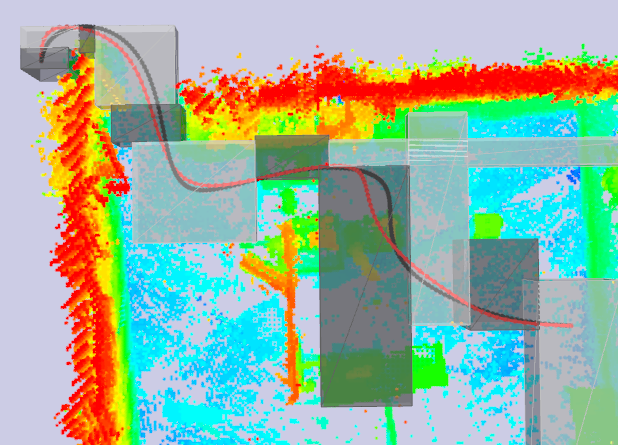
- 该方法在物理实验中实现了实时性能,成功支持了低加加速度、高能效的反应式目标跟踪轨迹生成。
- 该框架在所有优化步骤中均保证可行性,允许任意终止而不影响解的质量。
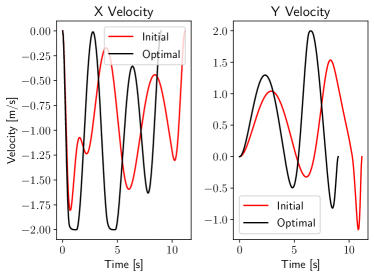
- 数值实验表明,与启发式时间参数化方法相比,所提方法更有效地降低了轨迹加加速度与时间成本。
- 理论分析证实,在标准无人机约束条件下,该方法能保持强二阶必要条件(SSOSC),确保局部最优性与收敛性。
更好的研究,从现在开始
从阅读论文到最终审阅,大幅缩短您的研究时间。
无需绑定信用卡
本解读由 AI 生成,并经人工编辑审核。