
[论文解读] Fault Diagnosis on Induction Motor using Machine Learning and Signal Processing
本研究提出了一种基于机器学习与信号处理的框架,用于使用 MATLAB Simulink 对三相感应电动机进行故障诊断。该框架生成了 150,000 个数据点,涵盖正常状态及四种故障类型(断路、短路、过载、断条),应用 FFT 进行特征提取,并评估了多种模型,其中决策树模型达到 92% 的准确率,展现出在工业故障分类中高度可解释性和鲁棒性。
The detection and identification of induction motor faults using machine learning and signal processing is a valuable approach to avoiding plant disturbances and shutdowns in the context of Industry 4.0. In this work, we present a study on the detection and identification of induction motor faults using machine learning and signal processing with MATLAB Simulink. We developed a model of a three-phase induction motor in MATLAB Simulink to generate healthy and faulty motor data. The data collected included stator currents, rotor currents, input power, slip, rotor speed, and efficiency. We generated four faults in the induction motor: open circuit fault, short circuit fault, overload, and broken rotor bars. We collected a total of 150,000 data points with a 60-40% ratio of healthy to faulty motor data. We applied Fast Fourier Transform (FFT) to detect and identify healthy and unhealthy conditions and added a distinctive feature in our data. The generated dataset was trained different machine learning models. On comparing the accuracy of the models on the test set, we concluded that the Decision Tree algorithm performed the best with an accuracy of about 92%. Our study contributes to the literature by providing a valuable approach to fault detection and classification with machine learning models for industrial applications.
研究动机与目标
- 开发一种可靠、自动化的系统,用于早期检测感应电动机故障,以防止工业环境中非计划停机。
- 通过数据驱动方法实现预测性维护,解决感应电动机 35–40% 的故障率(主要由电气故障引起)。
- 评估并比较多种机器学习模型在使用实时电动机参数对多种故障类型进行分类时的性能。
- 通过在仿真电动机数据上结合信号处理(FFT)与机器学习,提升故障检测的准确性。
- 提供一种适用于工业 4.0 应用的实用、可解释且鲁棒的解决方案,基于 MATLAB Simulink 构建。
提出的方法
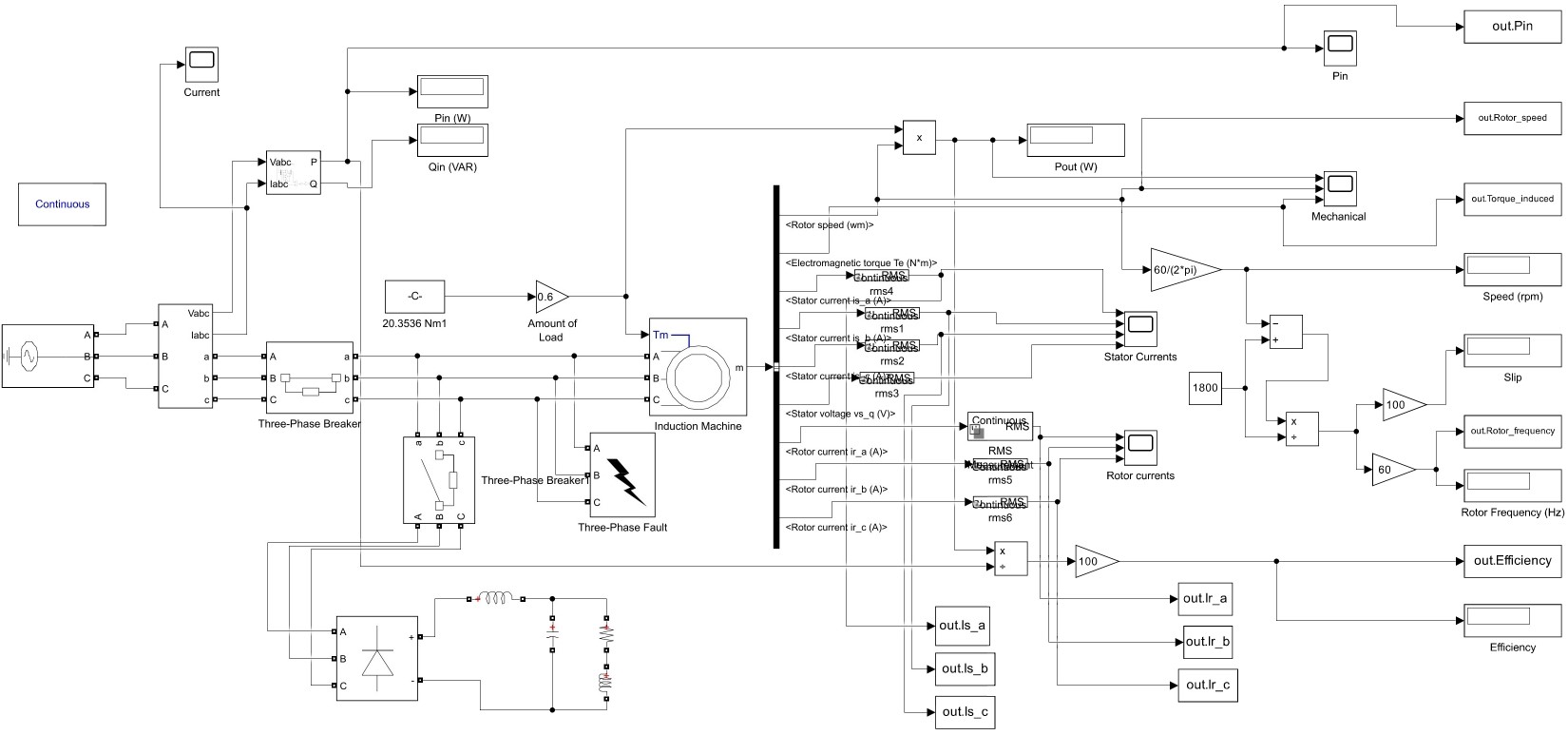
- 在 MATLAB Simulink 中建立了三相感应电动机模型,并集成传感器以监测定子电流、转子电流、输入功率、转差率、转子转速和效率。
- 通过专用模块(如三相断路器、故障模块、RLC 电路用于谐波模拟)对四种故障类型(断路、短路、过载、断条)进行仿真。
- 共收集 150,000 个数据点,健康与故障状态按 60-40 比例划分,确保训练与测试集的平衡。
- 应用快速傅里叶变换(FFT)提取频域特征,识别与特定故障相关的谐波失真。
- 使用 MATLAB 中的 Classification Learner 工具箱训练并比较多种模型:决策树、支持向量机、逻辑回归和朴素贝叶斯。
- 通过准确率、精确率、召回率和 F1 分数评估模型性能,并利用特征重要性分析与混淆矩阵解释结果。
实验结果
研究问题
- RQ1在使用仿真数据对多种感应电动机故障进行分类时,哪种机器学习模型的准确率最高?
- RQ2基于 FFT 的信号处理在增强电动机电流与功率信号的故障判别能力方面效果如何?
- RQ3决策树中的特征重要性排序在多大程度上反映了电动机参数在故障诊断中的物理意义?
- RQ4在真实工业数据场景中,不同算法对噪声和异常值的鲁棒性如何比较?
- RQ5结合信号处理与可解释机器学习的混合方法,能否实现适用于工业 4.0 系统的可靠、实时故障诊断?
主要发现
- 决策树算法在测试中达到最高的 92% 准确率,优于支持向量机、逻辑回归和朴素贝叶斯。
- 混淆矩阵显示,断路与短路故障的分类准确率均为 100%,表明其信号特征具有高度可区分性。
- 特征重要性分析确认,定子电流、转子电流和输入功率是故障分类中最具影响力的变量。
- 决策树模型对噪声和异常值表现出强鲁棒性,适用于存在数据不完美的真实工业环境。
- 基于 FFT 的预处理成功提取了故障特异性频率分量,尤其在断条故障中表现显著,其引入了明显的谐波失真。
- 通过矩阵图分析确认数据集中无冗余特征,无需主成分分析(PCA),从而保持了模型的可解释性。
更好的研究,从现在开始
从阅读论文到最终审阅,大幅缩短您的研究时间。
无需绑定信用卡
本解读由 AI 生成,并经人工编辑审核。