
[论文解读] Federated Learning for Intrusion Detection System: Concepts, Challenges and Future Directions
本文提出将联邦学习(FL)作为一种保护隐私的入侵检测系统(IDS)解决方案,实现无需共享原始数据即可在边缘设备之间进行去中心化的机器学习模型训练。本文回顾了FL在异常检测中的应用,识别出数据异构性、投毒攻击和资源限制等关键挑战,并提出通过分层聚类、区块链集成和轻量化模型等解决方案,以提升基于FL的IDS在安全性、准确性和效率方面的表现。
The rapid development of the Internet and smart devices trigger surge in network traffic making its infrastructure more complex and heterogeneous. The predominated usage of mobile phones, wearable devices and autonomous vehicles are examples of distributed networks which generate huge amount of data each and every day. The computational power of these devices have also seen steady progression which has created the need to transmit information, store data locally and drive network computations towards edge devices. Intrusion detection systems play a significant role in ensuring security and privacy of such devices. Machine Learning and Deep Learning with Intrusion Detection Systems have gained great momentum due to their achievement of high classification accuracy. However the privacy and security aspects potentially gets jeopardised due to the need of storing and communicating data to centralized server. On the contrary, federated learning (FL) fits in appropriately as a privacy-preserving decentralized learning technique that does not transfer data but trains models locally and transfers the parameters to the centralized server. The present paper aims to present an extensive and exhaustive review on the use of FL in intrusion detection system. In order to establish the need for FL, various types of IDS, relevant ML approaches and its associated issues are discussed. The paper presents detailed overview of the implementation of FL in various aspects of anomaly detection. The allied challenges of FL implementations are also identified which provides idea on the scope of future direction of research. The paper finally presents the plausible solutions associated with the identified challenges in FL based intrusion detection system implementation acting as a baseline for prospective research.
研究动机与目标
- 应对由于数据量激增和设备数量增加,分布式异构网络中对安全、隐私保护型入侵检测日益增长的需求。
- 通过联邦学习技术在不传输原始数据的情况下训练模型,克服集中式机器学习在IDS中面临的隐私与安全局限。
- 识别并分析在FL用于IDS时面临的关键挑战,包括数据非独立同分布(non-IID)分布、模型投毒攻击、误报率以及物联网设备的资源限制。
- 提出实用解决方案,如利用区块链实现安全聚合、利用数字孪生技术建立信任机制,以及采用轻量化模型,以提升基于FL的IDS的鲁棒性与可扩展性。
- 通过阐明未解决的问题和潜在研究方向,为未来在联邦入侵检测系统领域的研究奠定基础。
提出的方法
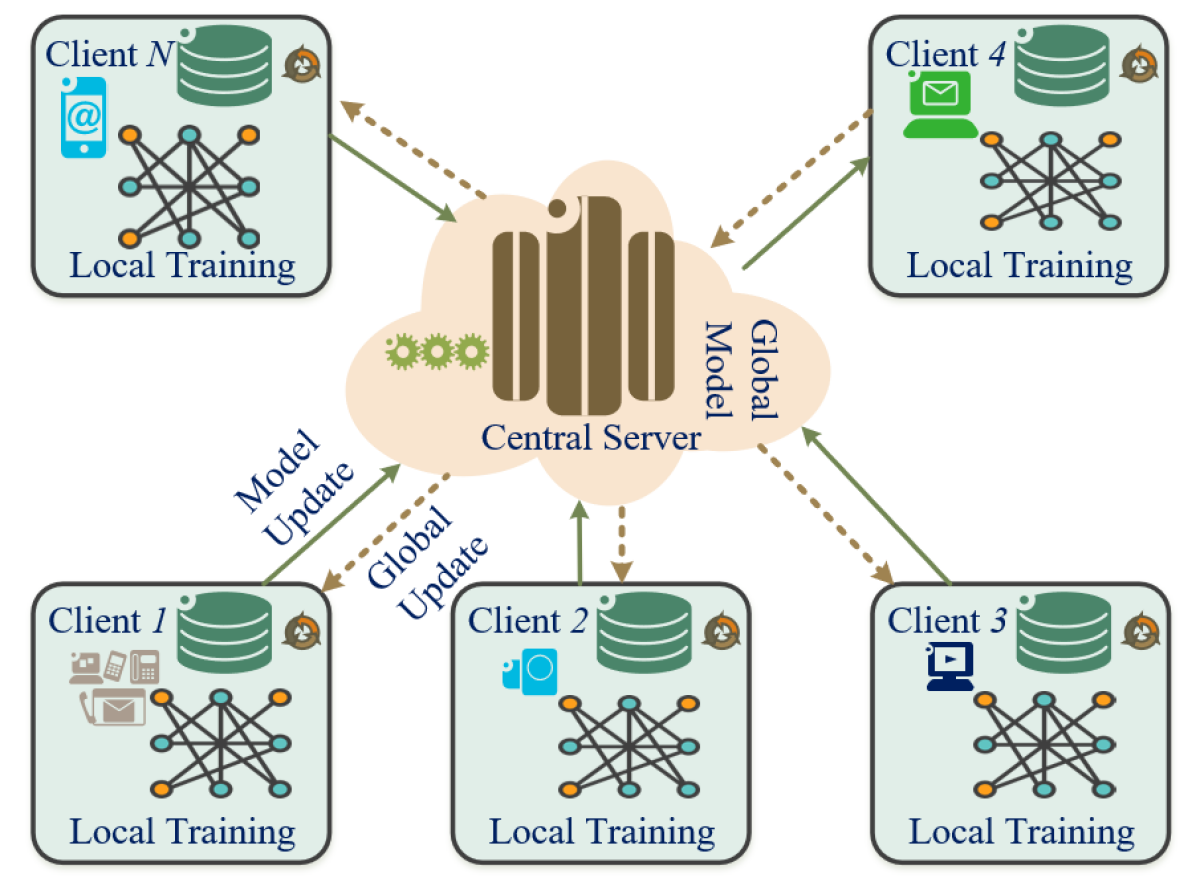
- 实施一个联邦学习框架,其中客户端(边缘设备)在其私有数据上训练本地模型,并仅将模型参数(权重)发送至中央服务器进行全局聚合。
- 通过多轮的本地模型更新与全局模型聚合,迭代优化中心化检测模型,而无需共享数据。
- 应用分层聚类技术对相似的客户端模型更新进行分组,以降低非独立同分布(non-IID)数据的影响,提升收敛速度与模型同质性。
- 集成区块链技术以记录和验证模型更新,实现安全、透明且防篡改的聚合机制,从而抵御投毒攻击。
- 采用数字孪生技术对模型更新进行仿真与验证,确保仅合法且预期的更新被接受并参与聚合过程。
- 通过轻量化深度学习模型和高效的资源分配技术,优化低功耗物联网设备中的资源使用,以支持边缘端的联邦学习训练。
实验结果
研究问题
- RQ1如何有效将联邦学习应用于构建分布式、异构网络中的隐私保护型入侵检测系统?
- RQ2在部署基于FL的IDS时,主要挑战是什么,特别是针对数据非独立同分布(non-IID)分布、模型投毒攻击和误报率的问题?
- RQ3低功耗物联网设备的资源限制如何影响联邦入侵检测的可行性与性能表现?
- RQ4哪些机制可以增强基于FL的IDS在面对诸如数据投毒和后门注入等对抗性攻击时的安全性与可靠性?
- RQ5哪些优化与架构策略能够提升收敛速度、减少误报率,并确保FL在真实入侵检测系统环境中的高效部署?
主要发现
- 联邦学习可在不传输敏感数据的前提下实现高精度的入侵检测,显著优于集中式学习方法在隐私与安全性方面的表现。
- 客户端之间数据分布的非独立同分布(non-IID)特性导致模型方差增大和收敛困难,从而在IDS中引发更高的误报率。
- 数据投毒攻击可通过操纵模型更新,注入后门或降低模型性能,严重威胁全局模型的完整性。
- 基于区块链的模型更新日志机制可增强信任度,并支持选择性聚合,从而降低恶意更新的风险。
- 对客户端模型更新进行分层聚类,可通过在异构环境中模拟数据同质性,提升收敛速度与模型质量。
- 轻量化深度学习模型与高效的资源管理技术对于在计算能力有限的低功耗物联网设备上部署基于FL的IDS至关重要。
更好的研究,从现在开始
从阅读论文到最终审阅,大幅缩短您的研究时间。
无需绑定信用卡
本解读由 AI 生成,并经人工编辑审核。