
[论文解读] Fiber-optic detection of snow avalanches using telecommunication infrastructure
本研究证明,现有电信光纤电缆可通过分布式声学传感(DAS)检测雪崩,即使雪崩未直接撞击电缆。在瑞士阿尔卑茨峰Flüelapass地区,使用一条10公里长的光纤,DAS记录到雪崩引发的地震波,其 apparent velocity >1500 m/s,应变波动达3 μm/m/s,该结果经无人机和摄像图像验证,实现了长距离、低成本、近实时的雪崩监测。
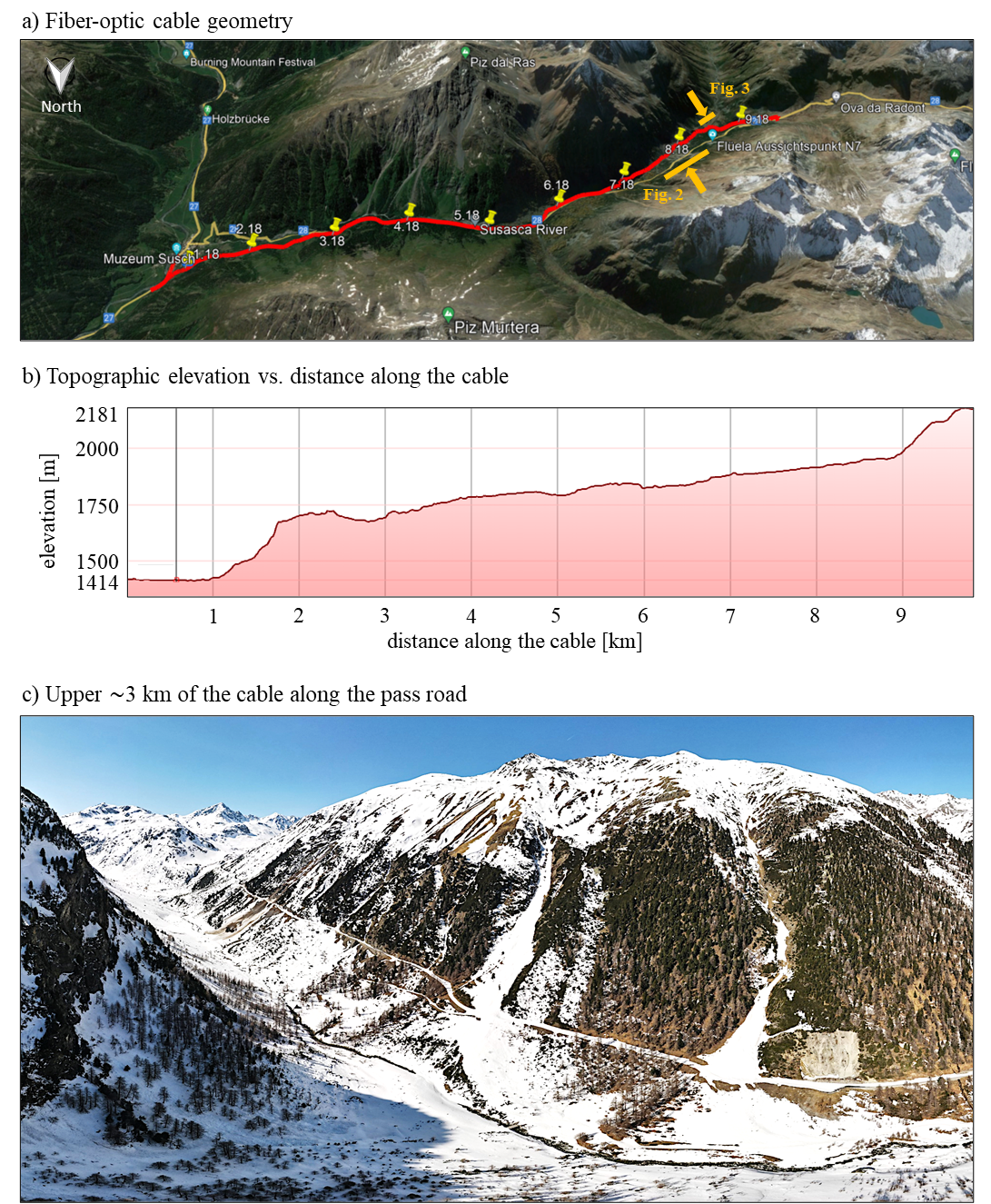
We demonstrate the detectability of snow avalanches using Distributed Acoustic Sensing (DAS) with existing fiber-optic telecommunication cables. For this, during winter 2021/2022, we interrogated a 10 km long cable closely following the avalanche prone Fluelapass road in the Swiss Alps. In addition to other signals like traffic and earthquakes, the DAS data contain clear recordings of numerous snow avalanches, even though most of them do not reach the cable. Here we present two examples of snow avalanche recordings that could be verified photographically. Our results open new perspectives for cost-effective, near-real-time avalanche monitoring over long distances using pre-installed fiber-optic infrastructure.
研究动机与目标
- 评估利用现有电信光纤电缆通过分布式声学传感(DAS)检测雪崩的可行性。
- 评估DAS是否可在雪崩未直接触及电缆的情况下,基于地震波传播检测到雪崩信号。
- 通过摄影和实地证据验证DAS记录,以确认真实世界雪崩事件。
- 探索DAS作为低成本、大范围解决方案在近实时监测雪崩和大规模运动中的潜力。
- 研究DAS信号与交通、地震等其他环境噪声源的区分能力。
提出的方法
- 使用Silixa iDAS TM 2.0探测器对瑞士阿尔卑茨峰Flüelapass地区约10公里长的现有电信光纤电缆进行探测。
- 以100 Hz采样频率和2米空间通道间隔记录原始DAS数据,沿电缆产生约5000个测量点。
- 通过敲击测试估算通道映射中电缆位置的精度,误差约20米。
- 开展实地考察和无人机调查,收集电缆附近雪崩事件的摄影证据。
- 在电缆端部安装固定摄像机,拍摄山谷的延时图像以验证事件。
- 将DAS信号与视觉记录进行对比,确认雪崩的发生及其特征。
实验结果
研究问题
- RQ1现有电信光纤的DAS信号能否检测到未直接撞击电缆的雪崩?
- RQ2雪崩事件的DAS信号特征(如apparent velocity、应变波动)与交通和地震噪声相比有何差异?
- RQ3摄影和延时图像证据在多大程度上可确认DAS识别的雪崩事件?
- RQ4DAS数据能否将雪崩信号与其他环境信号(如车辆交通或地震)区分开?
- RQ5即使雪崩本身是局部的,其可检测的DAS信号在光纤上的空间范围有多大?
主要发现
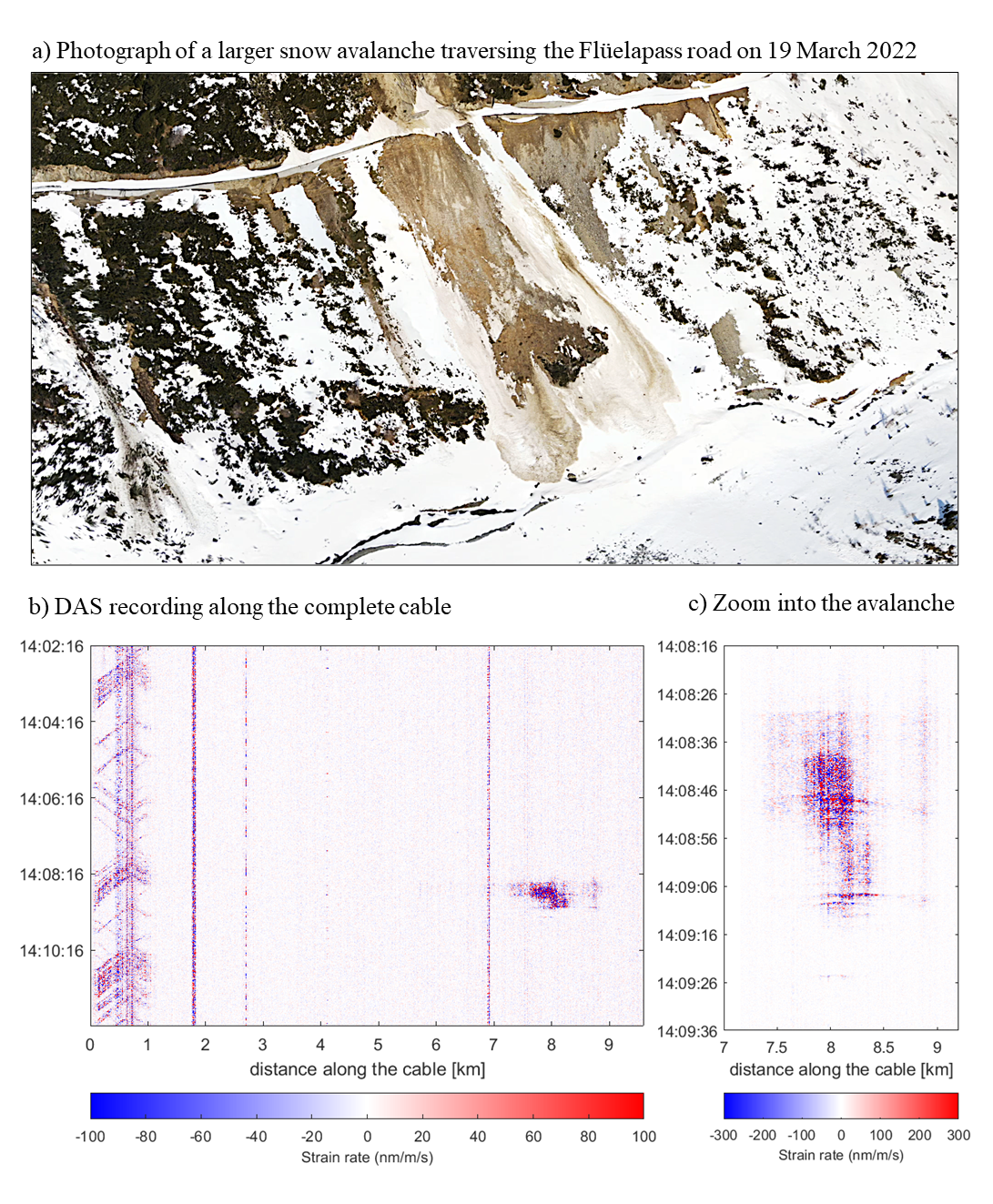
- 2022年3月19日,DAS在约1.5公里长的光纤上检测到一次大规模雪崩,尽管雪崩在河对岸距电缆约350米处停止。
- 该雪崩产生复杂的DAS信号,apparent velocity超过1500 m/s,应变波动达3 μm/m/s,即使物理雪崩宽度不足200米。
- 2022年4月15日,位于河对岸南侧的一次较小雪崩在DAS数据中被检测到数百米范围,应变波动约3 μm/m/s,经固定摄像机图像差分法确认。
- 大规模雪崩的DAS信号在约1.5公里长的光纤上具有空间相干性,表明地震波与地面及光纤之间存在强耦合。
- 交通噪声可通过其较慢的apparent velocity(<40 km/h)和在电缆前1.2公里处一致的空间模式与雪崩信号区分开。
- 本研究证实,由于地震波在地下的传播,DAS可在事件发生几公里外检测到雪崩信号,即使电缆未直接受到冲击。
更好的研究,从现在开始
从阅读论文到最终审阅,大幅缩短您的研究时间。
无需绑定信用卡
本解读由 AI 生成,并经人工编辑审核。