
[论文解读] From Assistive Technologies to Metaverse: Technologies in Inclusive Higher Education for Students with Specific Learning Difficulties
本文综述了新兴技术——人工智能(AI)、扩展现实(XR)、物联网(IoT)、数字孪生和元宇宙——在促进有特定学习障碍(SLDs)学生的包容性高等教育中的应用。论文提出了一项整合路线图,尤其聚焦联邦学习和可解释人工智能(XAI),以增强可访问性、隐私保护和个性化支持,从而实现教育参与的公平性。
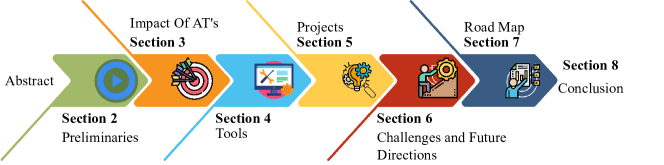
The development of new technologies and their expanding use in a wide range of educational environments are driving the transformation of higher education. Assistive technologies are a subset of cutting-edge technology that can help students learn more effectively and make education accessible to everyone. Assistive technology can enhance, maintain, or improve the capacities of students with learning difficulties. Students with learning difficulties will be greatly benefited from the use of assistive technologies. If these technologies are used effectively, students with learning difficulties can compete with their peers and complete their academic tasks. We aim to conduct this review to better understand the role of assistive technologies in providing inclusive higher education for students with learning difficulties. The review begins with the introduction of learning difficulties and their causes; inclusive education and the need for assistive technologies; the reasoning for conducting this review; and a summary of related reviews on assistive technologies for students with learning difficulties in inclusive higher education. Then, we discuss the preliminaries for the learning difficulties type and assistive technology. Later, we discuss the effects of assistive technology on inclusive higher education for students with learning difficulties. Additionally, we discuss related projects and support tools available in inclusive higher education for students with learning difficulties. We also explore the challenges and possible solutions related to using assistive technology in higher education to provide inclusive education for students with learning difficulties. We conclude the review with a discussion of potential promising future directions.
研究动机与目标
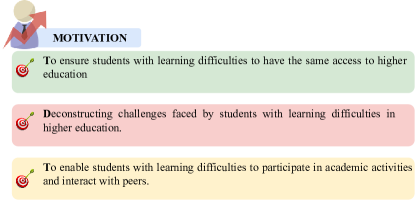
- 探讨新兴技术在促进有特定学习障碍(SLDs)学生实现包容性高等教育中的作用。
- 识别可支持SLD学生在高等教育环境中学习的关键辅助技术,如人工智能(AI)、XR、IoT、数字孪生和元宇宙。
- 分析在部署辅助技术过程中面临的主要挑战,包括数据隐私、算法偏见,以及在欠发达地区存在的可访问性问题。
- 提出解决方案,如联邦学习和可解释人工智能(XAI),以提升辅助系统中的信任度、透明度和数据安全性。
- 提供一项战略路线图,指导将先进技术整合到高等教育体系中,以确保SLD学生获得公平的教育机会和学术成功。
提出的方法
- 对关于高等教育中SLD学生辅助技术的期刊论文和会议论文进行了系统性文献综述。
- 根据其功能和集成潜力,将技术分类为人工智能(AI)、扩展现实(XR,包括VR/AR)、物联网(IoT)、数字孪生和元宇宙。
- 评估现有的辅助技术项目和工具,重点关注其设计、实施以及在高等教育环境中的实际成效。
- 识别出主要挑战,如数据隐私问题、人工智能决策缺乏透明度(黑箱特性),以及在发展中国家存在的资源不均等现象。
- 提出技术解决方案:通过在本地设备上训练模型来保护数据隐私的联邦学习,以及通过提升模型可解释性来增强用户信任的可解释人工智能(XAI)。
- 制定一项战略路线图,概述如何将先进技术有效整合到高等教育体系中,以切实支持SLD学生。
实验结果
研究问题
- RQ1人工智能(AI)、XR、IoT、数字孪生和元宇宙等新兴技术如何增强有特定学习障碍(SLDs)学生的包容性高等教育?
- RQ2在高等教育中为SLD学生部署辅助技术时,主要挑战是什么,特别是关于数据隐私和算法透明度方面?
- RQ3联邦学习和可解释人工智能(XAI)如何缓解人工智能驱动的辅助系统中与隐私和信任相关的问题?
- RQ4与初等教育相比,目前在高等教育中关于SLD学生辅助技术的研究与实施处于何种状态?
- RQ5什么样的战略路线图可以指导先进辅助技术在高等教育体系中的整合,以确保可访问性和公平性?
主要发现
- 人工智能(AI)和人机交互(HCI)是目前在高等教育中研究最广泛、应用最广泛的辅助技术。
- 扩展现实(XR)技术,如虚拟现实(VR)和增强现实(AR),在提升学生参与度、促进社会融合以及推动体验式学习方面展现出巨大潜力。
- 基于物联网(IoT)的辅助系统可通过传感器实现实时监控和自适应支持,从而提升学习环境的可访问性和响应能力。
- 数字孪生和元宇宙正成为变革性工具,能够通过虚拟仿真,让学生在实际应用前安全地练习应对现实世界挑战。
- 联邦学习通过在本地设备上训练模型,避免集中化敏感信息,从而有效保护学生数据隐私,解决了人工智能辅助系统中的一个核心关切。
- 可解释人工智能(XAI)通过阐明决策过程,提高了人工智能推荐的透明度和可信度,减少偏见,并增强教育技术中的问责机制。
更好的研究,从现在开始
从阅读论文到最终审阅,大幅缩短您的研究时间。
无需绑定信用卡
本解读由 AI 生成,并经人工编辑审核。