
[论文解读] Frontier AI Regulation: Managing Emerging Risks to Public Safety
本文主张监管性构建模块和初步安全标准,以管理可能带来严重公共安全风险的前沿人工智能模型,强调生命周期监管、可视性与合规。
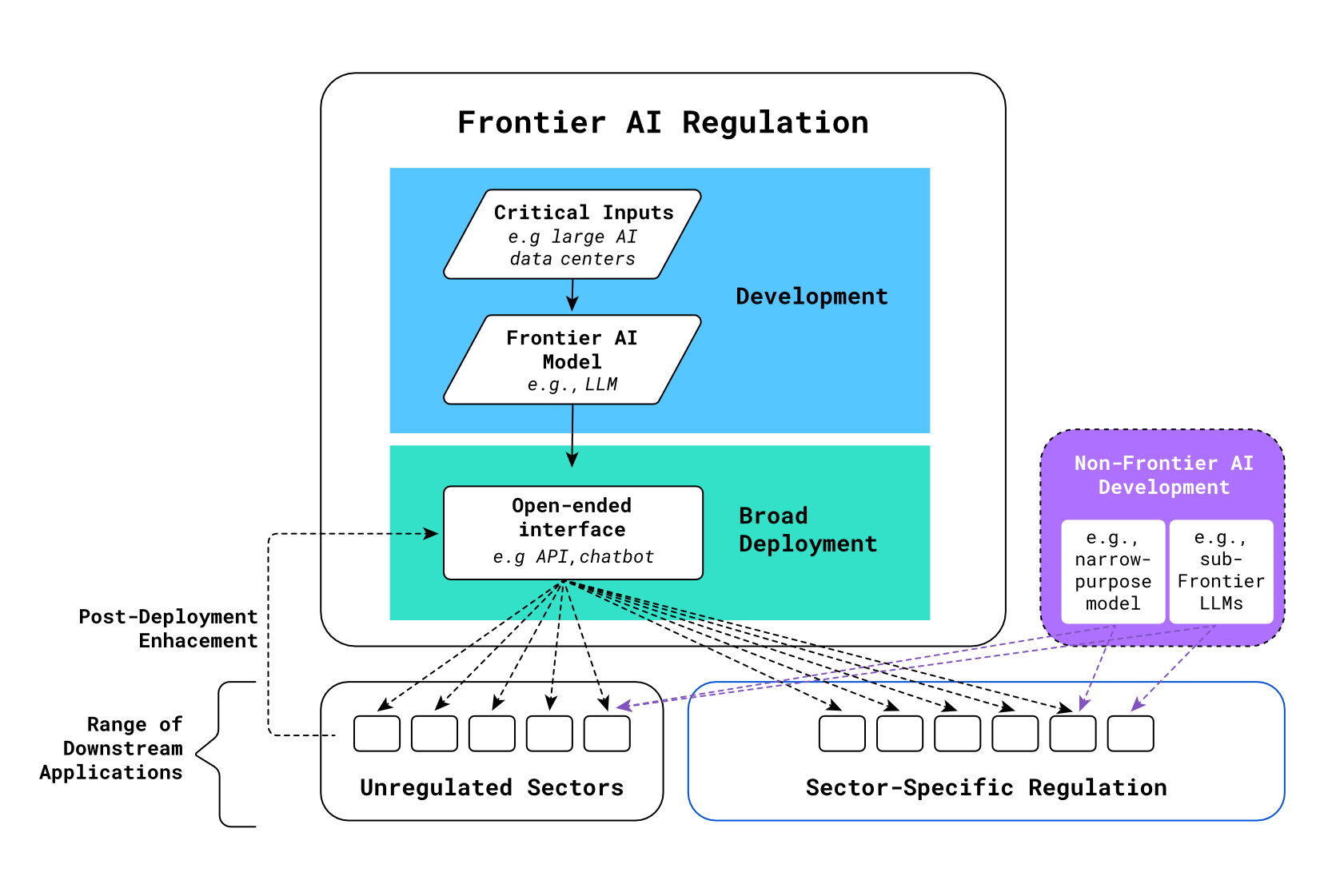
Advanced AI models hold the promise of tremendous benefits for humanity, but society needs to proactively manage the accompanying risks. In this paper, we focus on what we term "frontier AI" models: highly capable foundation models that could possess dangerous capabilities sufficient to pose severe risks to public safety. Frontier AI models pose a distinct regulatory challenge: dangerous capabilities can arise unexpectedly; it is difficult to robustly prevent a deployed model from being misused; and, it is difficult to stop a model's capabilities from proliferating broadly. To address these challenges, at least three building blocks for the regulation of frontier models are needed: (1) standard-setting processes to identify appropriate requirements for frontier AI developers, (2) registration and reporting requirements to provide regulators with visibility into frontier AI development processes, and (3) mechanisms to ensure compliance with safety standards for the development and deployment of frontier AI models. Industry self-regulation is an important first step. However, wider societal discussions and government intervention will be needed to create standards and to ensure compliance with them. We consider several options to this end, including granting enforcement powers to supervisory authorities and licensure regimes for frontier AI models. Finally, we propose an initial set of safety standards. These include conducting pre-deployment risk assessments; external scrutiny of model behavior; using risk assessments to inform deployment decisions; and monitoring and responding to new information about model capabilities and uses post-deployment. We hope this discussion contributes to the broader conversation on how to balance public safety risks and innovation benefits from advances at the frontier of AI development.
研究动机与目标
- 推动对可能具备危险性、涌现性能力的前沿AI模型进行前瞻性治理。
- 识别三个核心监管挑战:意外能力、部署安全与快速扩散。
- 提出三方监管框架:安全标准制定、监管可见性与合规机制。
- 建议通过多方参与过程以及可能的政府干预,在创新与安全之间取得平衡。
提出的方法
- 将前沿AI模型界定为具备高度能力、可能具备危险能力的基础模型。
- 概述三大监管挑战:意外能力、部署安全与扩散。
- 提出构建块:制度化安全标准、提升监管可见性、确保合规性(自律、执法、许可) 。
- 提出初步安全标准:风险评估、外部审查、基于风险的部署协议,以及部署后监测。
实验结果
研究问题
- RQ1需要哪些监管策略来治理具备危险能力的前沿AI模型?
- RQ2在快速发展的前沿AI环境中,如何制定与更新安全标准?
- RQ3哪些机制能为监管者提供对前沿AI开发与部署的可见性?
- RQ4哪些合规方法(自律、监管、许可)适用于前沿AI?
主要发现
- 仅靠自律不足以应对前沿AI风险;政府介入可能是必要的。
- 提出三元监管:安全标准制定、对开发过程的可见性、以及执行/合规机制。
- 概述初步安全标准,包括风险评估、外部审查、部署协议和部署后监控。
- 监管应在保障公共安全与不扼杀创新之间取得平衡,并能适应AI的快速进展。
- 前沿AI监管应纳入更广泛的AI风险与收益相关的政策组合。
![Figure 2: Certain capabilities seem to emerge suddenly 22 22 22 Chart from [ 63 ] . But see [ 67 ] for a skeptical view on emergence. For a response to the skeptical view, see [ 66 ] and Appendix B.](https://ar5iv.labs.arxiv.org/html/2307.03718/assets/emerge.png)
更好的研究,从现在开始
从论文设计到论文写作,大幅缩短您的研究时间。
无需绑定信用卡
本解读由 AI 生成,并经人工编辑审核。