
[论文解读] Gaia Data Release 1: Astrometry - one billion positions, two million proper motions and parallaxes
Gaia DR1 呈现对超过10亿颗恒星的天区测量结果,其中一个包含约200万颗恒星的主子集提供Hipparcos类型精度,使用TGAS和辅助数据;另有一个次级数据集,含有超过11.4亿个源在J2015.0纪元的位置。
Gaia Data Release 1 (Gaia DR1) contains astrometric results for more than 1 billion stars brighter than magnitude 20.7 based on observations collected by the Gaia satellite during the first 14 months of its operational phase. We give a brief overview of the astrometric content of the data release and of the model assumptions, data processing, and validation of the results. For stars in common with the Hipparcos and Tycho-2 catalogues, complete astrometric single-star solutions are obtained by incorporating positional information from the earlier catalogues. For other stars only their positions are obtained by neglecting their proper motions and parallaxes. The results are validated by an analysis of the residuals, through special validation runs, and by comparison with external data. Results. For about two million of the brighter stars (down to magnitude ~11.5) we obtain positions, parallaxes, and proper motions to Hipparcos-type precision or better. For these stars, systematic errors depending e.g. on position and colour are at a level of 0.3 milliarcsecond (mas). For the remaining stars we obtain positions at epoch J2015.0 accurate to ~10 mas. Positions and proper motions are given in a reference frame that is aligned with the International Celestial Reference Frame (ICRF) to better than 0.1 mas at epoch J2015.0, and non-rotating with respect to ICRF to within 0.03 mas/yr. The Hipparcos reference frame is found to rotate with respect to the Gaia DR1 frame at a rate of 0.24 mas/yr. Based on less than a quarter of the nominal mission length and on very provisional and incomplete calibrations, the quality and completeness of the astrometric data in Gaia DR1 are far from what is expected for the final mission products. The results nevertheless represent a huge improvement in the available fundamental stellar data and practical definition of the optical reference frame.
研究动机与目标
- 提供 Gaia DR1 天区测量内容及其模型假设、数据处理与验证的概述。
- 描述两类数据集(主数据集 TGAS 与次级数据集)及其精度、参考系和局限性。
- 解释 Gaia DR1 中使用的输入数据、参考系和相对论建模。
- 总结姿态与仪器标定,以及它们如何输入到天区测量解中。
提出的方法
- 将 Gaia 观测与 Hipparcos 与 Tycho-2 的先验位置结合,用于主解(TGAS)。
- 应用六参数天区测量模型(α, δ, π, μ_α*, μ_δ, v_r),在 Gaia DR1 中将 v_r 设为零。
- 使用相对论 Gaia 模型(GREM)将 BCRS 方向转化为在 CoMRS/SRS 中的 Gaia 观测方向。
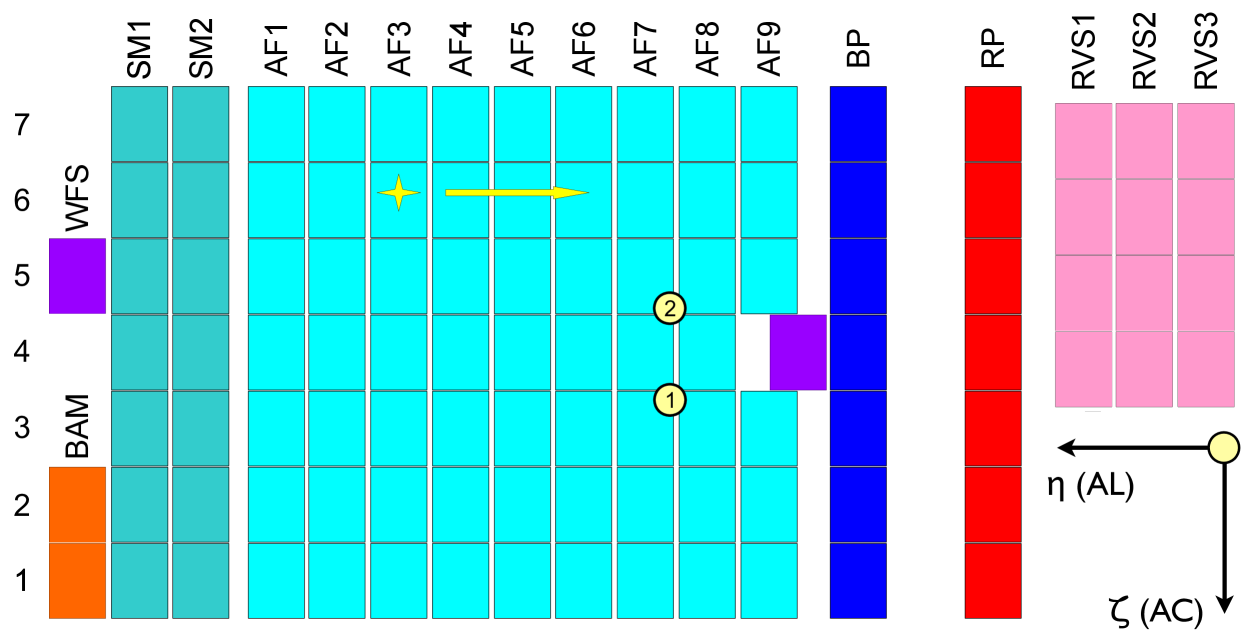
- 用几何标定和姿态样条表示来建模仪器几何。
- 在标定中加入机载计量(BAM)数据和辅助的太阳系历元。
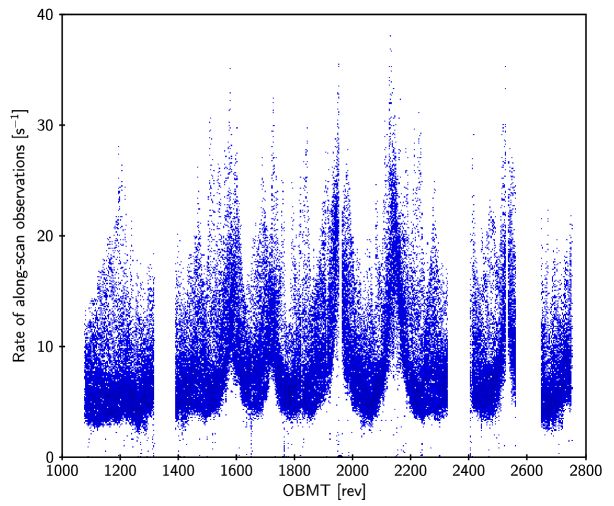
- 在主解中处理近3,500万条基本记录,在次级解中处理1.7×10^10条记录。
实验结果
研究问题
- RQ1Gaia DR1 的天区测量内容是什么,以及它如何分为主数据集和次级数据集?
- RQ2Gaia DR1 对明亮恒星与微弱源的达到的精度和参考框架对齐情况如何?
- RQ3天区测量解(TGAS 与次级)如何构建,以及使用了哪些先验?
- RQ4在 Gaia DR1 处理中,如何建模并合入相对论效应与仪器标定?
- RQ5Gaia DR1 结果的局限性与临时性质是什么,以及未来版本将如何改进?
主要发现
- 主数据集包含约2.06百万颗明亮恒星的位置、视差以及平均自行,位置/视差的典型不确定度约为0.3 mas,自行的约为1 mas/年。
- 对于约93,635颗由 Hipparcos 支撑的恒星,自行的精度达到约0.06 mas/yr。
- 微弱源在纪元 J2015.0 的位置精度约为10 mas,参考框架对齐到 ICRF,在 J2015.0 达到小于0.1 mas。
- 总体而言,Gaia DR1 提供的天区测量解是暂定的,原因是时间跨度短且标定仍在进行中,但已在基础恒星数据与光学参考框方面相较先前数据有实质性改进。
- 与 Gaia DR1 的框架相比,Hipparcos 参考框架被发现以约0.24 mas/年的速率相对于 Gaia DR1 的框架旋转。
更好的研究,从现在开始
从论文设计到论文写作,大幅缩短您的研究时间。
无需绑定信用卡
本解读由 AI 生成,并经人工编辑审核。