
[论文解读] Gauge invariant quantum thermodynamics: consequences for the first law
本文提出了一种规范不变的量子热力学框架,通过涌现的规范对称性从量子态描述中消除冗余信息,实现了对功和热的一致定义。研究表明,规范不变的热和功源自时间依赖的相干性和本征基变化,且在Lipkin-Meshkov-Glick模型中通过数值验证,长期的Krylov复杂度作为动力学序参量。
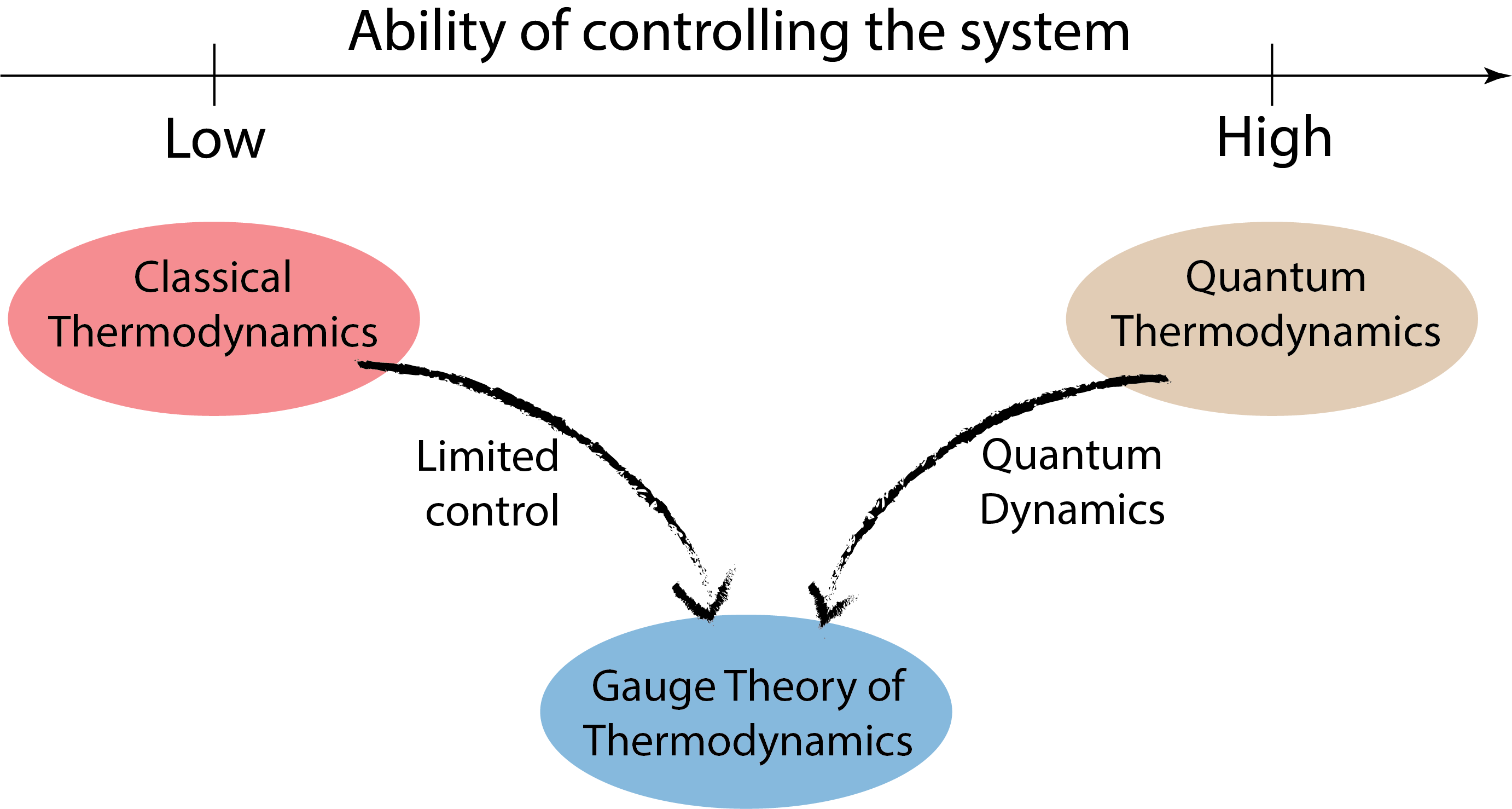
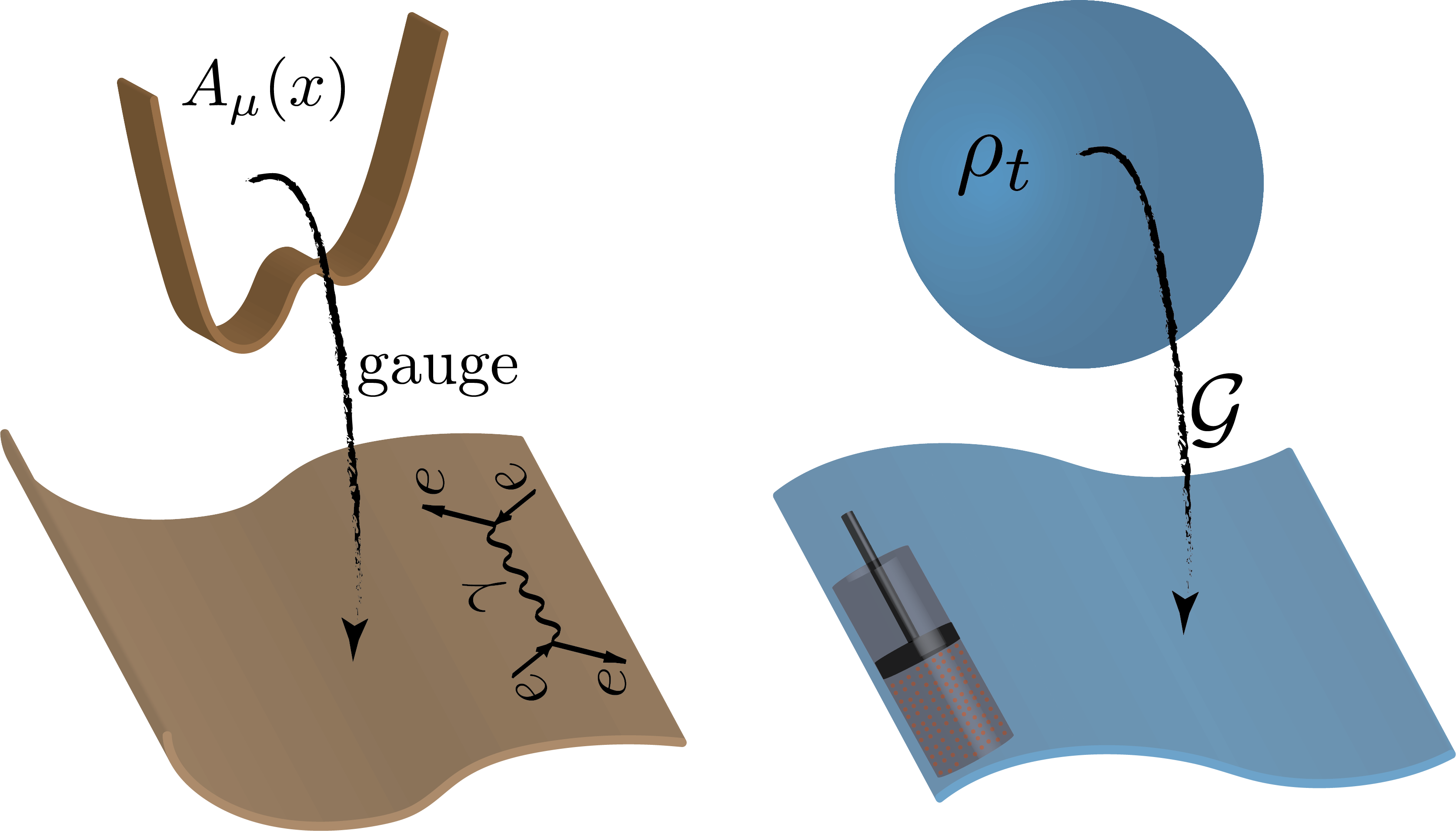
Universality of classical thermodynamics rests on the central limit theorem, due to which, measurements of thermal fluctuations are unable to reveal detailed information regarding the microscopic structure of a macroscopic body. When small systems are considered and fluctuations become important, thermodynamic quantities can be understood in the context of classical stochastic mechanics. A fundamental assumption behind thermodynamics is therefore that of coarse-graning, which stems from a substantial lack of control over all degrees of freedom. However, when quantum systems are concerned, one claims a high level of control. As a consequence, information theory plays a major role in the identification of thermodynamic functions. Here, drawing from the concept of gauge symmetry, essential in all modern physical theories, we put forward a new possible, intermediate route. Working within the realm of quantum thermodynamics we explicitly construct physically motivated gauge transformations which encode a gentle variant of coarse-graining behind thermodynamics. As a consequence, we reinterpret quantum work and heat, as well as the role of quantum coherence.
研究动机与目标
- 开发一种规范不变的量子热力学形式化,以消除量子态描述中的冗余信息。
- 通过规范对称性操作性地定义功和热等热力学量,而非依赖于基的表示。
- 建立一个框架,使热力学量从量子动力学与粗粒化的相互作用中自然涌现,类似于经典热力学。
- 在Lipkin-Meshkov-Glick模型中通过数值方法验证该框架,特别关注动力学相变和复杂度度量。
提出的方法
- 引入一种作用于时间依赖密度算符的涌现规范对称性,以消除基依赖的冗余。
- 利用能量基中哈密顿量本征值和相干性的时间导数来定义规范不变的功和热。
- 推导规范不变热为 $ Q_{\mathrm{inv}} = 2\int_{0}^{\tau} \mathrm{Re}[c_{12}(t)] \frac{\dot{\gamma}_{t}}{\lambda_{t}} dt $,其依赖于相干性的演化。
- 定义规范不变功为 $ W_{\mathrm{inv}} = \int_{0}^{\tau} [c_{22}(t) - c_{11}(t)] \dot{\lambda}_{t} dt $,其对布居变化敏感。
- 在角动量基中数值求解LMG模型的薛定谔方程,以计算系数 $ c_m(t) $ 的时间演化。
- 在Krylov基和能量基中分别计算Krylov复杂度、逆参与比率和香农熵,以比较动力学行为。
实验结果
研究问题
- RQ1如何利用规范不变性在量子系统中以基无关的方式定义功和热等热力学量?
- RQ2相干性和本征基演化在决定封闭量子系统中热传递中的作用是什么?
- RQ3Krylov复杂度是否可以作为量子相变中的动力学序参量,即使初始态破缺对称性?
- RQ4在对称初始条件下,复杂度度量如逆参与比率和香农熵在Krylov基与能量基中的行为如何?
- RQ5在LMG模型中,Krylov基在何种条件下与标准角动量基重合?
主要发现
- 长期平均的Krylov复杂度作为动力学序参量,可区分由零磁场淬火引起的两个相,其临界点与传统序参量一致。
- LMG模型的Krylov基在数学上被证明等价于标准角动量基,解释了在对称初始态下Krylov基与能量基之间观察到的动力学行为等价性。
- 当初始态具有所需对称性时,在Krylov基和能量基中,逆参与比率和香农熵表现出相同的动力学行为。
- 规范不变热 $ Q_{\mathrm{inv}} $ 仅依赖于本征基的时间导数和能量基中的相干性,而不依赖于对角布居。
- 规范不变功 $ W_{\mathrm{inv}} $ 由耦合参数 $ \lambda_t $ 的时间导数和布居差 $ c_{22}(t) - c_{11}(t) $ 决定。
- 在角动量基中对薛定谔方程的数值积分验证了功和热表达式的自洽性,从而验证了规范不变热力学框架。
更好的研究,从现在开始
从阅读论文到最终审阅,大幅缩短您的研究时间。
无需绑定信用卡
本解读由 AI 生成,并经人工编辑审核。