
[论文解读] Generalized Local Optimality for Video Steganalysis in Motion Vector Domain
本文提出了一种广义局部最优性框架,用于运动矢量(MV)域的视频隐写分析,通过动态估计MV最优性,利用可变预测运动矢量(PMVs)并将其概念扩展至PMV域。该方法在不增加计算复杂度的前提下,提升了在多种视频编码器、分辨率和预测方法下的隐写分析特征准确率与鲁棒性,实现了最先进的性能。
The local optimality of motion vectors (MVs) is an intrinsic property in video coding, and any modifications to the MVs will inevitably destroy this optimality, making it a sensitive indicator of steganography in the MV domain. Thus the local optimality is commonly used to design steganalytic features, and the estimation for local optimality has become a top priority in video steganalysis. However, the local optimality in existing works is often estimated inaccurately or using an unreasonable assumption, limiting its capability in steganalysis. In this paper, we propose to estimate the local optimality in a more reasonable and comprehensive fashion, and generalize the concept of local optimality in two aspects. First, the local optimality measured in a rate-distortion sense is jointly determined by MV and predicted motion vector (PMV), and the variability of PMV will affect the estimation for local optimality. Hence we generalize the local optimality from a static estimation to a dynamic one. Second, the PMV is a special case of MV, and can also reflect the embedding traces in MVs. So we generalize the local optimality from the MV domain to the PMV domain. Based on the two generalizations of local optimality, we construct new types of steganalytic features and also propose feature symmetrization rules to reduce feature dimension. Extensive experiments performed on three databases demonstrate the effectiveness of the proposed features, which achieve state-of-the-art in both accuracy and robustness in various conditions, including cover source mismatch, video prediction methods, video codecs, and video resolutions.
研究动机与目标
- 解决现有视频隐写分析方法中静态且不准确的局部最优性估计的局限性。
- 通过使用可变PMVs而非固定PMVs动态建模局部最优性,提升隐写分析特征的准确率。
- 将局部最优性的适用范围从MV域扩展至PMV域,增加特征多样性并提升对嵌入痕迹的敏感度。
- 开发低维、对称化的隐写分析特征,在真实世界视频变化下保持高检测性能。
- 确保所提方法在增强建模复杂度的情况下,仍保持与先前方法相当的计算效率。
提出的方法
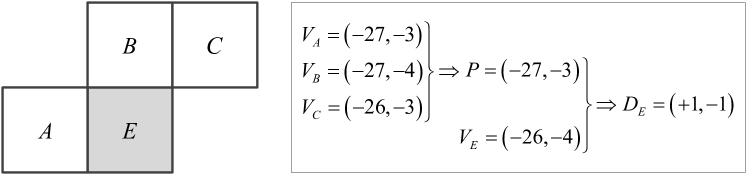
- 通过在率失真代价计算中引入预测运动矢量(PMVs)的变异性,提出动态局部最优性估计,取代静态PMV假设。
- 将局部最优性从MV域推广至PMV域,实现对MV和PMV中嵌入痕迹的检测。
- 基于广义局部最优性概念,设计两种新型隐写分析特征——GLO-MV与GLO-PMV。
- 应用特征对称化规则,在保留判别能力的同时降低特征维度。
- 使用率失真代价度量(如SAD与SATD)估计局部最优性,并重用中间计算以保持效率。
- 采用拉格朗日代价与绝对差和(SAD)作为广义最优性估计框架的核心组件。
实验结果
研究问题
- RQ1通过考虑PMV变异性而非假设固定PMVs,如何改进视频隐写分析中的局部最优性估计?
- RQ2将局部最优性从MV域扩展至PMV域,能在多大程度上提升隐写分析特征的敏感度与检测准确率?
- RQ3广义局部最优性特征是否能在多种视频编码器、分辨率和预测方法下保持高性能?
- RQ4与现有隐写分析特征提取技术相比,所提方法在计算效率上表现如何?
- RQ5特征对称化对降低维度的同时保持检测准确率有何影响?
主要发现
- 所提出的GLO-MV与GLO-PMV特征在所有测试数据库(包括DB1、DB2与DB3)中均实现了最先进的检测准确率。
- 在DB3(使用高分辨率1080p视频)中,准确率高于低分辨率CIF视频,归因于更精确的运动估计与更平滑的纹理。
- 该方法在不同视频编码器下保持强性能,H.264/AVC上的检测准确率略高于MPEG-4,后者因运动估计精度较低而表现稍差。
- 在QP=15时,所提GLO方法的特征提取时间仅为AoSO的1.40倍,且与NPE相比不超过1.37倍,表明无显著计算开销。
- 由于仅依赖基于SAD的率失真代价,GLO-PMV的特征提取速度优于NPE,显著减少计算时间。
- 该方法对载体源不匹配、视频预测方法、编码器与分辨率变化均表现出鲁棒性,在所有评估条件下均优于现有方法。
更好的研究,从现在开始
从阅读论文到最终审阅,大幅缩短您的研究时间。
无需绑定信用卡
本解读由 AI 生成,并经人工编辑审核。