
[论文解读] Haptic Transparency and Interaction Force Control for a Lower-Limb Exoskeleton
本文提出了一种针对带脚的下肢外骨骼的全外骨骼闭环补偿(WECC)方法,利用全身动力学模型与关节力矩测量,实现实时精确跟踪期望的交互力矩。WECC控制器在整个步态周期内均表现出一致的低交互力矩误差,在透明度和力跟踪性能上优于简化模型和被动外骨骼。
Controlling the interaction forces between a human and an exoskeleton is crucial for providing transparency or adjusting assistance or resistance levels. However, it is an open problem to control the interaction forces of lower-limb exoskeletons designed for unrestricted overground walking. For these types of exoskeletons, it is challenging to implement force/torque sensors at every contact between the user and the exoskeleton for direct force measurement. Moreover, it is important to compensate for the exoskeleton's whole-body gravitational and dynamical forces, especially for heavy lower-limb exoskeletons. Previous works either simplified the dynamic model by treating the legs as independent double pendulums, or they did not close the loop with interaction force feedback. The proposed whole-exoskeleton closed-loop compensation (WECC) method calculates the interaction torques during the complete gait cycle by using whole-body dynamics and joint torque measurements on a hip-knee exoskeleton. Furthermore, it uses a constrained optimization scheme to track desired interaction torques in a closed loop while considering physical and safety constraints. We evaluated the haptic transparency and dynamic interaction torque tracking of WECC control on three subjects. We also compared the performance of WECC with a controller based on a simplified dynamic model and a passive version of the exoskeleton. The WECC controller results in a consistently low absolute interaction torque error during the whole gait cycle for both zero and nonzero desired interaction torques. In contrast, the simplified controller yields poor performance in tracking desired interaction torques during the stance phase.
研究动机与目标
- 解决缺乏直接地面接触、承受高惯性和重力载荷的浮地型带脚下肢外骨骼在交互力控制方面的挑战。
- 克服先前方法依赖简化动力学模型(如独立双摆模型)或缺乏交互力反馈的局限性。
- 通过补偿外骨骼的全身体动力学与重力效应,实现在自由地面行走过程中精确、安全且透明的人机交互。
- 开发一种基于约束优化的控制框架,在满足物理与安全限制的同时跟踪期望的交互力矩。
- 在多名受试者中验证该方法在透明度与触觉再现任务中的性能表现。
提出的方法
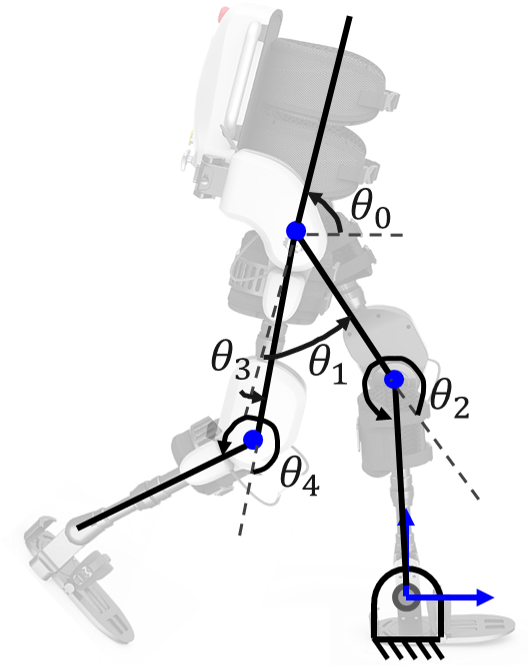
- 建立能够捕捉整个系统(包括双腿与躯干)在步态过程中耦合运动的全外骨骼动力学模型。
- 利用关节力矩传感器与地面反作用力测量,通过闭环反馈机制估计交互力矩。
- 实施一种约束优化算法,计算使实际与期望交互力矩误差最小化的所需关节力矩。
- 采用基于垂直地面反作用力的时间可变因子 α,对左右支撑阶段的动力学进行插值。
- 使用全身体动力学公式建模外骨骼的重力及科里奥利/离心力效应,包括足部与地面接触的等效惯性。
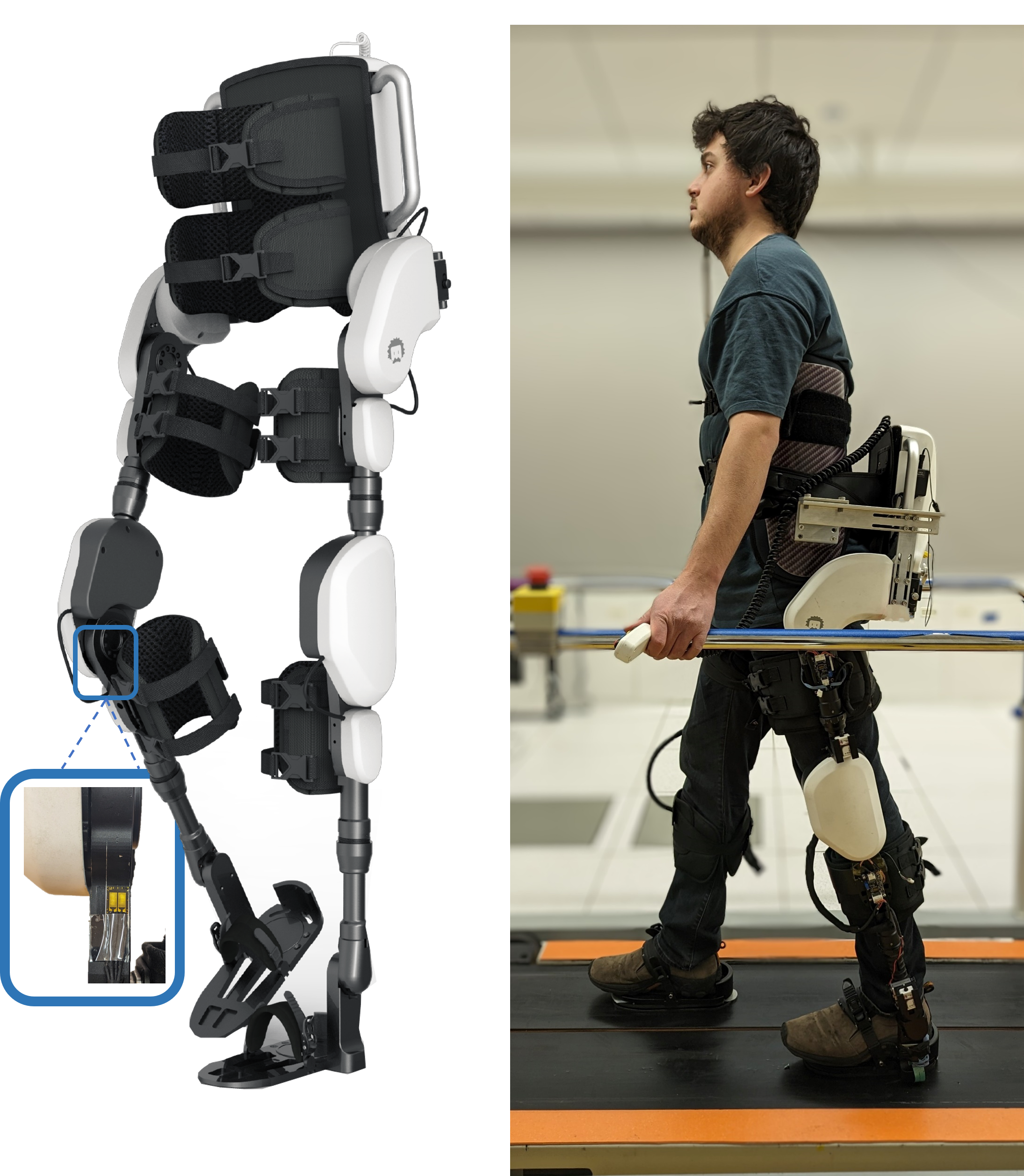
- 将控制器集成至 ExoMotus-X2 外骨骼的实时系统中,开展人机协同测试。
实验结果
研究问题
- RQ1全外骨骼闭环控制方法是否能在带脚的浮地型外骨骼中实现在地面行走过程中的精确交互力矩跟踪?
- RQ2与简化动力学模型和被动外骨骼相比,WECC控制器在交互力矩误差与透明度方面的性能如何?
- RQ3WECC方法在包括双支撑阶段在内的整个步态周期中,能否保持低误差水平?
- RQ4控制器在不同载荷条件下,如何有效补偿外骨骼全身体重力与动态效应?
- RQ5WECC控制器是否能同时支持透明控制(零交互力)与触觉再现(非零交互力矩)并保持一致性能?
主要发现
- WECC控制器在整个步态周期(包括双支撑与单支撑阶段)内均表现出一致的低绝对交互力矩误差。
- 在期望交互力矩为零(透明度条件)时,WECC控制器维持接近零的交互力矩误差,表现出优异的触觉透明度。
- 在非零期望力矩的触觉再现任务中,WECC控制器以极小误差跟踪参考力矩,证实了有效的力调节能力。
- 基于独立双摆动力学的简化控制器在单支撑阶段(特别是高惯性条件下)表现出较差的跟踪性能。
- 与两种主动控制器相比,被动外骨骼表现出显著更高的交互力矩误差,凸显了主动补偿的必要性。
- WECC试验中的关节轨迹在触觉再现期间表现出运动范围减小,与施加的虚拟弹簧与阻尼力一致。
更好的研究,从现在开始
从阅读论文到最终审阅,大幅缩短您的研究时间。
无需绑定信用卡
本解读由 AI 生成,并经人工编辑审核。