
[论文解读] How Can Applications of Blockchain and Artificial Intelligence Improve Performance of Internet of Things? -- A Survey
本综述研究了区块链与人工智能(AI)的融合,以增强物联网(IoT)系统的安全性、可扩展性和智能性。通过利用区块链的去中心化信任机制和AI的自适应学习能力,本文提出了一套统一框架,提升了在资源受限的物联网环境中的认证、威胁检测和实时决策能力,主要贡献在于识别了未来安全且智能的物联网应用在协同效应、局限性及开放挑战方面的关键问题。
In the era of the Internet of Things (IoT), massive computing devices surrounding us operate and interact with each other to provide several significant services in industries, medical as well as in daily life activities at home, office, education sectors, and so on. The participating devices in an IoT network usually have resource constraints and the devices are prone to different cyber attacks, leading to the loopholes in the security and authentication. As a revolutionized and innovated technology, blockchain, that is applied in cryptocurrency, market prediction, etc., uses a distributed ledger that records transactions securely and efficiently. To utilize the great potential of blockchain, both industries and academia have paid a significant attention to integrate it with the IoT, as reported by several existing literature. On the other hand, Artificial Intelligence (AI) is able to embed intelligence in a system, and thus the AI can be integrated with IoT devices in order to automatically cope with different environments according to the demands. Furthermore, both blockchain and AI can be integrated with the IoT to design an automated secure and robust IoT model, as mentioned by numerous existing works. In this survey, we present a discussion on the IoT, blockchain, and AI, along with the descriptions of several research works that apply blockchain and AI in the IoT. In this direction, we point out strengths and limitations of the related existing researches. We also discuss different open challenges to exploit the full capacities of blockchain and AI in designing an IoT-based model. Therefore, the highlighted challenging issues can open the door for the development of future IoT models which will be intelligent and secure based on the integration of blockchain and AI with the IoT.
研究动机与目标
- 分析区块链、AI与物联网融合的当前状态,以提升系统性能。
- 识别现有研究在物联网应用中应用区块链与AI的优势与局限性。
- 突出未来物联网系统在可扩展性、安全性、隐私保护和计算效率方面面临的关键挑战。
- 通过融合区块链与AI技术,提出一种智能、安全且去中心化的物联网框架。
- 通过阐明在现实世界物联网部署中区块链与AI部署的关键未解决问题,为未来研究提供指导。
提出的方法
- 对区块链、AI与物联网融合在多样化应用领域中的现有文献进行系统性综述。
- 基于共识机制、可扩展性和安全模型,对物联网中的区块链应用进行分类。
- 分析应用于物联网的AI技术——特别是监督学习与无监督学习——在异常检测与预测分析中的应用。
- 评估将AI推理卸载至集中式节点以减轻边缘设备工作负载的边缘计算架构。
- 研究结合AI驱动决策与区块链不可篡改审计日志的混合模型,以实现信任与问责。
- 识别无线与边缘环境中通信开销、延迟和计算资源限制等技术与架构挑战。
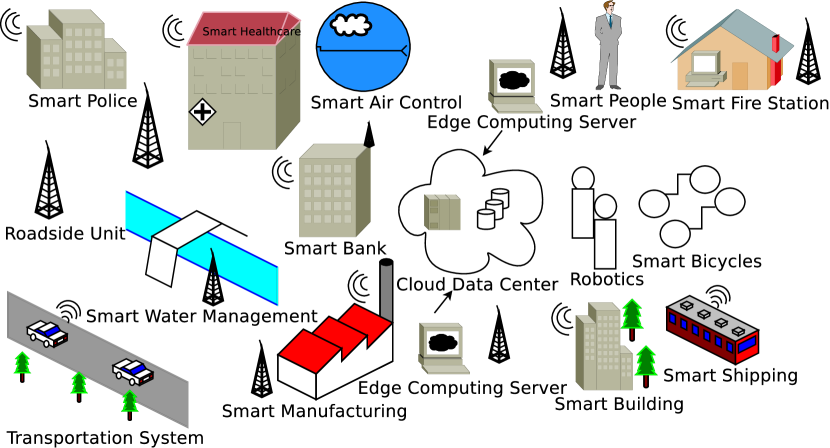
实验结果
研究问题
- RQ1区块链技术如何在资源受限的物联网网络中增强安全性、信任度与去中心化?
- RQ2人工智能在动态物联网环境中如何提升适应性、自动化与实时决策能力?
- RQ3将区块链与AI集成到物联网系统中面临的关键技术与架构挑战是什么?
- RQ4现有AI与区块链模型在物联网部署中的可扩展性、延迟与能效表现如何?
- RQ5在设计统一、智能且安全的物联网框架时,使用区块链与AI面临哪些开放性研究挑战?
主要发现
- 区块链通过实现去中心化、不可篡改且可审计的交易日志,增强了物联网安全性,降低了对中心化权威机构的依赖。
- 基于监督学习与无监督学习的人工智能异常检测可提升威胁暴露评估水平,并实现物联网网络的持续安全监控。
- 结合边缘计算与集中式AI模型可减轻边缘设备的计算负载,但通信开销仍是关键挑战。
- 以人为本的AI模型通过学习用户行为,可借助对语言、情绪与上下文的理解,弥合人机交互鸿沟。
- 将AI与5G及无线物联网网络结合可实现自适应资源管理,但需开发新模型以应对频谱、延迟与带宽限制。
- 尽管已取得进展,但在可扩展性、能效与互操作性方面仍存在显著挑战,尤其是在低功耗物联网设备上部署AI与区块链时。
更好的研究,从现在开始
从阅读论文到最终审阅,大幅缩短您的研究时间。
无需绑定信用卡
本解读由 AI 生成,并经人工编辑审核。