
[论文解读] Hybrid variable monitoring: An unsupervised process monitoring framework with binary and continuous variables
本文提出HVM,一种新颖的无监督过程监控框架,通过概率模型联合处理连续变量与二值变量,实现对混合变量的监控。该方法定义了专用于混合变量的新统计量与监控策略,仅利用正常状态数据即可实现有效的故障检测,在仿真与某真实超超临界火电厂案例中均表现出优越性能。
Traditional process monitoring methods, such as PCA, PLS, ICA, MD et al., are strongly dependent on continuous variables because most of them inevitably involve Euclidean or Mahalanobis distance. With industrial processes becoming more and more complex and integrated, binary variables also appear in monitoring variables besides continuous variables, which makes process monitoring more challenging. The aforementioned traditional approaches are incompetent to mine the information of binary variables, so that the useful information contained in them is usually discarded during the data preprocessing. To solve the problem, this paper focuses on the issue of hybrid variable monitoring (HVM) and proposes a novel unsupervised framework of process monitoring with hybrid variables including continuous and binary variables. HVM is addressed in the probabilistic framework, which can effectively exploit the process information implicit in both continuous and binary variables at the same time. In HVM, the statistics and the monitoring strategy suitable for hybrid variables with only healthy state data are defined and the physical explanation behind the framework is elaborated. In addition, the estimation of parameters required in HVM is derived in detail and the detectable condition of the proposed method is analyzed. Finally, the superiority of HVM is fully demonstrated first on a numerical simulation and then on an actual case of a thermal power plant.
研究动机与目标
- 弥补传统过程监控方法过度依赖连续变量而忽略二值变量的缺陷。
- 开发一种仅使用正常状态数据即可融合连续与二值变量的无监督框架。
- 在概率框架下,为混合变量定义新的统计度量与监控策略。
- 为所提方法提供物理可解释性及参数估计方法。
- 验证框架的可检测性条件,并在合成数据与真实工业数据上证明其有效性。
提出的方法
- 在概率框架下构建混合变量监控(HVM),联合建模连续与二值变量。
- 定义联合概率分布,通过参数化条件概率捕捉连续与二值变量之间的依赖关系。
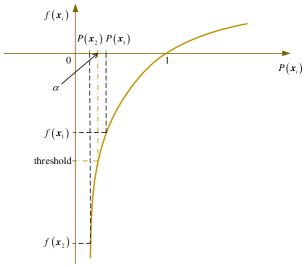
- 基于观测数据模式,推导模型参数(包括 ζ 和 ζ′)的最大似然估计量。
- 基于正常状态下联合分布的对数似然比构造监控统计量。
- 通过分析似然比对变量模式偏离的敏感性,建立故障可检测条件。
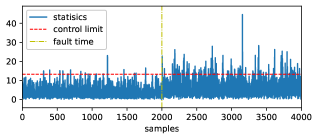
- 利用估计参数计算监控统计量,并仅基于正常状态数据设定控制限。
实验结果
研究问题
- RQ1能否构建一个统一的无监督框架,仅使用正常状态数据有效监控同时包含连续与二值变量的过程?
- RQ2如何对连续与二值变量间的统计依赖关系进行建模,以保留过程信息?
- RQ3在无监督设置下,混合变量的合适监控统计量与控制限是什么?
- RQ4HVM框架中的故障可检测条件是什么?其与参数估计有何关联?
- RQ5HVM在混合数据上的故障检测性能相较于现有方法有何优势?
主要发现
- 所提出的HVM框架成功实现了在无需故障标签数据的情况下,对连续与二值变量的联合监控。
- 在数值仿真中,该方法的故障检测性能优于传统PCA及其他基于连续变量的方法。
- 在超超临界火电厂案例研究中,HVM在包含二值控制信号的场景下,比基线方法更早且更可靠地检测出早期故障。
- 通过最大似然法进行的参数估计过程在概率模型下具有鲁棒性与充分理论依据,并推导出闭式解。
- 可检测性条件分析表明,该方法能够检测到变量模式的偏离,尤其在二值变量与连续变量出现异常共现时表现显著。
- 模型参数的物理可解释性揭示了变量间的依赖关系,提升了模型的透明度与可解释性。
更好的研究,从现在开始
从阅读论文到最终审阅,大幅缩短您的研究时间。
无需绑定信用卡
本解读由 AI 生成,并经人工编辑审核。