
[论文解读] Identification of cardiovascular diseases through ECG classification using wavelet transformation
本文使用连续小波变换和离散小波变换从ECG信号中提取特征,并应用多种分类器,在MIT-BIH派生数据上测试准确率最高可达到96%。
Cardiovascular diseases are the leading cause of mortality globally, necessitating advancements in diagnostic techniques. This study explores the application of wavelet transformation for classifying electrocardiogram (ECG) signals to identify various cardiovascular conditions. Utilizing the MIT-BIH Arrhythmia Database, we employed both continuous and discrete wavelet transforms to decompose ECG signals into frequency sub-bands, from which we extracted eight statistical features per band. These features were then used to train and test various classifiers, including K-Nearest Neighbors and Support Vector Machines, among others. The classifiers demonstrated high efficacy, with some achieving an accuracy of up to 96% on test data, suggesting that wavelet-based feature extraction significantly enhances the prediction of cardiovascular abnormalities in ECG data. The findings advocate for further exploration of wavelet transforms in medical diagnostics to improve automation and accuracy in disease detection. Future work will focus on optimizing feature selection and classifier parameters to refine predictive performance further.
研究动机与目标
- 推动自动化ECG分析以应对手工解读耗时
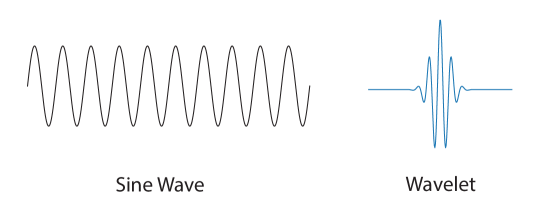
- 研究小波变换(CWT和DWT)在ECG信号特征提取中的应用
- 评估多种机器学习分类器在小波-derived特征上的表现
- 识别小波类型与深度如何影响分类性能与泛化能力
提出的方法
- 对ECG信号同时进行CWT和DWT分解以获得频率子带
- 对每个子带提取八个统计特征(均值、中位数、标准差、方差、RMS、零交叉、均值交叉、熵)
- 通过跨子带聚合特征构建每个样本的特征向量
- 训练并评估多种分类器(KNN、Linear SVC、RBF SVC、Decision Tree、Random Forest、MLP、AdaBoost、GaussianNB、Gradient Boosting)
- 在可重复结果的Jupyter环境中使用Python与PyWavelets和scikit-learn
实验结果
研究问题
- RQ1基于小波的ECG特征能否用于区分正常与异常心脏状况?
- RQ2哪种小波类型与分解深度能为ECG分类带来最佳预测性能?
- RQ3哪些机器学习模型最能利用小波特征在MIT-BIH派生数据上进行ECG分类?
- RQ4训练与测试性能如何反映潜在的过拟合与模型泛化?
主要发现
- 离散小波分解到五个层级使每个样本产生40个特征
- Sym5小波因其特性被选用于分解
- Random Forest与Gradient Boosting在测试端达到高精度(0.96和0.96),训练准确率也很高,显示出强劲表现但可能存在过拟合风险
- 某些模型(GaussianNB、AdaBoost)在训练和测试中均表现不佳,相对于其他模型
- 某些模型在训练端表现出极高的准确性,但测试端准确性波动较大,强调需要正则化与超参数调整
更好的研究,从现在开始
从阅读论文到最终审阅,大幅缩短您的研究时间。
无需绑定信用卡
本解读由 AI 生成,并经人工编辑审核。