
[论文解读] Image denoising using group sparsity residual and external nonlocal self-similarity prior
该论文提出了一种新颖的图像去噪方法,通过利用基于高斯混合模型(GMM)学习的外部非局部自相似性(NSS)先验,最小化组稀疏性残差。通过使用基于GMM的NSS先验,从噪声输入中估计干净图像的组稀疏系数,该方法在峰值信噪比(PSNR)和视觉质量方面均优于BM3D、EPLL及其他先进方法,实现了最先进的性能,同时具备更优的细节保留能力和更低的振铃伪影。
Nonlocal image representation has been successfully used in many image-related inverse problems including denoising, deblurring and deblocking. However, a majority of reconstruction methods only exploit the nonlocal self-similarity (NSS) prior of the degraded observation image, it is very challenging to reconstruct the latent clean image. In this paper we propose a novel model for image denoising via group sparsity residual and external NSS prior. To boost the performance of image denoising, the concept of group sparsity residual is proposed, and thus the problem of image denoising is transformed into one that reduces the group sparsity residual. Due to the fact that the groups contain a large amount of NSS information of natural images, we obtain a good estimation of the group sparse coefficients of the original image by the external NSS prior based on Gaussian Mixture model (GMM) learning and the group sparse coefficients of noisy image is used to approximate the estimation. Experimental results have demonstrated that the proposed method not only outperforms many state-of-the-art methods, but also delivers the best qualitative denoising results with finer details and less ringing artifacts.
研究动机与目标
- 解决仅使用噪声图像的NSS先验时,从噪声观测中重建干净图像的挑战。
- 通过引入组稀疏性残差作为优化目标,提升去噪性能。
- 利用从自然图像中学习的外部NSS先验(通过GMM学习)来更准确地估计原始干净图像的组稀疏系数。
- 比基于组稀疏性的现有方法更有效地减少振铃伪影并保留精细图像结构。
提出的方法
- 将图像去噪建模为最小化噪声图像与其估计干净版本之间的组稀疏性残差。
- 使用在干净图像块上训练的高斯混合模型(GMM)来学习自然图像的外部NSS先验。
- 利用噪声图像的组稀疏系数来近似原始干净图像所期望的组稀疏系数,该过程受外部GMM-based NSS先验的引导。
- 通过带有 $γ$-和 $ρ$-正则化的交替最小化算法,迭代更新组稀疏码和图像估计。
- 使用 $W \times W$ 搜索窗口对相似块进行分组,并为每组选择 $m$ 个最近邻,形成 $m$-维组。
- 通过聚合所有更新后的组估计,最终重建去噪图像。
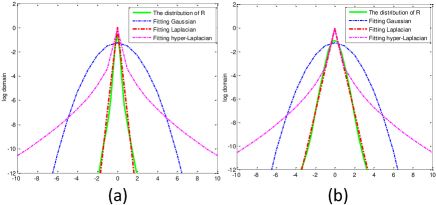
实验结果
研究问题
- RQ1最小化组稀疏性残差是否能比传统稀疏编码或正则化方法带来更好的图像去噪性能?
- RQ2通过GMM从干净图像块学习的外部NSS先验,在多大程度上能提升从噪声输入中估计干净图像组稀疏系数的准确性?
- RQ3通过外部GMM学习的自然图像NSS结构,是否能比仅依赖噪声图像NSS的方法更有效地减少振铃伪影并保留精细图像细节?
- RQ4所提出方法在PSNR和视觉质量方面,相较于最先进去噪技术,优势有多大?
主要发现
- 在噪声水平 $\sigma = 50$ 时,该方法相比BM3D平均提升0.24 dB,相比EPLL提升0.59 dB,相比GID提升1.30 dB。
- 在 $\sigma = 100$ 时,该方法达到23.19 dB的PSNR,优于aGMM(22.62 dB)、PGPD(23.03 dB)和BM3D(22.89 dB)。
- 视觉结果表明,与BM3D、EPLL、NCSR、GID、LINE、PGPD和aGMM相比,该方法能更有效地保留更精细的图像细节并抑制振铃伪影。
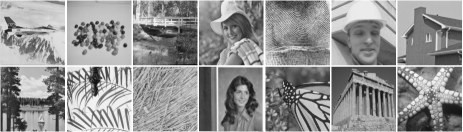
- 该方法在所有测试噪声水平下均取得最高PSNR,且在Kodak数据集的14张测试图像上均保持一致的性能提升。
- 通过GMM学习的外部NSS先验显著提升了组稀疏系数估计的准确性,从而带来更优的重建质量。
- 该方法在广泛噪声水平范围内表现出鲁棒性,通过为不同噪声水平调整参数设置,保持最优性能。
更好的研究,从现在开始
从阅读论文到最终审阅,大幅缩短您的研究时间。
无需绑定信用卡
本解读由 AI 生成,并经人工编辑审核。