
[论文解读] Interpreting Event-Studies from Recent Difference-in-Differences Methods
该论文显示,基于最近 DiD 方法的事件研究图(dCDH、CS、BJS)在结构上与传统 TWFE 图不同,原因在于不对称的处理前/处理后构造,并提供实用的绘图建议。
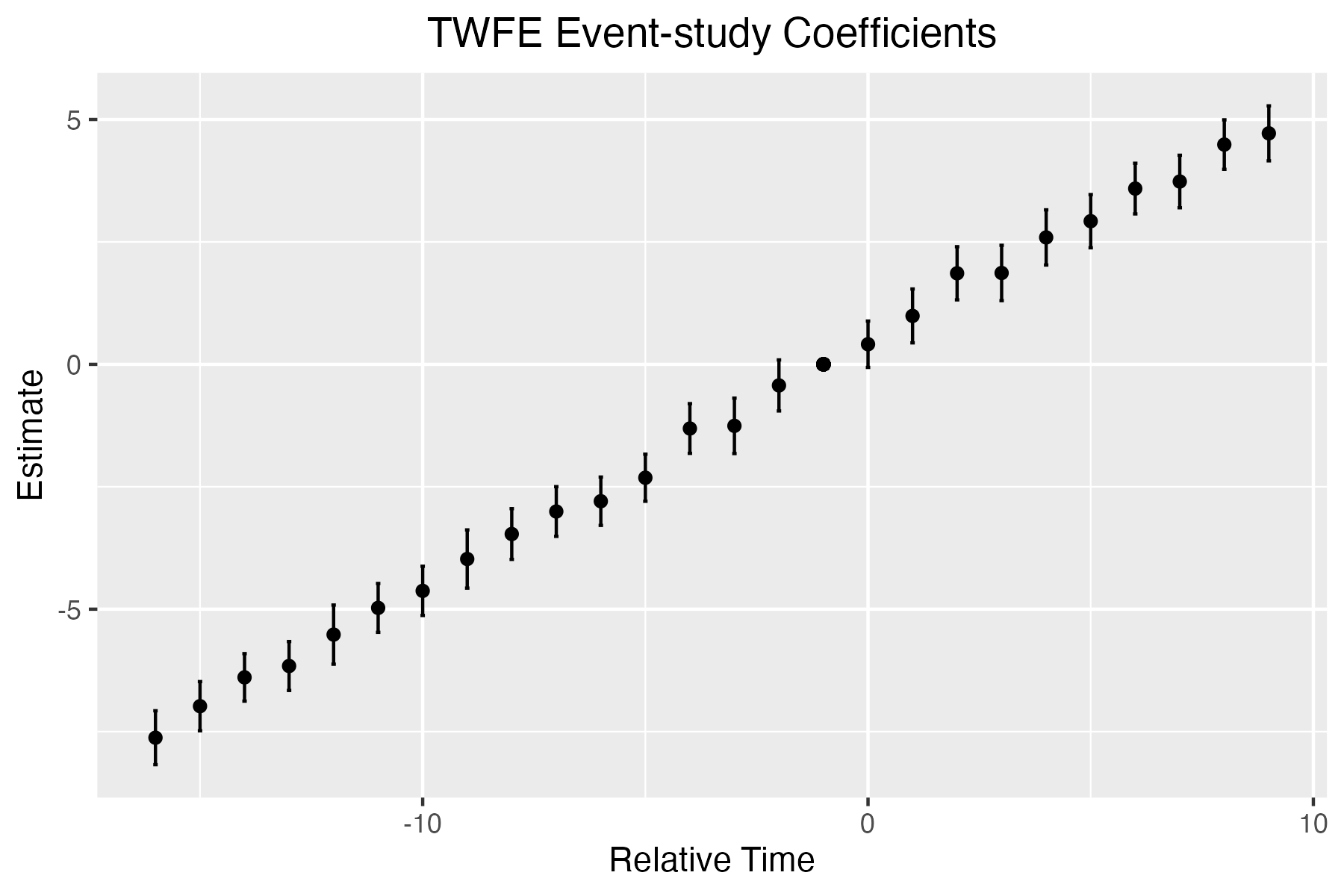
This note discusses the interpretation of event-study plots produced by recent difference-in-differences methods. I show that even when specialized to the case of non-staggered treatment timing, the default plots produced by software for several of the most popular recent methods do not match those of traditional two-way fixed effects (TWFE) event-studies. The plots produced by the new methods may show a kink or jump at the time of treatment even when the TWFE event-study shows a straight line. This difference stems from the fact that the new methods construct the pre-treatment coefficients asymmetrically from the post-treatment coefficients. As a result, visual heuristics for evaluating violations of parallel trends using TWFE event-study plots should not be immediately applied to those from these methods. I conclude with practical recommendations for constructing and interpreting event-study plots when using these methods.
研究动机与目标
- 说明现代 DiD 方法生成的事件研究图与传统 TWFE 图不同的动机和原因。
- 解释在 CS/dCDH 和 BJS 中为何处理前后系数的构造是不对称的。
- 通过仿真演示这些差异如何影响事件研究图的视觉解释。
- 提供实用建议,用于在 CS/dCDH 和 BJS 下构建与解读事件研究图。
提出的方法
- 模拟一个简单的非错层(non-staggered)DiD 设置,以比较 TWFE、CS、dCDH 和 BJS 的事件研究。
- 在数学上推导 TWFE、CS/dCDH 和 BJS 的前/后处理系数构造。
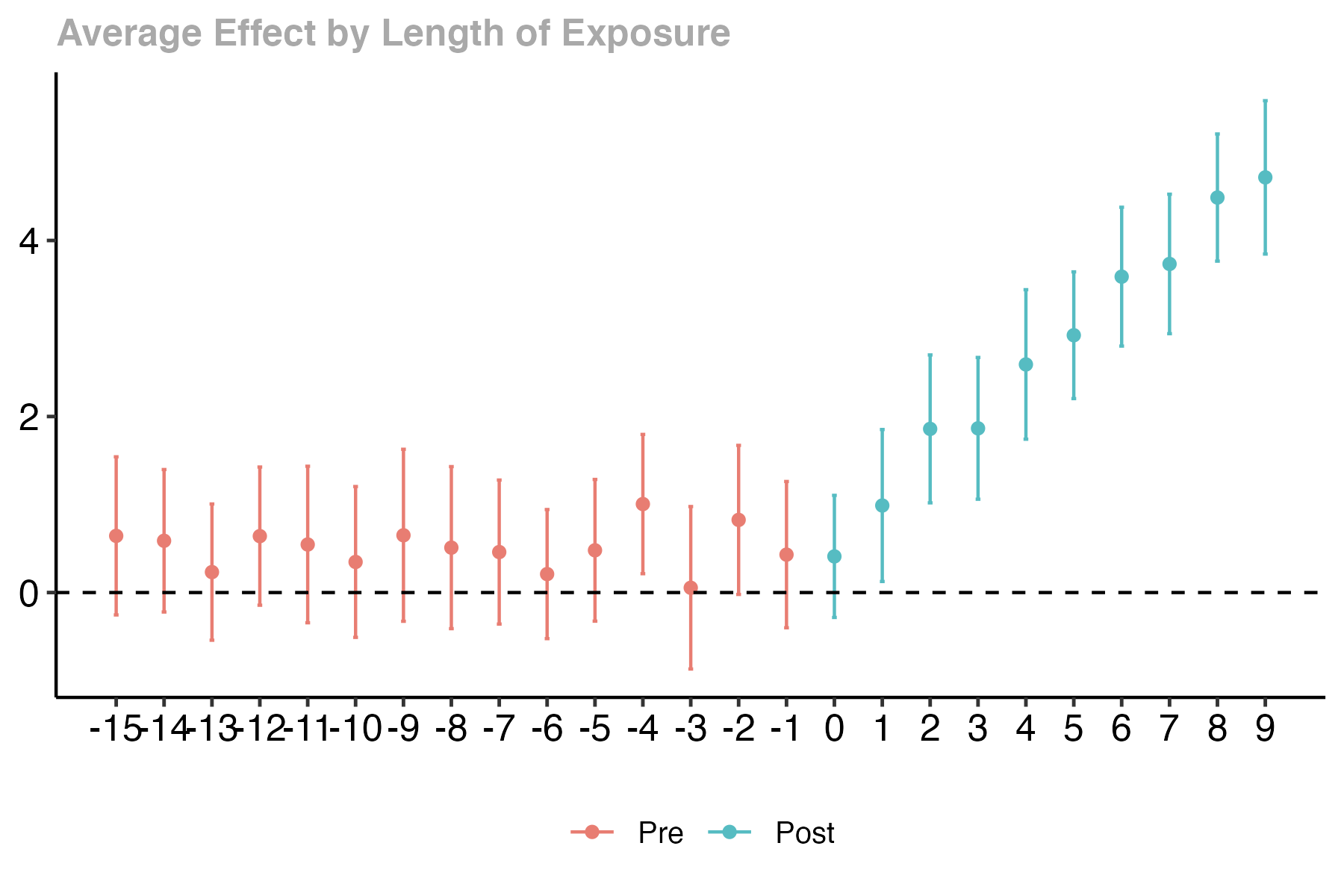
- 表明 CS/dCDH 在处理前使用短差(short-differences),处理后使用长差(long-differences),从而产生潜在的拐点。
- 证明 BJS 使用不对称的插补和处理前平均,导致与 TWFE 图的差异。
- 提供实际的补救措施,例如使用通用基期或长差以使图与传统解释一致。
实验结果
研究问题
- RQ1在非错层设置中,dCDH、CS 和 BJS 的事件研究图是否与传统 TWFE 图对齐?
- RQ2尽管平行趋势,现代 DiD 事件研究为何在处理日期附近仍表现出拐点或跳跃?
- RQ3在不同方法中,处理前/处理后系数的构造有何不同?
- RQ4研究人员可以采取哪些实际步骤,使这些图更具可比性和可解读性?
主要发现
- 在非错层设置中,TWFE 的事件研究呈现线性处理前趋势,并在处理后继续。
- CS 和 dCDH 由于处理前(短差)和处理后(长差)的不对称构造,在处理日期处产生拐点。
- BJS 可能在处理前显示上升趋势,但在处理时有急剧下降,反映其插补基于与不对称设计。
- 处理前/后构造的不对称解释了当将 TWFE 图的视觉启发应用于 CS/dCDH 与 BJS 图时会误导。
- 使用处理前系数的长差(通用基期)可以使 CS/dCDH 的图更接近 TWFE 的图。
- 在各自假设下,处理前平行趋势测试和处理后效应估计仍然有效,但应谨慎解读可视化结果。
更好的研究,从现在开始
从阅读论文到最终审阅,大幅缩短您的研究时间。
无需绑定信用卡
本解读由 AI 生成,并经人工编辑审核。