
[论文解读] Investigating Mutual Coupling in the Hydrogen Epoch of Reionization Array and Mitigating its Effects on the 21-cm Power Spectrum
本文通过半解析模拟与波束率滤波,研究了氢再电离时代阵列(HERA)中相互耦合的影响,旨在减轻其对21厘米功率谱的影响。研究发现,模拟的耦合特征与观测数据定性相符,但幅度约小一个数量级,表明模型中存在未建模的耦合机制;波束率滤波可将耦合效应降低约100倍,但仍有显著污染残留,因此EoR探测亟需更先进的抑制策略。
Interferometric experiments designed to detect the highly redshifted 21-cm signal from neutral hydrogen are producing increasingly stringent constraints on the 21-cm power spectrum, but some k-modes remain systematics-dominated. Mutual coupling is a major systematic that must be overcome in order to detect the 21-cm signal, and simulations that reproduce effects seen in the data can guide strategies for mitigating mutual coupling. In this paper, we analyse 12 nights of data from the Hydrogen Epoch of Reionization Array and compare the data against simulations that include a computationally efficient and physically motivated semi-analytic treatment of mutual coupling. We find that simulated coupling features qualitatively agree with coupling features in the data; however, coupling features in the data are brighter than the simulated features, indicating the presence of additional coupling mechanisms not captured by our model. We explore the use of fringe-rate filters as mutual coupling mitigation tools and use our simulations to investigate the effects of mutual coupling on a simulated cosmological 21-cm power spectrum in a "worst case" scenario where the foregrounds are particularly bright. We find that mutual coupling contaminates a large portion of the "EoR Window", and the contamination is several orders-of-magnitude larger than our simulated cosmic signal across a wide range of cosmological Fourier modes. While our fiducial fringe-rate filtering strategy reduces mutual coupling by roughly a factor of 100 in power, a non-negligible amount of coupling cannot be excised with fringe-rate filters, so more sophisticated mitigation strategies are required.
研究动机与目标
- 理解相互耦合对HERA实验中21厘米功率谱测量的影响。
- 评估波束率滤波在抑制相互耦合效应方面的有效性。
- 识别模拟与观测耦合特征之间的差异,以揭示缺失的物理机制。
- 评估当前抑制技术在最坏前景条件下的鲁棒性。
- 为未来硬件与软件解决方案提供指导,以提升EoR信号探测能力。
提出的方法
- 基于元件响应函数与阵列几何结构,采用计算高效的首阶半解析模型模拟相互耦合。
- 利用matvis与hera_sim进行可见度模拟,生成包含建模耦合效应的合成数据。
- 对可见度数据应用波束率滤波,以抑制时变的耦合特征。
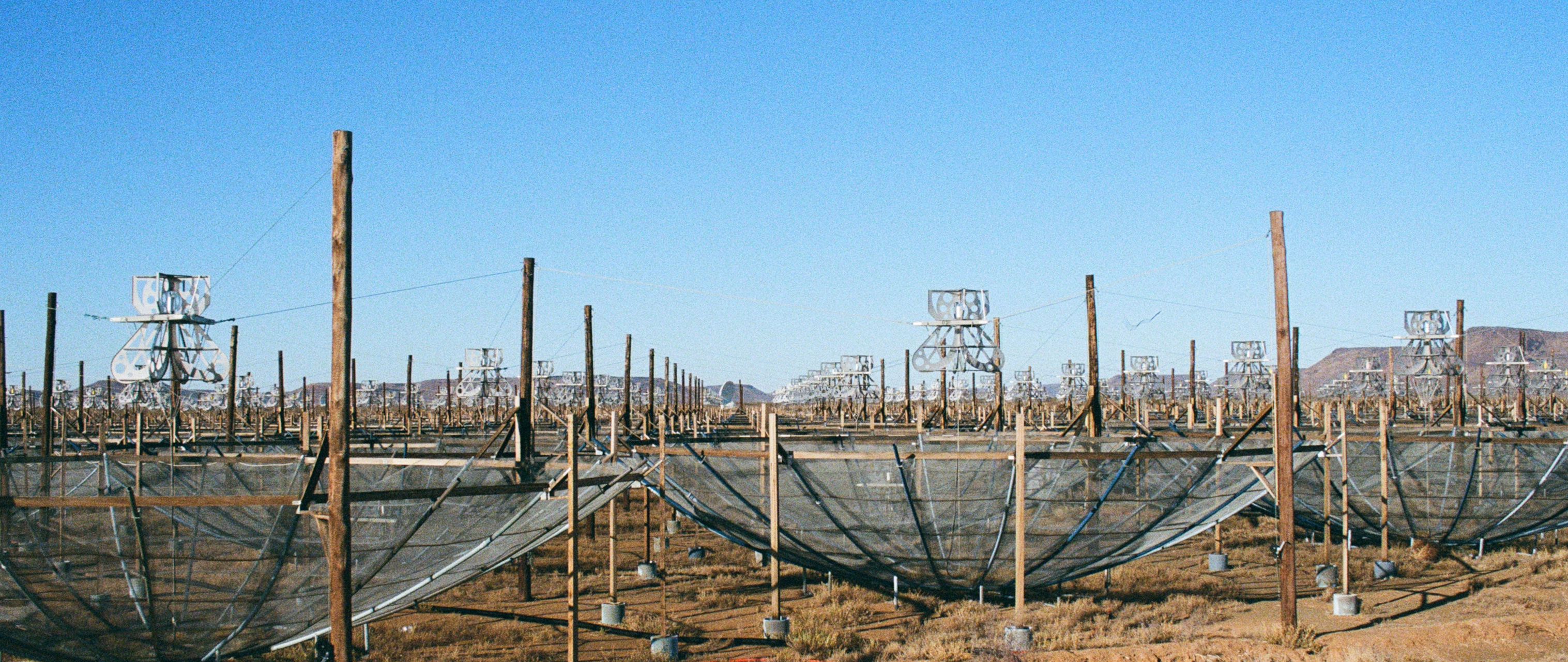
- 将模拟的耦合特征与12个观测夜的实测HERA数据进行对比,以验证模型保真度。
- 使用hera_pspec工具对滤波与未滤波数据进行功率谱估计,以量化污染水平。
- 采用LST分箱校准与插补技术处理数据缺口,提升动态范围。
实验结果
研究问题
- RQ1首阶半解析模拟在多大程度上能再现HERA数据中观测到的相互耦合特征?
- RQ2波束率滤波在多大程度上可抑制21厘米功率谱中的相互耦合?
- RQ3波束率滤波后,仍有多少比例的耦合污染残留?其最严重的区域在哪里?
- RQ4为何观测到的耦合特征显著比模拟结果更亮?是否存在可解释该差异的机制?
- RQ5在极端前景条件下的EoR窗口中,相互耦合如何影响探测性能?
主要发现
- 模拟的相互耦合特征与HERA数据中观测到的特征在定性上一致,但幅度约小一个数量级,表明模型中缺失了某些物理耦合机制。
- 波束率滤波将相互耦合功率降低了约100倍,显著提升了动态范围,但仍存在大量残留污染。
- 相互耦合污染了EoR窗口的大部分区域,其功率水平在广泛的k模范围内比预期的宇宙学21厘米信号高出数个数量级。
- 在最坏情况(强前景源)下,相互耦合在EoR窗口的大部分区域主导了功率谱,严重限制了探测灵敏度。
- 模拟与观测结果之间的差异表明,首阶模型未捕捉到高阶或非局域耦合效应。
- 首阶耦合模拟为测试抑制技术提供了可靠的基线,而无需进行完整的电磁仿真。
更好的研究,从现在开始
从阅读论文到最终审阅,大幅缩短您的研究时间。
无需绑定信用卡
本解读由 AI 生成,并经人工编辑审核。