
[论文解读] Joint cosmological and gravitational-wave population inference using dark sirens and galaxy catalogues
本文介绍了 gwcosmo Python 软件包的增强版本,该版本可利用暗啁啾信号和星系星表,联合推断宇宙学参数(如 H₀)以及引力波双星系统的种群特性。通过同时建模质量分布和并合率演化,该方法减少了偏差,并从 GWTC-3 星表中的 42 个 BBH 事件中得出稳健的 H₀ = 69⁺¹²₋₇ km s⁻¹ Mpc⁻¹,显著提升了未被透镜效应影响的引力波事件的宇宙学约束精度。
In the absence of numerous gravitational-wave detections with confirmed electromagnetic counterparts, the "dark siren" method has emerged as a leading technique of gravitational-wave cosmology. The method allows redshift information of such events to be inferred statistically from a catalogue of potential host galaxies. Due to selection effects, dark siren analyses necessarily depend on the mass distribution of compact objects and the evolution of their merger rate with redshift. Informative priors on these quantities will impact the inferred posterior constraints on the Hubble constant ($H_0$). It is thus crucial to vary these unknown distributions during an $H_0$ inference. This was not possible in earlier analyses due to the high computational cost, restricting them to either excluding galaxy catalogue information, or fixing the gravitational-wave population mass distribution and risking introducing bias to the $H_0$ measurement. This paper introduces a significantly enhanced version of the Python package GWCOSMO, which allows joint estimation of cosmological and compact binary population parameters. This thereby ensures the analysis is now robust to a major source of potential bias. The gravitational-wave events from the Third Gravitational-Wave Transient Catalogue are reanalysed with the GLADE+ galaxy catalogue, and an updated, more reliable measurement of $H_0=69^{+12}_{-7}$ km s$^{-1}$ Mpc$^{-1}$ is found (maximum a posteriori probability and 68% highest density interval). This improved method will enable cosmological analyses with future gravitational-wave detections to make full use of the information available (both from galaxy catalogues and the compact binary population itself), leading to promising new independent bounds on the Hubble constant.
研究动机与目标
- 通过引力波天文学实现独立、高精度的 H₀ 测量,以解决持续存在的哈勃张力问题。
- 克服在暗啁啾信号分析中因对引力波种群参数施加固定先验而引入的偏差。
- 开发一种计算高效的联合推断方法,从引力波事件和星系星表中同时推断宇宙学与种群参数。
- 使未来的宇宙学分析能够充分利用星系星表数据和致密双星种群的内在信息。
提出的方法
- 扩展 gwcosmo 软件包,以执行宇宙学与种群超参数的联合推断,包括质量分布和并合率演化。
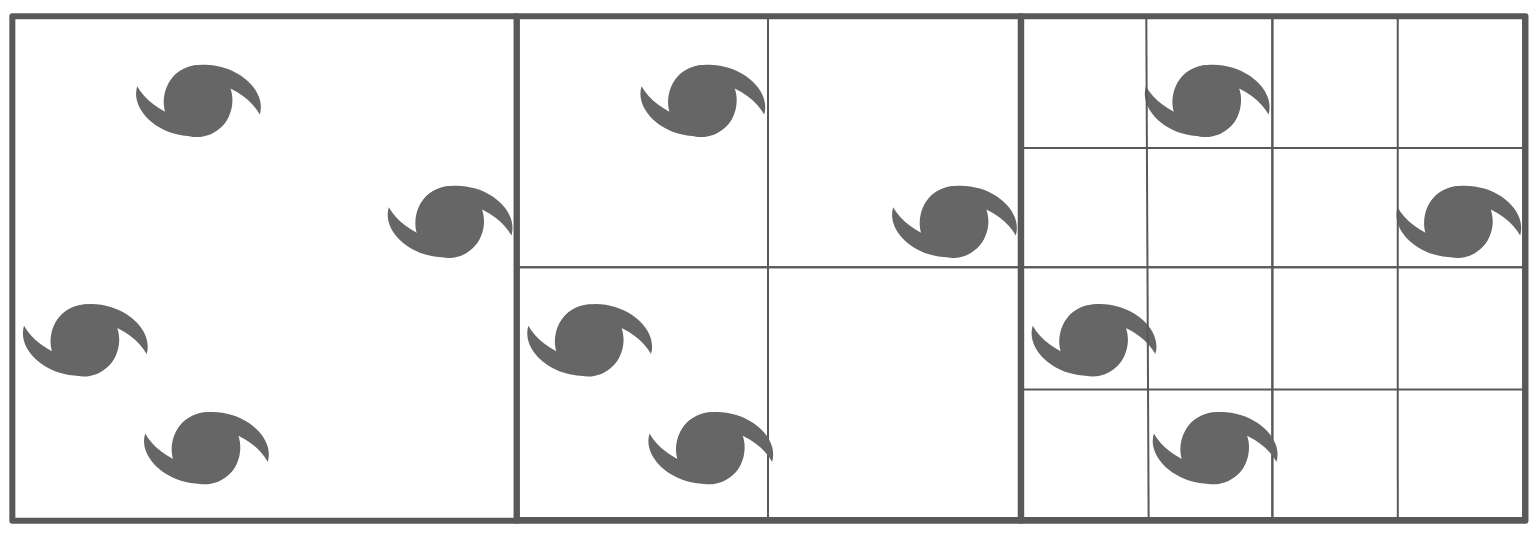
- 利用 GLADE+ 星系星表,通过星系宿主似然函数为引力波事件的位置体积分配红移概率。
- 使用平坦 ΛCDM 宇宙学模型建模光度距离-红移关系,将 H₀ 作为主要宇宙学参数。
- 将红移依赖的并合率演化和质量分布先验作为推断流程中的自由超参数。
- 采用贝叶斯分层框架,同时约束 H₀ 与种群参数,考虑选择效应和不确定性。
- 利用高效的采样技术,使在高维参数空间下实现联合推断在计算上成为可能。
实验结果
研究问题
- RQ1联合推断宇宙学与致密双星种群参数是否能减少从暗啁啾信号中测量 H₀ 时的偏差?
- RQ2质量分布与并合率演化模型的选择如何影响 H₀ 的推断值?
- RQ3当缺乏电磁对应体时,星系星表信息能在多大程度上提高 H₀ 约束的精度?
- RQ4是否可以构建一个统一框架,同时对多种致密双星种群(如 BBH、NSBH)进行建模,并共享超参数?
主要发现
- 联合推断方法通过允许种群参数(如质量分布和并合率演化)与 H₀ 同时被约束,降低了偏差。
- 更新后的分析利用 GWTC-3 星表中的 42 个 BBH 事件和 GLADE+ 星系星表,得出稳健的 H₀ = 69⁺¹²₋₇ km s⁻¹ Mpc⁻¹。
- 该方法计算高效,且其计算复杂度与星系星表规模无关,可适用于未来更深度的巡天(如 DES、LSST 和 Euclid)。
- 结果表明,星系星表信息与内在种群建模对于实现高精度的暗啁啾信号宇宙学研究均至关重要。
- 该方法可适应非高斯的红移不确定性,并可扩展至包含多种源种群的联合建模。
更好的研究,从现在开始
从阅读论文到最终审阅,大幅缩短您的研究时间。
无需绑定信用卡
本解读由 AI 生成,并经人工编辑审核。