
[论文解读] Learn Global and Optimize Local: A Data-Driven Methodology for Last-Mile Routing
本文提出一种数据驱动的分层路由方法,通过从历史配送数据中学习全局区域序列,并优化各区域内的停靠点序列,以更好地匹配现实中的司机行为。通过在加权成本矩阵中结合行驶时间和历史区域转换数据,该方法实现了高精度的路线预测(AUC为0.991),在最后一公里路由研究挑战赛中优于基线TSP模型。
In last-mile routing, the task of finding a route is often framed as a Traveling Salesman Problem to minimize travel time and associated cost. However, solutions stemming from this approach do not match the realized paths as drivers deviate due to navigational considerations and preferences. To prescribe routes that incorporate this tacit knowledge, a data-driven model is proposed that aligns well with the hierarchical structure of delivery data wherein each stop belongs to a zone - a geographical area. First, on the global level, a zone sequence is established as a result of a minimization over a cost matrix which is a weighted combination of historical information and distances (travel times) between zones. Subsequently, within zones, sequences of stops are determined, such that, integrated with the predetermined zone sequence, a full solution is obtained. The methodology is particularly promising as it propels itself within the top-tier of submissions to the Last-Mile Routing Research Challenge, while it maintains an elegant decomposition that ensures a feasible implementation into practice. The concurrence between prescribed and realized routes underpins the adequateness of a hierarchical breakdown of the problem and the fact that drivers make a series of locally optimal decisions when navigating. Furthermore, experimenting with the balance between historical information and distance exposes that historic information is pivotal in deciding a starting zone of a route. The experiments also reveal that at the end of a route, historical information can best be discarded, making the time it takes to return to the station the primary concern.
研究动机与目标
- 弥合理论最优路线与实际配送司机偏离之间的差距。
- 开发一种可扩展、实用的路由方法,融入司机的隐性知识和偏好。
- 通过利用区域级别的历史路由数据而非停靠点级别的数据,提升路线预测精度。
- 证明将TSP问题分层分解为全局(区域)和局部(区域内)优化,可增强现实可行性与性能。
- 提供一种可使用每日实际路由数据实时更新的框架,支持动态路线推荐。
提出的方法
- 将最后一公里路由建模为两阶段过程:首先,基于结合行驶时间与历史区域转换频率的成本矩阵,求解TSP以确定最优区域序列。
- 构建加权成本矩阵,将距离(行驶时间)与历史转换频次结合,使用可调参数(最优值接近0.9)。
- 对每个区域单独求解TSP(或OTSP),以确定最优停靠点序列,确保区域内最优。
- 利用区域级别数据学习转换概率,相比停靠点级别建模可减少数据稀疏性。
- 对站点到区域和区域到站点的转换应用不同权重,反映司机在路线末端更关注返回时间。
- 通过每日实际路由数据更新历史转换频次矩阵,实现模型的实时再训练。
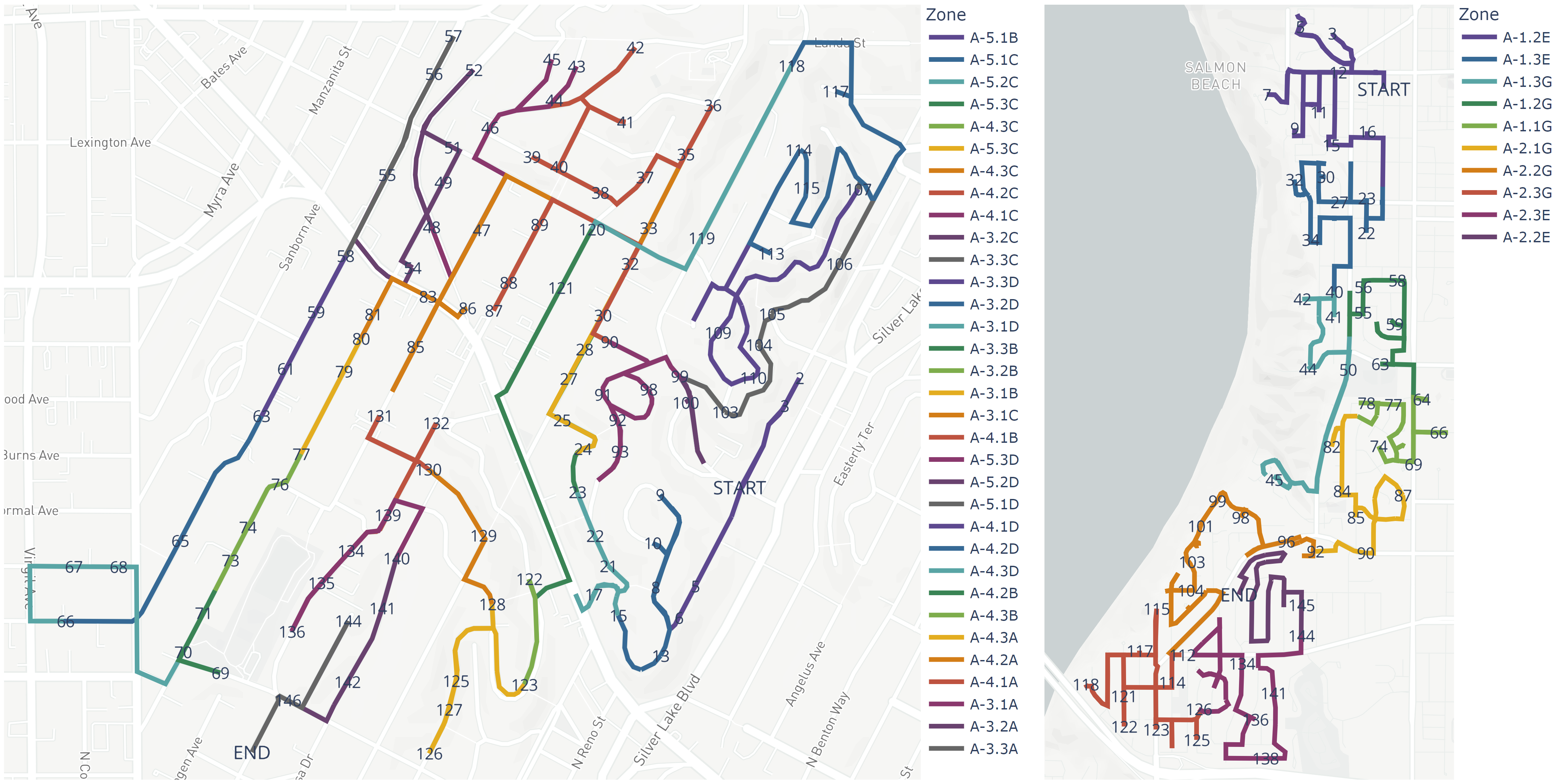
实验结果
研究问题
- RQ1如何利用历史配送数据,使路线预测精度优于标准TSP公式?
- RQ2将最后一公里路由分解为区域级与区域内优化的分层方法,在多大程度上提升了与现实司机行为的一致性?
- RQ3在区域序列预测的成本矩阵中,行驶时间与历史转换频率的最优平衡比例如何?
- RQ4司机在路线起点与终点的偏好,如何影响成本矩阵各成分的权重分配?
- RQ5该模型能否通过每日实际路由数据实时更新,以保持预测精度?
主要发现
- 所提方法在路线预测中达到AUC 0.991,显著优于基线TSP模型,在最后一公里路由研究挑战赛中位列顶尖。
- 将行驶时间与历史区域转换结合(最优权重接近0.9)的加权组合表现最佳,表明距离与司机偏好的强权衡关系。
- 当区域间转换的行驶时间权重高于站点到区域转换时,模型表现最佳,反映出司机在路线起点决策时更关注顺序而非时间。
- 在路线末端,历史信息相关性降低,最小化返回站点时间成为路线选择的主导因素。
- 该方法对权重参数误设具有鲁棒性,性能在广泛参数范围内保持稳定。
- 剩余可学习差距极小——仅0.009 AUC,表明仅用5,112条训练路线,模型已捕捉到司机行为中绝大部分可预测结构。
更好的研究,从现在开始
从阅读论文到最终审阅,大幅缩短您的研究时间。
无需绑定信用卡
本解读由 AI 生成,并经人工编辑审核。