
[论文解读] Limits on High-Frequency Gravitational Waves in Planetary Magnetospheres
本文提出利用行星磁层(尤其是地球和木星的)作为天然实验室,通过逆格茨恩施泰因效应探测高频引力波(HFGWs),即在强磁场中HFGWs转化为可探测光子。研究基于低地球轨道卫星和“朱诺号”任务首次给出了观测限制,由于转换路径长且辐射通量角分布广泛,该方法在未被探索的频段展现出极高的灵敏度。
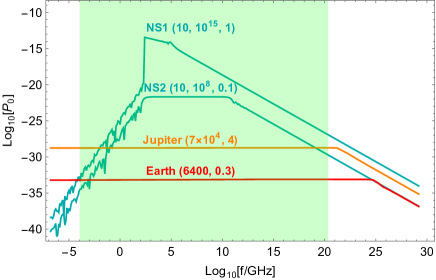
High-frequency gravitational waves (HFGWs) carry a wealth of information on the early Universe with a tiny comoving horizon and astronomical objects of small scale but with dense energy. We demonstrate that the nearby planets, such as Earth and Jupiter, can be utilized as a laboratory for detecting the HFGWs. These GWs are then expected to convert to signal photons in the planetary magnetosphere, across the frequency band of astronomical observation. As a proof of concept, we present the first limits from the existing low-Earth-orbit satellite for specific frequency bands and project the sensitivities for the future more-dedicated detections. The first limits from Juno, the latest mission orbiting Jupiter, are also presented. Attributed to the long path of effective GW-photon conversion and the wide angular distribution of signal flux, we find that these limits are highly encouraging, for a broad frequency range including a large portion unexplored before.
研究动机与目标
- 探索高频引力波(HFGWs)的新型探测策略,尽管其在宇宙学与天体物理学中具有重要意义,但至今仍研究不足。
- 通过利用行星磁层中延伸且强的磁场作为天然转换介质,应对引力耦合微弱的挑战。
- 建立利用现有及未来环绕行星轨道的太空探测器设定HFGW振幅观测限制的可行性。
- 量化不同轨道构型(如低地球轨道与高倾角轨道)对HFGW探测性能的影响。
- 将行星磁层的探测潜力与地面实验室实验进行比较,突出其在角覆盖范围与转换路径长度方面的优势。
提出的方法
- 利用逆格茨恩施泰因效应,即在横向磁场存在下,高频引力波与光子发生混合,导致引力波向光子的转换。
- 使用包含真空极化(Δγ,vac)和介质效应(Δγ,pla)贡献的混合矩阵建模引力波-光子转换概率,有效混合角由磁场强度与引力波频率决定。
- 将转换概率应用于行星磁层,其中磁场的长路径长度与空间扩展性使有效转换率显著高于地面实验。
- 通过对接收方向的角积分推导探测器处的预期光子通量,考虑行星环境的几何结构与磁场分布。
- 通过将预期信号率与现有任务(如“朱诺号”与低地球轨道卫星)中观测到的事件率进行比较,采用统计上限框架,推导灵敏度限制。
- 将实验室轴子实验(如CAST、ALPS I、OSQAR II)的限制重新表述为对HFGWs的约束,调整几何抑制与角分布效应,适用于圆柱形磁阱环境。
实验结果
研究问题
- RQ1行星磁层能否作为有效天然实验室,通过引力波-光子转换探测高频引力波?
- RQ2利用“朱诺号”与低地球轨道平台等现有卫星任务,可探测的频段范围与灵敏度限制为何?
- RQ3行星磁层中磁场路径长且角分布广,相比地面实验,如何显著提升HFGW探测灵敏度?
- RQ4轨道几何构型(如高倾角与低地球轨道)对HFGW信号有效探测时间与灵敏度有何影响?
- RQ5当重新表述为HFGW探测约束时,实验室实验(如CAST、ALPS I)的限制与行星磁层方法相比如何?
主要发现
- 首次基于低地球轨道卫星数据建立高频引力波的观测限制,CAST实验在重新表述为HFGW约束时,95%置信度上限为 $ h_{c,95\%} \sim 8 \times 10^{-26} $。
- 首次公布基于环绕木星的“朱诺号”任务的限制,证明利用行星任务作为HFGW探测器的可行性。
- SAFIR 2类高倾角轨道的灵敏度优于低倾角轨道,尽管其暗轨道时间较短,但高纬度区域的转换概率更高。
- 行星磁层中的有效转换路径远长于地面实验,显著提升信号通量,从而在宽频带范围内实现更高的灵敏度。
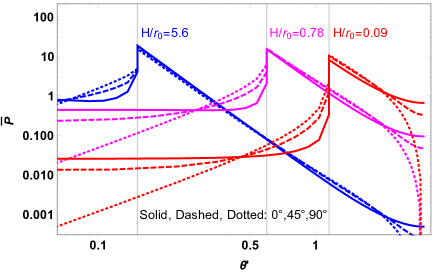
- 行星磁层中信号通量的广泛角分布使探测可覆盖多种入射方向,克服了地面实验中圆柱形磁阱的定向限制。
- 研究表明,实验室实验中常见的几何抑制(如 $ \sim \ln(1/\theta_p) $)可在行星环境中被缓解,因扩展的磁场导致更接近各向同性的有效信号并增强强度。
更好的研究,从现在开始
从阅读论文到最终审阅,大幅缩短您的研究时间。
无需绑定信用卡
本解读由 AI 生成,并经人工编辑审核。