
[论文解读] LSTM-Autoencoder based Anomaly Detection for Indoor Air Quality Time Series Data
该论文提出了一种LSTM-自编码器混合模型,用于检测室内空气质量(IAQ)时间序列数据中的异常,利用LSTM单元捕捉长期时间依赖性,并通过自编码器计算重构损失以设定异常阈值。在真实世界的新敦巴尔德CO₂数据集上评估,该模型实现了99.50%的检测准确率,优于现有方法。
Anomaly detection for indoor air quality (IAQ) data has become an important area of research as the quality of air is closely related to human health and well-being. However, traditional statistics and shallow machine learning-based approaches in anomaly detection in the IAQ area could not detect anomalies involving the observation of correlations across several data points (i.e., often referred to as long-term dependences). We propose a hybrid deep learning model that combines LSTM with Autoencoder for anomaly detection tasks in IAQ to address this issue. In our approach, the LSTM network is comprised of multiple LSTM cells that work with each other to learn the long-term dependences of the data in a time-series sequence. Autoencoder identifies the optimal threshold based on the reconstruction loss rates evaluated on every data across all time-series sequences. Our experimental results, based on the Dunedin CO2 time-series dataset obtained through a real-world deployment of the schools in New Zealand, demonstrate a very high and robust accuracy rate (99.50%) that outperforms other similar models.
研究动机与目标
- 解决传统统计方法和浅层机器学习方法在检测涉及IAQ时间序列中长期相关性的异常时的局限性。
- 开发一种深度学习模型,能够学习室内CO₂浓度数据中的复杂时间依赖性。
- 提升在真实世界、非平稳IAQ环境中异常检测的准确性,此类环境中数据质量常受影响。
- 建立一种基于重构误差的鲁棒、阈值化的异常检测系统,利用自编码器的输出。
提出的方法
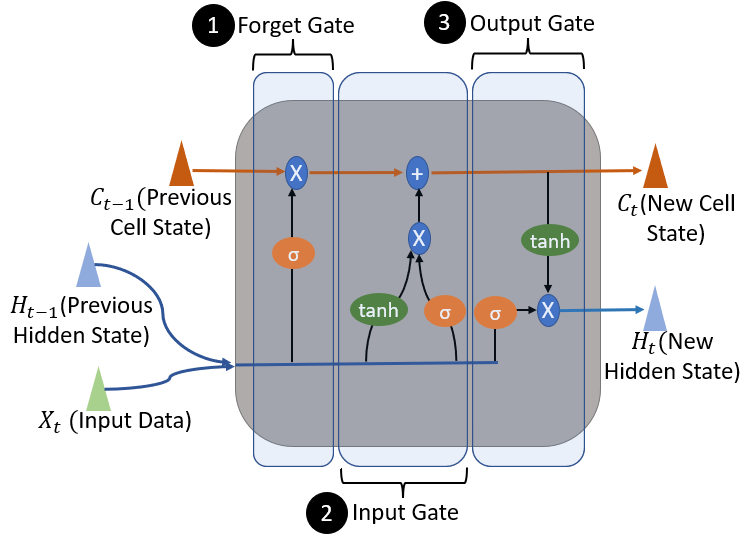
- 该模型使用堆叠的LSTM编码器,学习序列化IAQ数据点之间的长期时间依赖性。
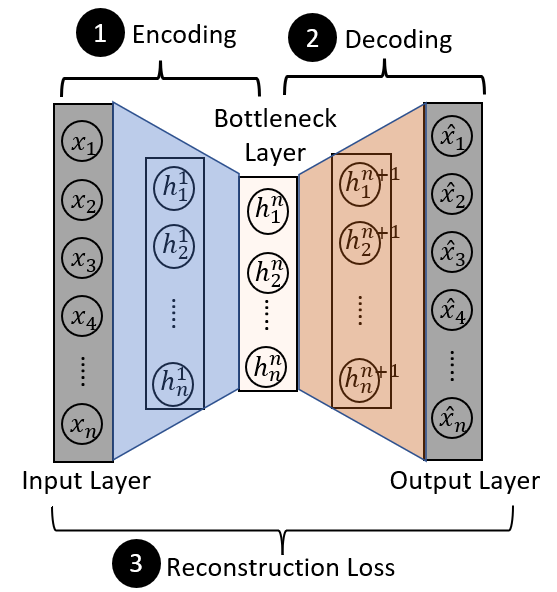
- 自编码器利用LSTM编码器生成的表示重构输入序列。
- 为每个时间步计算重构损失,并使用训练集中最大平均绝对误差(MAE)作为异常阈值。
- 当测试样本的重构损失超过学习到的阈值时,即判定为异常。
- 该模型在新敦巴尔德CO₂数据集上进行端到端训练,该数据集记录了真实教室环境中的CO₂水平。
- 性能通过标准指标(包括准确率、精确率、召回率、F1分数和AUC-ROC)进行评估。
实验结果
研究问题
- RQ1LSTM-自编码器模型能否有效检测涉及长期依赖性的室内空气质量时间序列数据中的异常?
- RQ2自编码器的重构损失与传统统计阈值相比,在识别异常CO₂读数方面表现如何?
- RQ3为最大化检测性能,该异常检测任务中的最优时间窗口长度是多少?
- RQ4与其它LSTM-自编码器变体相比,所提出的模型在真实世界IAQ数据上的性能如何?
- RQ5该模型能否在存在潜在数据质量问题的真实世界、非平稳IAQ数据上实现良好泛化?
主要发现
- 所提出的LSTM-自编码器模型在新敦巴尔德CO₂数据集上实现了99.50%的检测准确率,显著优于其他类似模型。
- 该模型实现了100%的精确率,表明检测到的异常中无误报,这对可靠的IAQ监测至关重要。
- AUC-ROC得分为94.8%,表明真阳性率与假阳性率之间具有出色的权衡性能。
- 性能最优的时间窗口长度为10个时间步,当窗口大小超过25后性能开始下降。
- 该模型的阈值设定为重构损失1.742,且CO₂浓度超过1,000 ppm的读数始终超过此阈值并被分类为异常。
- 在对比模型中,仅Nguyen等人[28]通过引入One-Class SVM获得了更高的F1分数(96.98%),但整体准确率(98.36%)低于本模型。
更好的研究,从现在开始
从阅读论文到最终审阅,大幅缩短您的研究时间。
无需绑定信用卡
本解读由 AI 生成,并经人工编辑审核。