
[论文解读] Machine Learning Approaches in Agile Manufacturing with Recycled Materials for Sustainability
本文提出了一种基于机器学习的决策支持系统,用于敏捷可持续制造,利用回收和再生成材料,通过人工神经网络(ANN)、随机森林(RF)和卷积神经网络(CNN)预测显微组织和机械性能,准确率高达90%。该方法实现了热处理过程的数据驱动优化,减少了对昂贵实验室实验的依赖,并通过预测分析推动绿色制造。
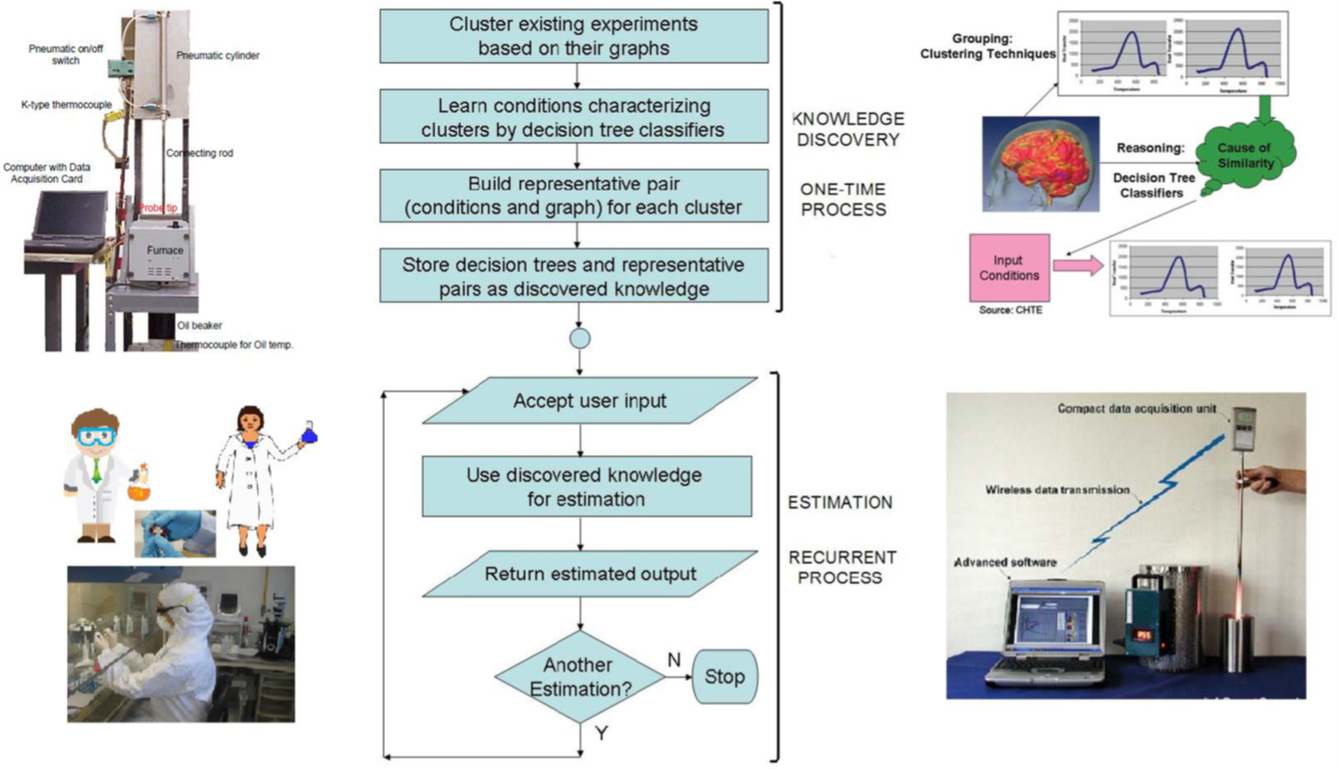
It is important to develop sustainable processes in materials science and manufacturing that are environmentally friendly. AI can play a significant role in decision support here as evident from our earlier research leading to tools developed using our proposed machine learning based approaches. Such tools served the purpose of computational estimation and expert systems. This research addresses environmental sustainability in materials science via decision support in agile manufacturing using recycled and reclaimed materials. It is a safe and responsible way to turn a specific waste stream to value-added products. We propose to use data-driven methods in AI by applying machine learning models for predictive analysis to guide decision support in manufacturing. This includes harnessing artificial neural networks to study parameters affecting heat treatment of materials and impacts on their properties; deep learning via advances such as convolutional neural networks to explore grain size detection; and other classifiers such as Random Forests to analyze phrase fraction detection. Results with all these methods seem promising to embark on further work, e.g. ANN yields accuracy around 90\% for predicting micro-structure development as per quench tempering, a heat treatment process. Future work entails several challenges: investigating various computer vision models (VGG, ResNet etc.) to find optimal accuracy, efficiency and robustness adequate for sustainable processes; creating domain-specific tools using machine learning for decision support in agile manufacturing; and assessing impacts on sustainability with metrics incorporating the appropriate use of recycled materials as well as the effectiveness of developed products. Our work makes impacts on green technology for smart manufacturing, and is motivated by related work in the highly interesting realm of AI for materials science.
研究动机与目标
- 开发基于人工智能的决策支持工具,用于使用回收和再生成材料的可持续敏捷制造。
- 通过数据驱动的预测建模,减少对耗时且昂贵的实验室实验的依赖。
- 通过将废金属流转化为高附加值产品,特别是国防应用,提升环境可持续性。
- 通过基于成分和加工参数的快速、准确的材料性能预测,提升制造敏捷性。
- 建立衡量回收材料使用和产品有效性对可持续性影响的指标。
提出的方法
- 采用人工神经网络(ANN)预测在淬火回火过程中显微组织的发展,准确率约为90%。
- 应用卷积神经网络(CNN)进行显微组织图像中的晶粒尺寸检测,实现自动化分析。
- 利用随机森林(RF)进行相分数检测,提供高准确率和可解释性,支持可解释人工智能。
- 将数据挖掘和机器学习技术整合到统一框架中,实现计算估计和过程优化。
- 使用实验室研究的真实实验数据训练和验证模型,确保实际相关性。
- 探索VGG和ResNet等先进计算机视觉模型,以期在准确率、效率和鲁棒性方面实现进一步提升。
实验结果
研究问题
- RQ1机器学习模型在热处理过程中对回收钢合金显微组织演变的预测准确度如何?
- RQ2不同机器学习模型——ANN、RF和CNN——在基于输入参数预测机械性能和显微组织特征方面的表现如何?
- RQ3数据驱动模型能否减少在使用回收材料的敏捷制造中对昂贵且耗时的实验试错的需求?
- RQ4计算机视觉模型如VGG和ResNet如何提升可持续制造中显微组织分析的准确性和鲁棒性?
- RQ5在敏捷制造过程中,量化使用回收材料对可持续性影响的最有效指标是什么?
主要发现
- 人工神经网络(ANN)在预测淬火回火过程中的显微组织发展方面,准确率约为90%,这是关键热处理工艺。
- 卷积神经网络(CNN)在晶粒尺寸检测方面表现出色,实现了自动化且可扩展的基于图像的分析。
- 随机森林(RF)提供了高准确率并增强了可解释性,支持材料性能预测中的可解释人工智能。
- 将领域知识融入机器学习模型,提升了预测输出的相关性和可靠性。
- 初步结果表明,机器学习工具可显著降低实验室实验的成本和时间,同时支持可持续制造目标。
- 未来工作预计通过探索VGG和ResNet等先进模型,进一步提升性能,实现最佳准确率和鲁棒性。
更好的研究,从现在开始
从阅读论文到最终审阅,大幅缩短您的研究时间。
无需绑定信用卡
本解读由 AI 生成,并经人工编辑审核。